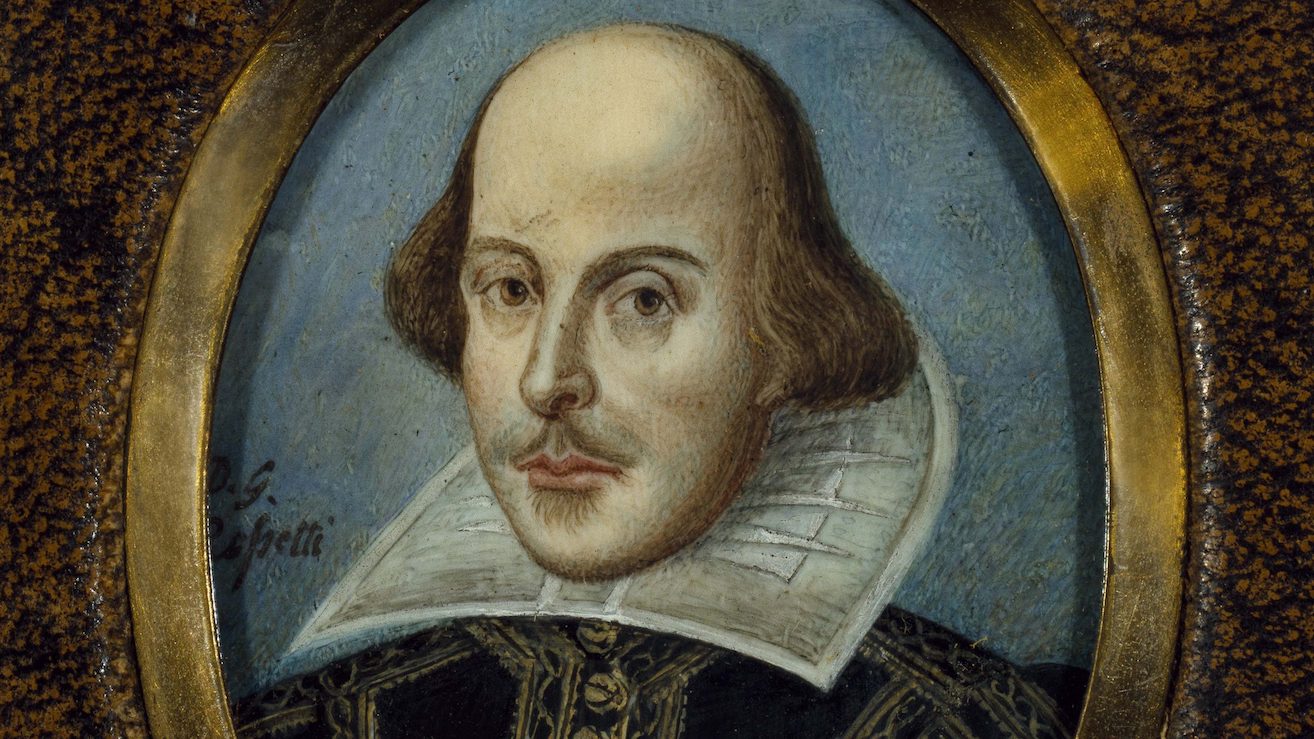
M arjorie Garber ( Shakespeare After All , 300–2) nicely captures the Pauline resonances of the trial scene in Merchant of Venice : “Shylock will provide a scale to weigh the pound of flesh, but not a surgeon to staunch the wound. He will, that is, provide the emblem of justice, the balances, or scales, but not the emblem of mercy. If Saint Paul's celebrated dictum ‘the letter kills, but the spirit gives life’ is seen to underpin this tension between Shylock and Portia, justice and mercy, it is all the more pertinent when restored to its context in 2 Corinthians, where Paul distinguishes between the New Testament and the Old Testament. God, he says, has made him and the other apostles ‘ministers of the new testament; not of the letter, but of the spirit; for the letter killeth but the spirit giveth life (2 Corinthians 3:6). By contrast, Moses ‘put a veil over his face, that the children of Israel could not steadfastly look to the end of that which is abolished,’ and ‘until this day remaineth the same veil untaken away in the reading of the old testament, which veil is done away with in Christ’ (2 Corinthians 3:13–14).”
She notes the connection between the pound of flesh “nearest to the heart,” and Paul’s “fleshly tables of the heart.” Ironically, Shylock insists “on literalizing what Paul, equally insistently, asserts to be a matter of figure.” This means that “Shylock . . . is a bad reader; he reads the letter, not the spirit.” Shakespeare could have footnoted Augustine’s de doctrina .
Shylock’s literalistic insistence on the letter is a trap. The letter does indeed kill. The life of Shylock the Jew ends. For Shakespeare’s original audience, though, this death by the letter would be seen as a step toward new life. Shylock the Jew dies in order to be raised as Shylock the Christian, as the old covenant killed in order to be raised up into a ministry of reconciliation. Bassanio chooses death voluntarily when he chooses the lead casket. Like Paul, Shylock is killed by the law. For both, death is the path to life.
Peter Leithart
Peter J. Leithart is President of Theopolis Institute. He is the author of numerous books on theology, literature, and culture, including Theopolitan, Defending Constantine, and Baptized Body.
More from Shakespeare
Continue reading related articles
Call Me Malvolio
Call me Malvolio. I was lately the steward of the house of the great and famed Countess Olivia of Illyria. You may have heard of her. I had charge of my Lady’s household retinue, the maids and men who clean, cook, and care for the house. I do my work…
Truth, Love, Lies: Much Ado About Nothing
The following is an excerpt from my Brightest Heaven of Invention , published in the misty days of the mid-1990s. Claudio looks at Hero’s appearance, and concludes she is a maid, a virgin. Because of Don John’s deception, he believes that he has peeled away the deceptive outer layer, the…
Shakespeare the Christian?
W illiam Shakespeare was baptized on April 26, 1564. Baptized , but was he a Christian? The answer partly depends on what we think happens when someone is baptized. Many Christians believe that baptism marks the beginning of life as a Christian. I am one of those Christians. My short…
In Medias Res
Your weekly digest for all things Theopolis.