
Hamann (“Metacritique”) says that “words as undetermined objects of empirical concepts are entitled critical appearances, specters, non-words or unwords, and become determinate objects for the understanding only through their institution and meaning in usage. This meaning and its determination arises, as everyone knows, from the combination of a word-sign, which is a priori arbitrary and indifferent and a posteriori necessary and indispensable, with the intuition of the word itself; through this reiterated bond the concept is communicated to, imprinted on, and incorporated in the understanding, by means of the word-sign as by the intuition itself.”
But not everyone knows this. It’s not clear, for instance, that Saussure knows it.
Saussure grasps the first part of Hamann’s description - that the sign is arbitrary and indifferent; but he loses track of the a posteriori necessity of the association of word-sign with the intuition of the word itself. Hamann is surely right; word-signs are arbitrarily affixed to concepts or things only in their origins (and not entirely then even - neologisms borrow from the existing stock of words), but once the signs are affixed, they become necessary.
Hamann is also superior to Saussure in his emphasis on the role of custom and repetition in the process of “imprinting” concepts on the understanding. Binding a word-sign to an “intuition” doesn’t by itself constitute language. If I call the crevasses in my knuckles “garvels,” and no one else does, the association of word-sign and concept/thing doesn’t communicate knowledge or count as a part of the language. Others need to adopt ths same usage, and use it again and again.
Peter Leithart
Peter J. Leithart is President of Theopolis Institute. He is the author of numerous books on theology, literature, and culture, including Theopolitan, Defending Constantine, and Baptized Body.
More from Uncategorized
Continue reading related articles
Cautions About Conversion
Wisdom from my old friend and colleague, Rev. Rich Bledsoe, on conversion . People "meet" Jim Jordan, and have the bracing thrill of escaping the flatness of just living and being in the 21st century. They might take off to the thrilling different world of Eastern Orthodoxy. They experience the…
Spousal Body
John Paul II ( Man and Woman He Created Them: A Theology Of The Body , 181-5) argues from Genesis that “‘alone,’ the man does not completely realize [his] essence.” Without the woman, Adam does not possess the “basic conditions that make it possible to exist in a relation of…
At the Right Hand
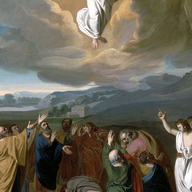
Forty days after Jesus rose from the dead, He ascended into heaven to take His place at the right hand of the Father (Acts 1:3), fulfilling the promise of Psalm 110. The Psalm is patterned as three sets of seven clauses. Verses 1-2 make up the first sequence, verses 3-4…
In Medias Res
Your weekly digest for all things Theopolis.