
Robin Parry’s Worshipping Trinity , now in its second edition, is a solid overview of Trinitarian theology and its implications for worship. He opens with an overview of the Trinity in Scripture and sums of Christian orthodoxy before turning to liturgical questions per se - to Trinity in prayer, song, lament, preaching.
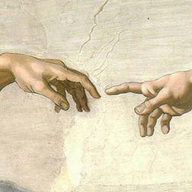
Salvation has a Trinitarian structure: “The Father draws us close to his own heart (having reconciled us in Christ’s death) by stretching out the hand of his Spirit, which draws us to the hand of his Son. Then, grasped between the hands of the Spirit and of Son we are drawn to the Father and held in a Trinitarian embrace” (40). And the pattern of redemption is, for the Trinity-shaped community of the church, the structure of liturgy.
The book is in part a critique of Evangelical worship, and here Parry’s analysis of liturgical song is notable. He surveys music from Vineyard worship services, discovering that only 1.4% are “three-person songs,” while over half(51%) are “You Lord” songs that do not reflect a Trinitarian outline. Another 30+% are Jesus-only hymns (114-5). Parry knows that Vineyard doesn’t equal Evangelicalism, but the dominance of You-Lord and Jesus songs does seem fairly widespread.
Along the way, a couple of alarms went off in my Puritan head, beginning with the analysis of songs. While I of course have no quarrel with explicit references the Trinity in hymnody, I don’t think this should be the main emphasis of Christian liturgical music. Rather, the recovery and mastery of the Psalter should be central (which is Trinitarian hymnody, when sung Augustinely). Party also suggests that the Trinity might be communicated in various media - dance and art, as well as in preaching and Eucharist. But in a church that doesn’t even do the Eucharist, are we really well-prepared to adorn our worship fittingly?
Which leaves me thinking that we should spend a generation or two striving for richly Trinitarian preaching, regular Eucharist understood as a Trinitarian event, Psalms sung as the songs of Jesus before we know what worship is well enough to think about enhancing it.
Peter Leithart
Peter J. Leithart is President of Theopolis Institute. He is the author of numerous books on theology, literature, and culture, including Theopolitan, Defending Constantine, and Baptized Body.
More from Trinity
Continue reading related articles
Creator and Critics
A response to Jordan Ballor’s review of my Creator , which was published at Acton.org on August 12. 1. Ballor says that, to avoid pantheism or panentheism, God’s identity as creator must be “relative, secondary, or conditional.” He rightly says that I argue the opposite: “God is Creator” is the…

We Are God's Hospitality
The true God, the living God, is a hospitable God. He’s eternally hospitable. The life of God is infinitely faithful, infinitely joyful welcome. God is hospitality. God is hospitable because He’s Triune. As we confess every Sunday, we believe in one God who exists in three Persons. The Son isn’t…
Events and Persons
God is an event, writes Robert Jenson ( Systematic Theology, I , 221). “God is a person,” writes Robert Jenson, on the next page (222). How, Jenson asks, can He be both? Jenson’s rejoinder: How can He not be both? “What else could be a person?” A bit more elaborately:…
In Medias Res
Your weekly digest for all things Theopolis.