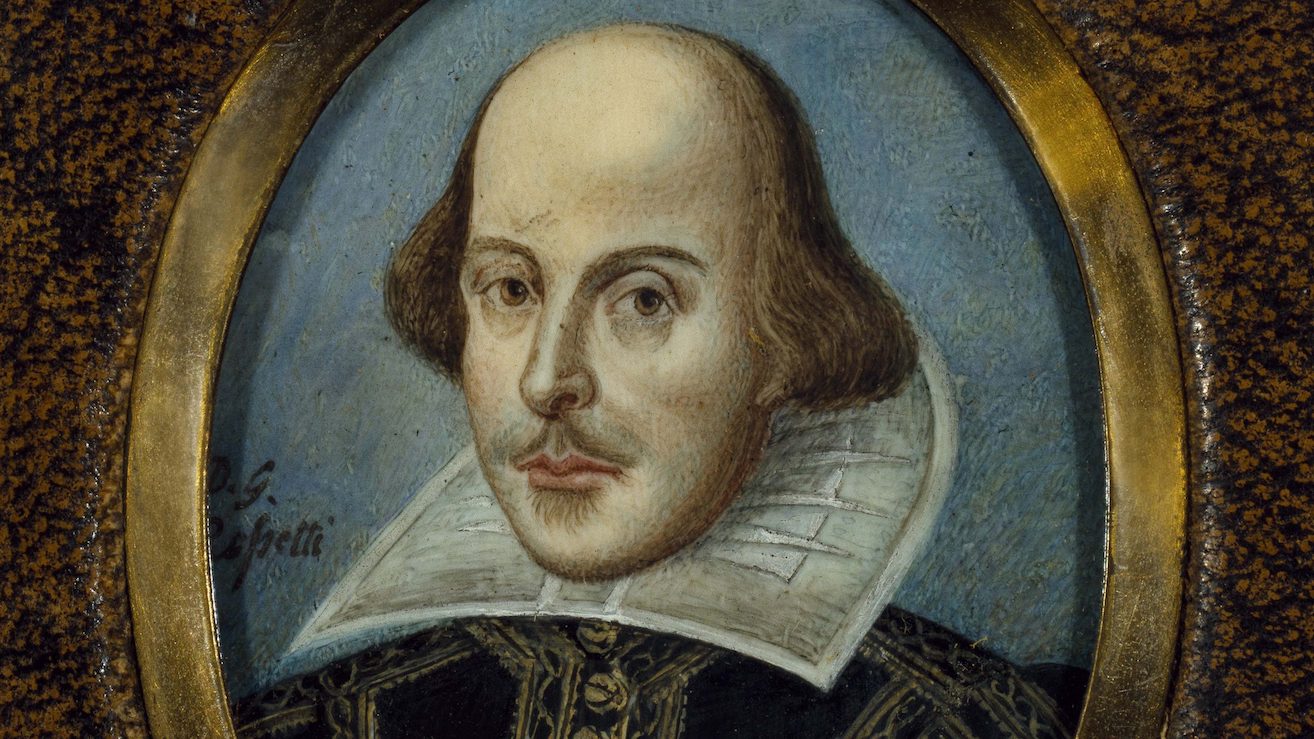
Emily Michael in the July 2003 issue of the Journal of the History of Ideas examines the views of John Wyclif on atoms, hylomorphism, and the mind-body problem, and argues that he represented a “first step towards a modern account of the structure of material substances,” but a step that remained well within the “context of an Aristotelian natural philosophy.” How did Wyclif combine an Aristotelian hylomorphism with a belief in the atomic structure of material substances? Essentially by accepting the Aristotelian assumption that extended matter must be divisible; if this is the case, then there can be no extended atoms, for that would be they would be divisible, and that would mean they no longer play the role that atoms play. Instead, atoms are indivisible because unextended atoms.
Wyclif believed, moreover, that soul and body were really distinct essences, since each can exist without the other. How then does he affirm an Aristotelian hylomorphism? Michael explains: “Body and mind and the composite of both are distinct essences that belond to one person, and one person is numerically one substance. But this consequence follows only if the human body and mind are truly bound together. This, Wyclif contends, is accomplished by a hypostatic union, a bond between the body and mind of each human being willed by God.”
One of the questions this raises is the extent to which Wyclif’s intriguing combination of themes in natural philosophy affected his thinking in other areas, in questions of sacramental theology particularly. There’s an article, perhaps a thesis, to be written there.
Peter Leithart
Peter J. Leithart is President of Theopolis Institute. He is the author of numerous books on theology, literature, and culture, including Theopolitan, Defending Constantine, and Baptized Body.
More from Philosophy
Continue reading related articles
Substance or Tune?
Jonathan Edwards didn’t think the world is a machine. At the heart of the mechanistic interpretation of Newtonian physics, he discerned, was the notion that “bodies” are (in Robert Jenson’s words) “the sort of thing that either can or cannot act ‘properly by themselves.’” The mechanistic world picture involved an…
Paul's Idol Polemics
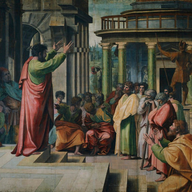
Joshua Jipp argues that Paul's Areopagus address contains both critique and propaganda, critique of Athenian superstition, lust for novelty, and idolatry, and propaganda in favor of Christian faith as a more consistent fulfillment of the aspirations of Hellenistic philosophical theology. Much of the critique, Jipp shows, is drawn from Isaiah's…

Of Causes and Effects
This essay was first published in The Theopolitan, a weekly newsletter for Theopolis Partners. To become a Partner, you must donate at least $500 per year or $50 per month. Give here . Craig Carter’s Thesis #2 about Trinitarian classical theism ( Contemplating God with the Great Tradition ) is,…
In Medias Res
Your weekly digest for all things Theopolis.