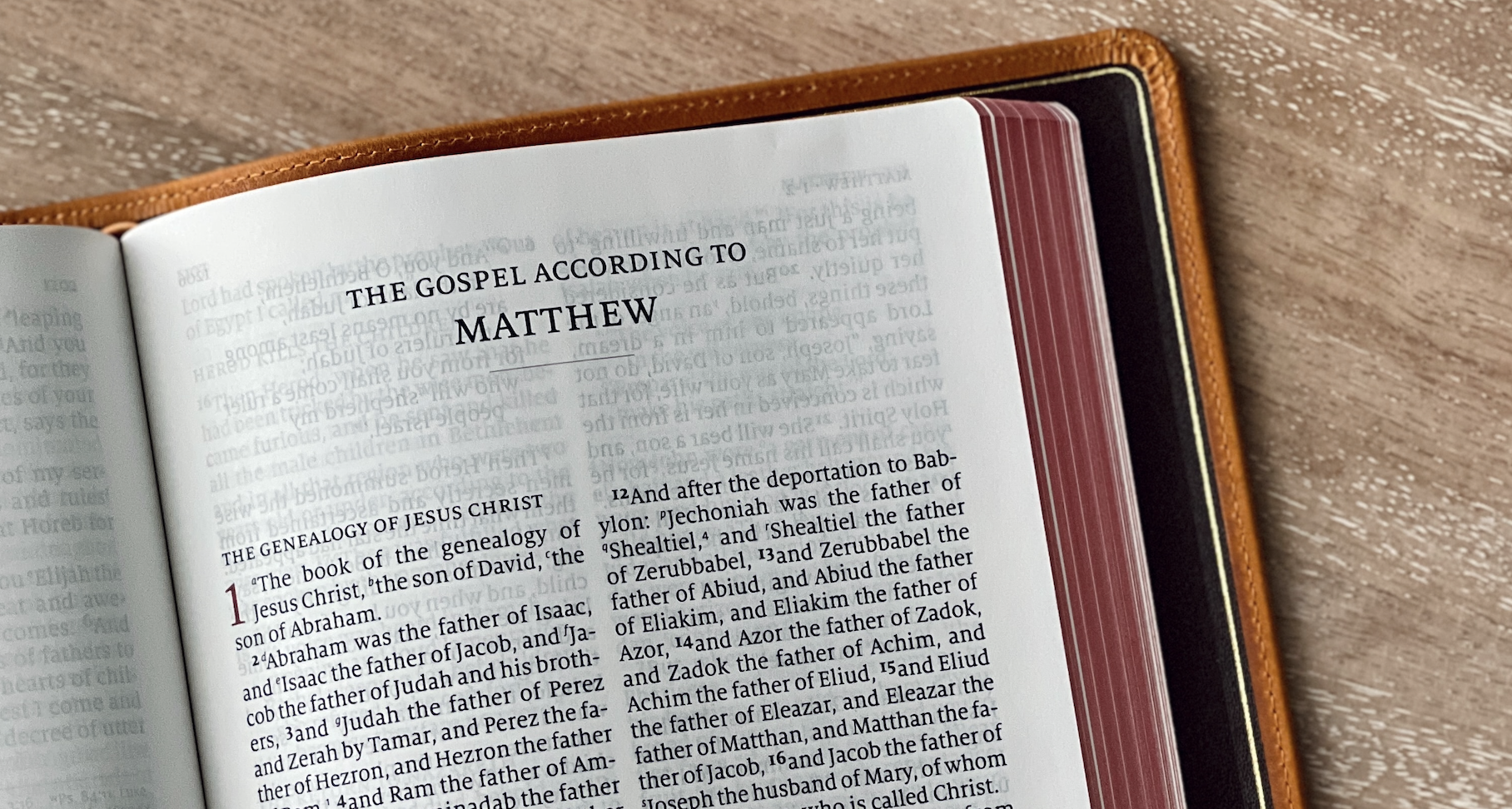
The apostle Matthew is also known as Levi son of Alphaeus. While not much is said about this man, the few things that are told us are significant.
Matthew in Greek is Matthaios and comes from the Hebrew name Mattithiah, or Mattith-Yah, "Gift of Yah(weh)." Matthew’s other name is Levi, which in Hebrew means "Joined" (Genesis 29:34).
If we reflect on these names – and names are almost always significant in the Word of God – some interesting associations can occur to us. The Levites of Israel connected or joined the people to God, for they were the priests and deacons of the nation, mediators between God and the people.
The Levites received the tithe of the people (Numbers 18), and Levi was a tax farmer for the Roman Empire. He left that service to follow Jesus and become a fisher ( = farmer) of men. Tithes and taxes represent the people who give them; Matthew would collect the people themselves.
Moreover, the Levites were the teachers of Israel. To them was committed the task of teaching the Word to the people in the local synagogues and Levitical cities, as well as at the central sanctuary. Is it an accident, then, that the new Levi writes the first gospel, which is a "Mosaic" gospel full of sermons?
Matthew means "Gift of Yah." The Levites of old were given to Yahweh as His servants, but Yahweh gave them back to Israel as teachers and servants of the people.
Finally, I find it interesting that in all of the first three gospels, we find that Matthew Levi holds a feast in his house (Mt. 9; Mk. 2; Lk. 5). The Pharisees complain that Jesus eats and drinks with tax farmers and outcasts. Notice that this is an argument about eating, about the use of food, which was supervised by the Levites and priests. Yet, in the Law there is no prohibition on eating with any group of people; only certain meats are forbidden. Matthew Levi, in his feast, shows what a true keeping of the dietary laws entails.
Moreover, Jesus says that He came not to heal the healthy but the sick, and to save sinners. That was Levi’s task all along. The scribes and Pharisees, who were the heirs of the original Levites, were not doing their job. But Jesus and His new Levi are.
This article was originally published at Biblical Horizons. BIBLICAL Horizons, No. 90
James B. Jordan is a contributor to Theopolis.
More from Matthew
Continue reading related articles
Mission Accomplished: John the Baptizer and the Highway to Holiness (Matthew 11:1–6)
Misreading Intent In the opening verses of Matthew 11, the reader is confronted immediately by John the baptizer who has been imprisoned since 4:12. John poses a question to Jesus, inquiring from prison as to whether or not he is Israel’s awaited Messiah or if they should anticipate another: “Are…
Testimonium Negativum: Josephus, Matthew’s Gospel, and New Evidence for the Coming Christ
1. Introduction In this article, I delve into some parallels found in the scholarly analysis of two important literary works: the Testimonium Flavianum by Josephus ( Antiquities 18.63–64) and the Olivet Discourse in the gospel of Matthew (Matthew 24–25). These texts have been at the center of countless academic discussions,…
Authority that Heals: Unpacking Matthew 4:18 – 10:4
Many years ago, while perusing Janice Anderson’s revised doctoral dissertation, Matthew’s Narrative Web: Over, and Over, and Over again , I was impressed by her attention to literary structures of repetition within and across Matthew’s Gospel. 1 Her research, in part, nudged me closer toward my present conviction that Matthew…
In Medias Res
Your weekly digest for all things Theopolis.