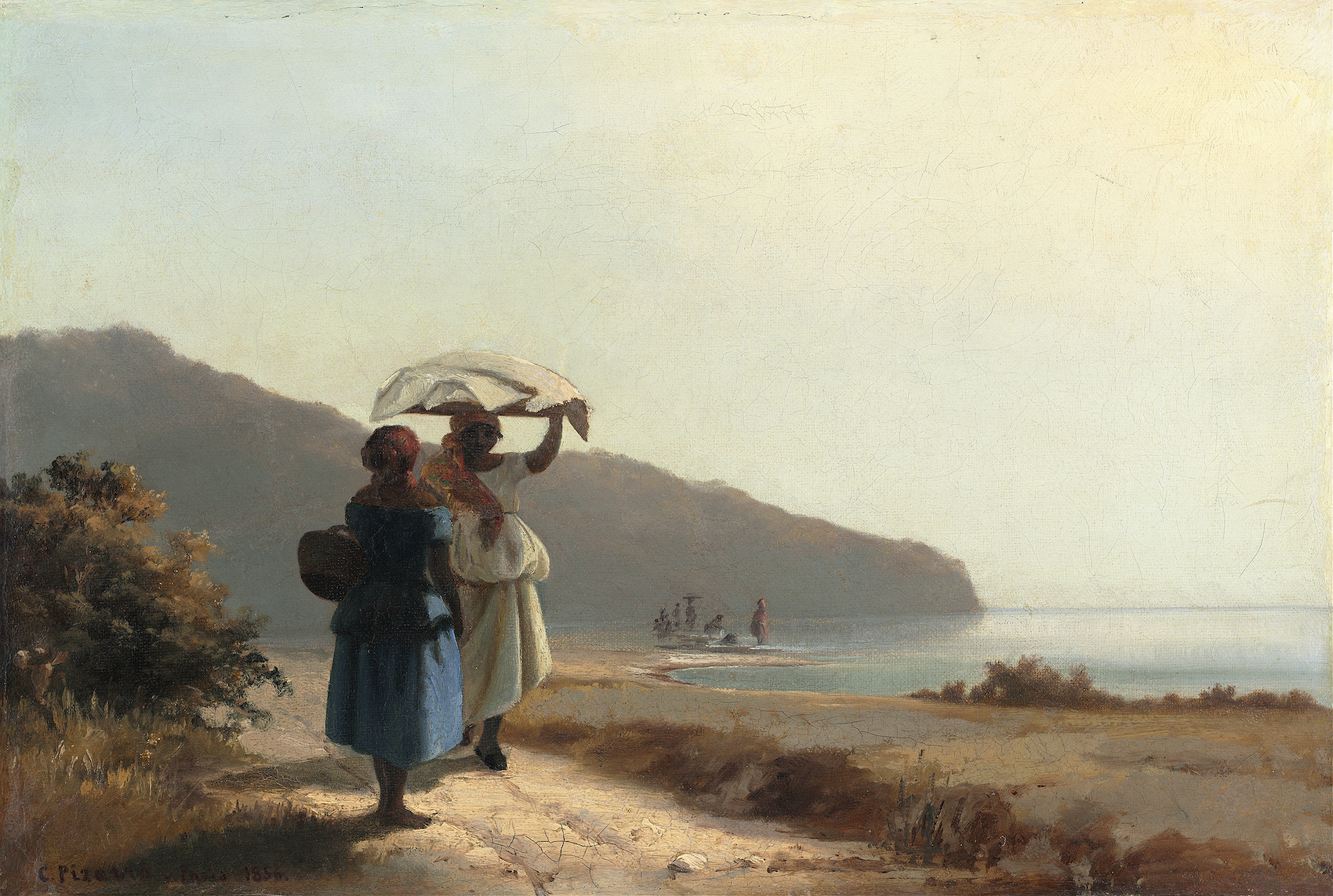
Midwives of a New Israel
Midwives are rarely mentioned in Scripture, but play a prominent role in the first chapter of Exodus. The word midwife is used seven times in verses 15-22, though it is used only twice elsewhere in the Old Testament. The reason, I think, is not merely that the midwives were heroic women who saved the male children of Israel from Pharaoh’s satanic plot. Rather, the midwives are introduced and given prominence here for thematic and theological reasons.
First, the first two chapters of Exodus focus on courageous and faithful women. The dominance of women in the first several events is astonishing; Moses enters a world of women. ("Daughter" is used six times in 2:1-10.) To begin with, midwives save the boys of Israel. Then, Jochebed, Moses’ mother, hides him for three months; though Amram no doubt cooperated in the concealment, he is mentioned only in passing in 2:1 and otherwise the text directs attention entirely to his resourceful wife. Then Pharaoh’s daughter appears surrounded by her maid servants, and has one of them draw Moses from the waters in which so many Hebrew boys had died. Instantly another girl appears, Miriam this time, who promises to find a nursemaid for the baby. When Moses grows to adulthood he becomes the deliverer of Israel, and one of his first acts is to deliver the daughters of Jethro from the shepherds at the well of Midian. His way, however, has been prepared by the actions of women.
Ultimately, the background to this is the promise to Adam and Eve in Gen 3:15: the seed of the woman will crush the head of the serpent. Moses is a type of the Seed, but for the seed to come into the world, there must be women. The midwives, Jochebed, and Pharaoh’s daughter are a kind of collective Eve, working together to bring to life the deliverer who will crush Pharaoh, Leviathan, and redeem His people.
Second, it is significant that the women in Exodus 1:15-22 are midwives. Midwives mediate and oversee the coming into the world of new life, coaching a woman through the pain of labor and ensuring that the new child is born safely. Scripture compares the pain of oppression and judgment and tribulation to childbirth (cf. John 16:21). Our tribulations, Jesus says, are like childbirth because they is painful, but also because they issue in joy and new life. For those who are faithful judgment is unto life. The entire book of Exodus is about the birth of a new people of God through the great labor process of oppression and slavery, the birth of a new people from the convulsions of Egypt. (Compare Matthew 24:8.) So, it is fitting that the book begins with midwives. Just as Moses, having been deli-vered by the actions of faithful women, becomes the deliverer, so the duty of "midwifing" the birth of a new Israel is passed to Moses. As the "nursing father" (Numbers 11:12, KJV), he presides over the painful birth of a new people of God. Drawn out from the reeds along the Nile, he will later bring the people through the Sea of Reeds. As Everett Fox points out, the name "Moses" is formed from the active verb; his name means not "drawn out" but "the one who draws out." Midwifed through the death waters to new life, he will serve as midwife to others.
Peter Leithart is the president of Theopolis Institute. This post originally appeared on Biblical Horizons .
Peter Leithart is a contributor to Theopolis.
More from Hermeneutics
Continue reading related articles

The Trinity and Cross in Creation
At the outset of the Torah (as Christians understand it), a triune God creates the heavens and earth over the course of a seven-day week. Why? What’s the connection between the three and the seven? Could a triune God have created the world over any period of time he chose?…
Jesus Did Not Pray to Avoid the Cross at Gethsemane
Several decades ago, a pastor (and friend) mentioned in passing at one of our regular breakfasts together that he wasn’t satisfied with the usual reading of Jesus’s prayer in Gethsemane, the usual reading being that Jesus asked the Father to avoid the Cross at Gethsemane. We turned to the passage,…
Jonah’s Pauline Move: Finding Mercy for Gentiles in Texts about Mercy for Israel
Jonah is Paul’s typological opposite. Indeed, in the whole Old Testament, it would be difficult to find a more perfect foil to Paul than Jonah. Whereas Paul crosses the sea to enact God’s saving purposes for the Gentiles, Jonah crosses the sea to avoid bringing Gentiles God’s mercy. For that…
In Medias Res
Your weekly digest for all things Theopolis.