And there came a voice from heaven, saying, Thou art my beloved Son, in whom I am well pleased. And immediately the Spirit driveth him into the wilderness. And he was there in the wilderness forty days, tempted of Satan; and was with the wild beasts; and the angels ministered unto him. Mark 1:11-13
When we understand the Biblical imagery that the wilderness is the haunt of wild beasts and demons (Isaiah 13:20-22; 34:11-15; Jeremiah 50:39-40; 51:37; Leviticus 11:13-19; Mark 5:2-5; Luke 11:24; Revelation 18:2) it is then that we see Mark 1:11-12 gives us a shocking juxtaposition. One moment the Father is declaring Jesus as His beloved Son – and immediately afterwards the Spirit drives Jesus far away from civilisation into a barren place of wild beasts and devils where He is tempted by the Devil himself.
How can this be? How can One Whom the Father calls His beloved and well-pleasing Son be immediately cast away from God’s presence into the very company of devils and the chief of devils?
Indeed, as we read on, the whole world that Jesus has entered seems upside down. God’s faithful herald, John the Baptist, is imprisoned (verse 14) and, rather than the wilderness, it is the synagogues and the cities that are filled with demons (verses 23, 33-34) while Jesus, the righteous One, is driven out of the cities (verses 35, 45). The cities have become like the wilderness and the wilderness a place of prayer (1:35) and blessing to which the people resort (1:45).
Of course, this upset began with John the Baptist, the Lord’s forerunner…
The voice of one crying in the wilderness, Prepare ye the way of the Lord, make his paths straight. John did baptize in the wilderness, and preach the baptism of repentance for the remission of sins. And there went out unto him all the land of Judaea, and they of Jerusalem, and were all baptized of him in the river of Jordan, confessing their sins. Mark 1:3-5
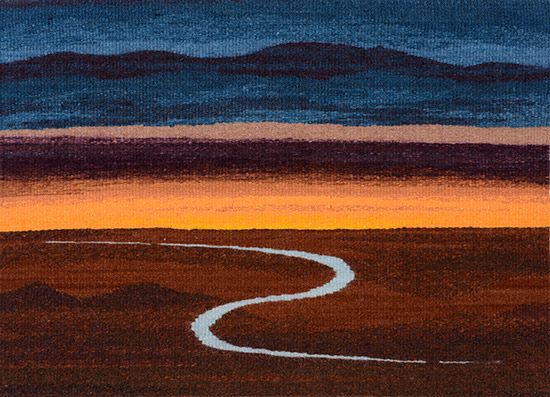
The streaming waters of baptism flowing in the desert show us that Isaiah 35 is being fulfilled.
Jesus comes to the wilderness and turns it into a garden. First, we see it in the literal wilderness where He conquered the chief of demons, and then we see it in the cities that have become like a wilderness, parched ground, cities filled with demons and the moans of the sick.
The Day of Coverings (Atonement) in Leviticus 16 was an annual ritual that put things to rights. So to speak, it turned the world the right way up again. And, like the scapegoat on that day, Jesus is led out into the wilderness, to the devil (Azazel) to begin the work of putting things right, but unlike that scapegoat, He then returns, having conquered Satan, and now He can enter the wilderness that is Galilee’s cities, casting out demons and bearing away in Himself the sickness and infirmities of the people (Matthew 8:17).
The Spirit drove Jesus into the wilderness because only He could turn our wilderness into the garden of the Lord.
Revd. Arthur Kay is a minister in the Free Church of England.
Arthur Kay is a contributor to Theopolis.
More from Atonement
Continue reading related articles

Limited Atonement & J. I. Packer
When I became a Calvinist it wasn't long before I learned that John Owen’s The Death of Death in the Death of Christ was regarded as the masterful treatise on what is known as "Limited Atonement"--the "L" in the TULIP mnemonic device for "the five points of Calvinism." This wasn't…

Footstool of His Feet
The translation and theology of the Hebrew term kapporet have long been puzzling to scholars. On the translation of the term, I have nothing new to offer. I wish instead to concentrate on the theological symbolism of the kapporet . The kapporet was the solid gold slab that laid "above"…
Bearing Sin
Fredrik Hagglund ( Isaiah 53 in the Light of Homecoming After Exile (Forschungen Zum Alten Testament) ) argues against the common notion that Isaiah 53 is about the atoning suffering of Yahweh’s Servant. The Servant’s suffering is vicarious (i.e., he suffers for the sins of others) but it is not…
In Medias Res
Your weekly digest for all things Theopolis.