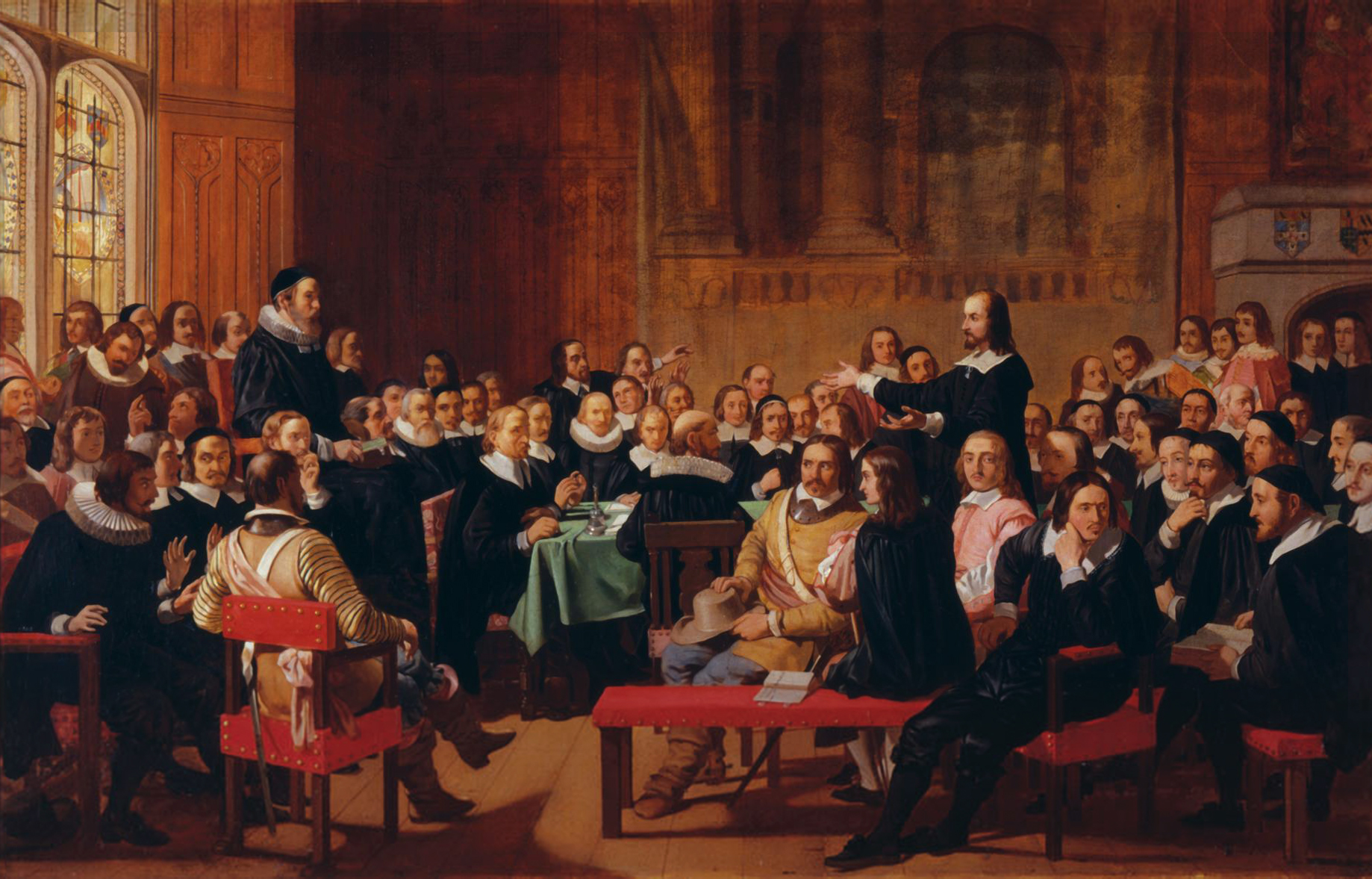
Answer 4 of the Westminster Shorter Catechism is often taken as a magnificent answer to the question, "What is God?" It reads: "God is a Spirit, infinite, eternal, and unchangeable in his being, wisdom, power, holiness, justice, goodness, and truth." Presbyterians are fond of praising this statement, preaching on it, and viewing it as virtually given by Divine inspiration at the Westminster Assembly.
I don’t like it.
I don’t like it because it is a good description of the god of Aristotle.
I don’t like it because it is a good description of the god of Islam.
I don’t like it because it is a good description of the god of Deism.
In short, I don’t like it because there is nothing specifically Christian about it.
To be sure, everything it says is true enough, but (a) it is not specifically Christian; (b) it is abstract; and (c) it does not isolate as fundamental the things that the Bible focuses on.
And thus, I suggest a new answer to a better question: " Who is God?: God is the Triune Creator, Ruler, Lawgiver, Empowerer, and Judge of all things in heaven and earth."
Notice the following specific Christian elements:
First, God is triune. No other religion can say that. It means that God is a Person and also three Persons.
Second, God created heaven and earth. He did not create one realm but two (though they are destined to become one).
These two matters alone eliminate all non-Christian and philosophical notions of "god."
The five attributes mentioned come from the covenant and from history. They affirm that history is real, and that God oversees it. They are not abstractions, but point to God’s activity. Thus:
Third, God is Creator. This affirms the Creator-creature distinction, and thereby implies everything said in the Westminster Shorter Catechism statement, but on a specifically Christian basis.
Fourth, God is Ruler. This affirms Providence, God’s lordship over all transitions in history.
Fifth, God is Lawgiver. This affirms the Word of God, the Bible, as true communication from God to mankind. No philosophy here!
Sixth, God is Empowerer. As the Spirit, God moves all that moves, and gives life to all that lives.
Finally, God is Judge. History is real, and God evaluates it all along the way, intervening at many points, and finally judging it.
I submit that this is a far more Christian description of God than what we find in the WSC .
Is this important? I think so. Historically, Calvinism has repeatedly declined into deism and gnosticism. This is because Calvinism, in spite of being the most consistent form of Christianity thus far, has treated God philosophically, and then added the idea that God is triune, a person, and an actor in history. The Oneness of God is, de facto , treated as more ultimate than His Threeness. For this reason, good Calvinists could be Freemasons and affirm that, for political reasons, the "general oneness of God" was enough. By now it is clear to thinking people that all the water has run out of that particular tub, and we need to ask why our forefathers ever got into that tub in the first place. WSC Answer 4 is one of the reasons.
This article originally appeared at Biblical Horizons.
BIBLICAL Horizons, No. 82
James B. Jordan is a contributor to Theopolis.
More from Biblical Horizons
Continue reading related articles

Priestly Animals
The first commandment given in the Levitical sacrificial legislation has to do with the animals appropriate to sacrifice: "When any man of you brings an offering to the Lord, you shall bring your offering of cattle ( behemah ), from the herd or the flock" (Lev. 1:2). Cattle alone were…

The Bible and Western Literature
The most cursory glance at the history of Western literature reveals that it has been deeply influenced by the Bible. Some of the greatest classics of Western literature draw their plots, characters, and ideas largely from Scripture; Dante’s Divine Comedy and Milton’s Paradise Lost are two of the most notable…

Broadening Our View of the Trinity
This article was originally posted in May of 1994. We speak of God as Father, Son, and Holy Spirit. The early Church tended to speak of Him as Father, Word, and Spirit. In this short essay, I want to suggest some other ways to think of the Trinity, ways that…
In Medias Res
Your weekly digest for all things Theopolis.