
Theopolis Logo

Writing

Explore our collection of theological essays, biblical studies, and reflections on faith and culture.

See all
giammarco-zeh-ljawhtg-unsplash
Biblical Horizons

OPEN BOOK: Views and Reviews

Isaac E. Mozeson, The Word: The Dictionary that Reveals the Hebrew Sources of English (Northvale, NJ: Jacob Aaronson Inc., 1995), 310 pp. Reviewed by James B. Jordan. Once there was only one language in the world, the language God spoke to Adam. At the Tower of Babel, there came to…

by James B. JordanJune 28, 1996
tim-wildsmith-j6jv-mkdzqs-unsplash
Esther

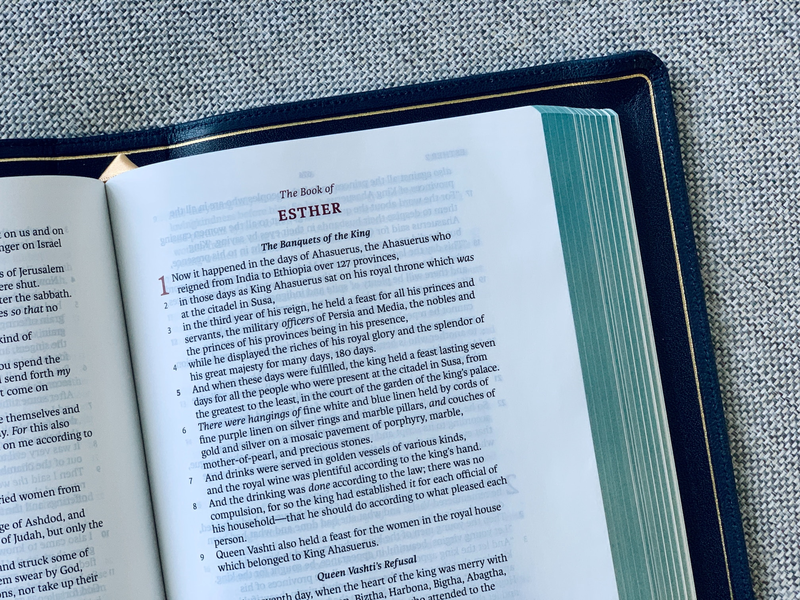
Esther: Historical & Chronological Comments (IV)

2. The Setting of the Book of Esther A. Xerxes (continued from previous issue) Ezra 6:14 says that the Jews finished building "according to the command of the God of Israel and the decree of Cyrus and Darius and Artaxerxes king of Persia." The problem with this verse is that…

by James B. JordanJune 28, 1996
ales-krivec-4mibe6zg5r0-unsplash
Acts

Jesus and Amalek

This essay goes with our previous study of the Amalek pattern back in Biblical Horizons No. 2. Since many do not have this essay, entitled "The Battle of Gog and Magog," let me cite the relevant paragraphs: Note in Genesis 12-15 that Abram moves into the land after escaping Pharaoh…

by James B. JordanJune 28, 1996

aaron-burden-1ebsmyrau-s-unsplash
Proverbs

The Strange Woman

Proverbs 7:6-23 is one of several passages early in the Proverbs in which Solomon warns his son about the wiles and dangers of the "strange woman." It is certainly quite proper to take these as straightforward warnings against sexual sins, and these are certainly warnings that need to be impressed…

by Peter LeithartJune 27, 1996
jan-kahanek-g3o5ztrk2e4-unsplash
Biblical Studies

Some Observations

1. In Luke 4:20 we read that after Jesus finished reading from Isaiah, "the eyes of all in the synagogue were fixed upon Him." This is usually taken in a psychological sense: They were amazed at Jesus somehow. I suggest that, as always, a merely psychological reading is a modern…

by James B. JordanMay 28, 1996
tim-wildsmith-j6jv-mkdzqs-unsplash
Esther

Esther: Historical & Chronological Comments (III)

2. The Setting of the Book of Esther Up to now we have assumed what we must prove, that the king in Esther is Darius the Great. While Biblical chronologists have usually taken this position, commentators on the book of Esther have often taken others as the king. One view,…

by James B. JordanMay 28, 1996

Showing page 265 of 309

See all

Showing page 10 of 43

See all
History

St. Abraham

Rosenstock-Huessy strikingly sees the spirit of Francis in the person of Abraham Lincoln: “When Lincoln, as President and Commander-in-Chief of a victorious army, walked into Richmond in 1865, on foot, without escort, St. Francis had conquered the powers of this earth. In Siberia, in Egypt, people would whisper that old…

January 3, 2007
History

Reformation of gift

Natalie Zelmon Davis writes, “In a profound sense, the religious reformations of the sixteenth century were a quarrel about gifts, that is, about whether humans can reciprocate to God, about whether humans can put God under obligation, and about what this means for what people should give to each other.”

January 3, 2007

As if it were planned

Few areas of theology have been as ridiculed in modern times as eschatology. Antichrists, dragons, beasts, final judgments - it’s all superlatively mythological for modern rationalists. Sometime in the early part of the twentieth century, however, New Testament scholars began rediscovering the centrality of eschatology in NT theology. For some,…

January 3, 2007
Economics

Work and teaching

Discussing the separation of workplace and home, Rosenstock-Huessy makes the striking observation that this divide separates labor from a man’s “right to teach, once the supreme value of a master’s earthly life.”

January 3, 2007
History

Exorcising the family

The Protestant Reformation had well-known effects on the nuclear family, but Rosenstock-Huessy notes that a parallel movement occurred in the Roman Catholic church after 1500, when Catholics began to “lay far more stress on the cult of St. Joseph and on the conception of the Holy Family.” As a result,…

January 3, 2007
History

Childbirth again

In The Christian Future , Rosenstock-Huessy again makes some passing comments about childbirth. He is talking about the character of suburban life, its ethnic and economic uniformity, its placid and indifferent external peacefulness that hides, he claims, desperate inner conflicts. For Rosenstock-Huessy, the whole situation is summarized by the fact…

January 3, 2007

Showing page 1743 of 2212

Browse by Category

In Medias Res

Your weekly digest for all things Theopolis.

Donate

Theopolis is nearly 100% donor-supported. Consider joining us on our mission.