Theopolis Logo

Writing

Explore our collection of theological essays, biblical studies, and reflections on faith and culture.

See all
tanner-mardis-xuxghzhibn4-unsplash-1-2
Biblical Studies

Tweets-turned-Notes on the Bible’s Chronology

Summary In what follows, I will consider the “year-stamps” employed in Scripture, i.e., statements of the form, “Such-and-such an event took place in the Xth year of Y.” In the process, I will suggest some ways in which the Biblical narrative might relate to events in the extra-Biblical world, though…

by James BejonJuly 16, 2019
durer-prodigal-son-2
Luke

Perspectives on the Prodigal, (Part 2)

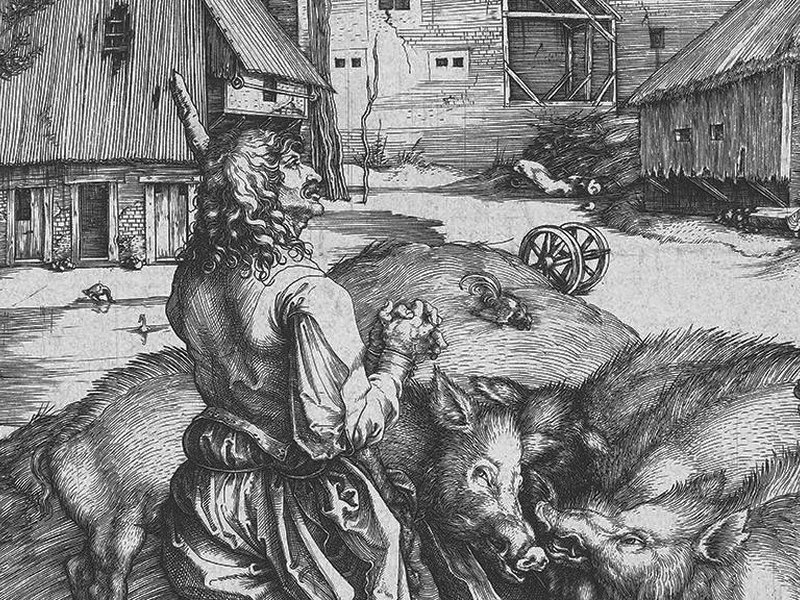
In the first essay on the parable of the Prodigal Son, I suggested that the problems commentators and others encounter in interpreting Jesus three-part parable are not accidental. These are not just problems in our ignorance of cultural background. They are intentional features of the stories —stories designed to poke…

by Ralph Allan SmithJuly 11, 2019
durer-prodigal-son-2
Luke

Perspectives on the Prodigal, (Part 1)

The story of the Prodigal Son is perhaps the most well-known story in the Bible. As others have observed, it may also be one of the most misunderstood. In two short essays, I will point out features of this story that are commonly neglected, aspects of Jesus’ parable that might…

by Ralph Allan SmithJuly 9, 2019
de-rijke-man-en-de-arme-lazarus-by-jacopo-da-ponte-16th-century
Luke

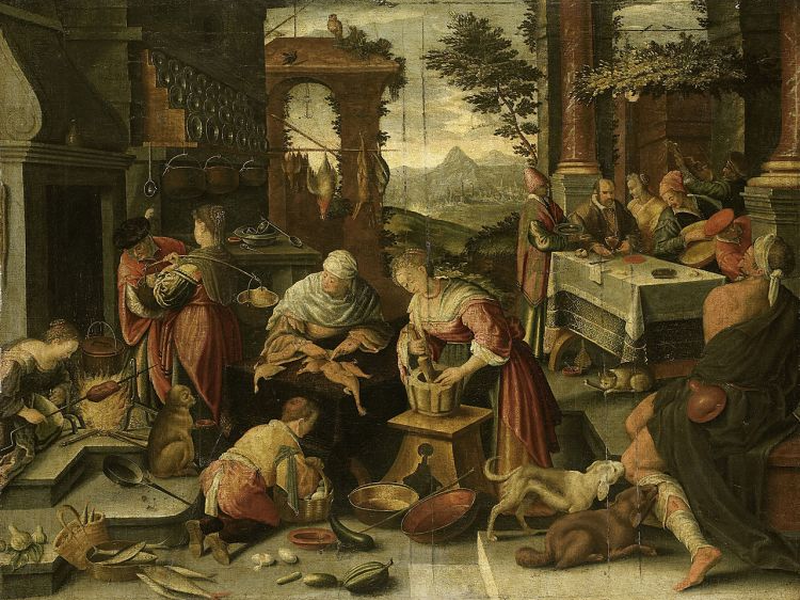
Lazarus and the Rich Man

The parable of Lazarus and the nameless rich man is not an independent story. It is part of a long context that begins in Luke 15:1, where Jesus is eating with tax collectors and sinners and the scribes and Pharisees grumble. In response to their hardheartedness, Jesus tells a three-part…

by Ralph Allan SmithJuly 4, 2019
aaron-burden-uynrnfdkjwg-unsplash
Luke

Everybody has Dropsy - Luke 14:1-24

The Bible is written so that even when a reader cannot pick up on what might be deeper or more detailed aspects of a text, there is virtually always a message to be heard. In the ancient world, where the “reader” of Scripture would likely be a church official facing…

by Ralph Allan SmithJuly 2, 2019
communion
Biblical Theology

Fruit Trees and Grain Plants

The distinction between garden (or vineyard) and field begins in Genesis 2. This relates to the ordering of the formless world. Plants of the field are contrasted with the garden planted by God in Genesis 2:5&8. Later on, under the Old Covenant the Israelites will be required to keep their…

by James B. JordanJune 27, 2019

Showing page 77 of 309

See all

Showing page 10 of 43

See all

The Church and Civil Power

The church’s stance with regard to civil order is neatly articulated in Romans, provided we read chapters 12-13 together. Romans 13 makes it clear that God has given rulers the sword, and that they are to use it for just vengeance. They bear the sword to punish evildoers and to…

May 17, 2017
Liberalism

Limitless Liberalism

D espite its claims to the contrary, Patrick Deneen writes in a 2014 piece in The American Conservative , “liberalism was never about ‘limited' government” or curbing absolutism. Rather, liberalism is about “the pursuit and exercise of potentially limitless power toward seemingly ‘limited' ends of securing Rights.” The limitation on…

May 16, 2017

Greatening Greatness

I n David's final speech (1 Chronicles 29), he offers a fivefold praise of God's perfections (v. 11): Yours is . . . 1. Greatness ( gedolah ) 2. Power ( giburah , related to gibbor , “mighty man”) 3. Glory 4. Victory 5. Majesty He adds an expansive note…

May 16, 2017

That Old Capitalist Religion

P atrick Murray's essay in Culmination of Capital lays out sixfold aim of Marx's Capital : to present and examine in the form of a systematic dialectic the social forms constitutive of the capitalist order, beginning with the (generalized) commodity; to expose capitalist society, in its enlightened secularism, to be…

May 15, 2017

Parents as Strangers

I n the Divine Institutes , Lactantius takes on Plato's endorsement of common property. He makes a grudging admission that it might be “supported so long as it appears to refer only to money.” After all, “everyone should be wise enough to despise money!” (translation from From Irenaeus to Grotius…

May 12, 2017

Justice Christianized

“W e dismiss what philosophers take to be the fundamental exercise of justice,” writes Ambrose in his Christianized Ciceronian treatise de officiis (translation, F rom Irenaeus to Grotius , 84-5). According to Ambrose's summary, philosophical justice takes as “the primary criterion . . . that we do no harm except…

May 12, 2017

Showing page 175 of 2212

Browse by Category

In Medias Res

Your weekly digest for all things Theopolis.

Donate

Theopolis is nearly 100% donor-supported. Consider joining us on our mission.