Theopolis Logo

Writing

Explore our collection of theological essays, biblical studies, and reflections on faith and culture.

See all
tim-marshall-k2u71wv2ei4-unsplash
Apostasy

Regeneration and Lettuce

My good friend, Jason Ewert, recently posted a review of Pastor Douglas Wilson’s book, Against the Church . Jason correctly notes that Pastor Wilson’s main pastoral motivation in writing this book is to combat dead orthodoxy. Dead orthodoxy is a real problem in Reformed churches that celebrate the primacy of…

by Garry VanderveenJuly 31, 2014
the_last_supper_-_leonardo_da_vinci_-_high_resolution_32x16-2
Eucharist

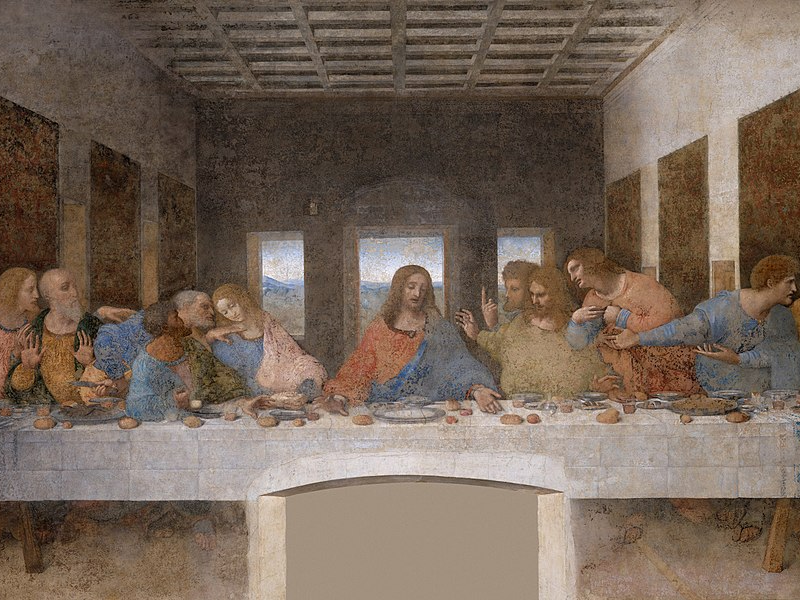
Jesus Eats First

At the church I pastor, we have four servers who distribute the communion elements to the congregation, and I distribute the elements to those in the foyer and nursery. The servers and I do not partake of the bread and wine until the congregation is served first. As this has…

by Burke ShadeJuly 28, 2014
markus-winkler-aid-xyrtlec-unsplash
Theopolis News

Church of the Present, Pastors of the Future

We at Trinity House believe that the church ought to raise and train her future pastors. Part of that training may be carried out by specialized institutions like Trinity House, but the church and her leaders are ultimately responsible for that training. To encourage churches to assume that responsibility, Trinity…

by Peter LeithartJuly 23, 2014
aaron-burden-1ebsmyrau-s-unsplash
Exodus

Mutilated Bodies

Sandra Jacobs's ​The Body as Property examines the role of physical disfigurement in the Hebrew Bible, with focus on the Torah, and more specifically on the (fictitious) Priestly document, P. After an introduction laying out a rationale for the comparative method that guides her research, she explores circumcision, the use…

by Peter LeithartJuly 23, 2014
Isaiah

Saving Judah

Yahweh saves. That’s what Isaiah’s name means, and that’s what Isaiah’s prophecy is about. Yah saves Judah when Aram and Israel pressure her. He saves Jerusalem from the Assyrian siege. He brings Judah back from the grave of Babylonian exile. But this triumphant message of Isaiah fizzles. The last few…

by Peter LeithartJuly 21, 2014
screen-shot-2019-11-12-at-5-58-16-pm
Apostasy

Apostasy and Assurance

Are apostasy and assurance mutually exclusive? Some seem to think so. But let’s consider this a bit: No Reformed man would ever say that a man who is “saved” today will be safe forever no matter what . Rather we say, “your sins are forgiven, now, walk faithfully, glorify the…

by Steve WilkinsJuly 16, 2014

Showing page 171 of 309

See all

Showing page 10 of 43

See all
Philosophy

Continental v. analytic

Continuing through Simon Critchley’s book on Continental philosophy, the following analogy seems to capture some aspects of the contrast of Continental and analytic: Continental is Catholic: conscious of tradition, respectful of saints, aware of historical contextualization. Philosophy is the history of philosophy. Analytic is Protestant: deals with de-contextualized philosophical problems,…

September 14, 2006
History

Modernist postmoderns

Postmodern critics of modernity sometimes treat the latter not only as the pursuit and ambition for totality; they treat it as a totality, as an undifferentiated whole. But if postmoderns are right, even modernity was fragmented and frayed at the edges, and the appearance of totality is a modernist ruse.…

September 13, 2006
History

Modernity and dirt

A subsidiary thesis: Modernity is motivated by a desire for purity, by dirt-avoidance - dirt being, as Mary Douglas says, “matter out of place.” Counter-modernity is dirt’s revenge, celebration of dirt.

September 13, 2006
History

Modernity as court culture

Featherstone once again. He points out that sometime in the 18th century, upper class culture divided from lower class culture: “in 1500 the educated strata despised the common people although they shared their culture. Yet by 1800 their descendants had ceased to join spontaneously in popular culture and were rediscovering…

September 13, 2006
History

Romantic ethic and Consumption

In his 1987 book, The Romantic Ethic and the Spirit of Modern Consumerism , C. Campbell attempts to explain the origins of contemporary obsession with novelty, pleasure in the new, self-expression through consumption of goods. He traces it to romanticism’s focus on “imagination, fantasy, mysticism, creativity and emotional exploration” (Featherstone’s…

September 13, 2006
History

Consumption, Body, and the Sacred

A couple of further notes from Featherstone’s very stimulating book. First, citing Pierre Bourdieu, he notes the limits of seeing consumption as an isolated marker of status. The signs “that betray a person’s origins and trajectory through life are manifest in body shape, size, weight, stance, walk, demeanour, tone of…

September 13, 2006

Showing page 1794 of 2212

Browse by Category

In Medias Res

Your weekly digest for all things Theopolis.

Donate

Theopolis is nearly 100% donor-supported. Consider joining us on our mission.