Theopolis Logo

Writing

Explore our collection of theological essays, biblical studies, and reflections on faith and culture.

See all
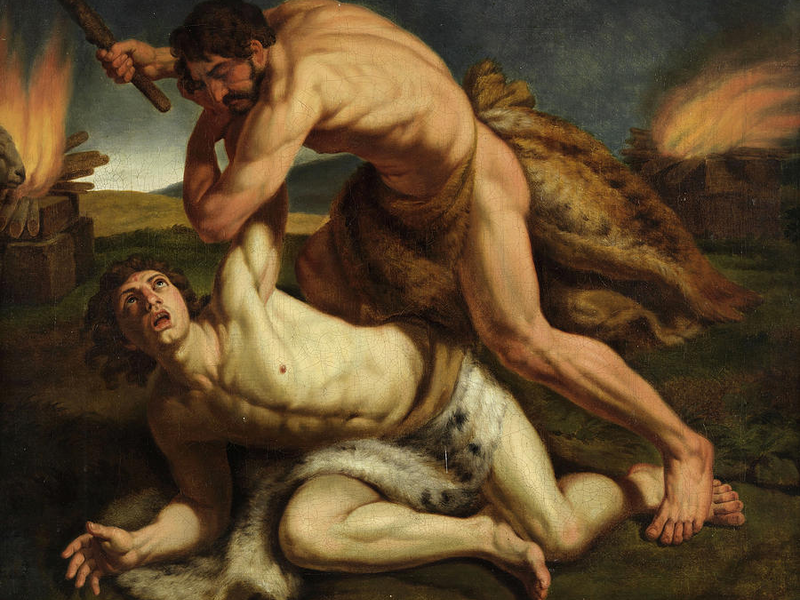
cain-killing-abel-unknown-19th-century
Biblical Theology

The Gospel of Genealogy

Genesis 3 ends on a decisive, and decisively negative, note. Yahweh “drove the man out” of the garden, and, in addition, “at the east of the garden of Eden He stationed the cherubim, and the flaming sword which turned every direction, to guard the way to the tree of life.”…

by Peter LeithartJuly 15, 2014

screen-shot-2017-08-16-at-11-40-48
Books

Catholic Novelist

When she died in 2005 at the age of 72, Anna Haycraft, the author who published under the name Alice Thomas Ellis, was a celebrated writer in Great Britain. While working at Duckworth Publishers(which her husband owned), she produced a dozen novels, a collection of short stories, a cookbook, volumes…

by Peter LeithartJuly 9, 2014
523501ldsdl
History

Postmodernism and Me

Some have suggested recently that my "project" is postmodern. To clarify my views on postmodernism, I'm re-posting something I wrote in 2005, with a few modifications. For a fuller discussion, you can check out my Solomon among the Postmoderns (Canon, 2008). First, it is helpful to distinguish, as many writers…

by Peter LeithartJuly 8, 2014
306571rgsdl
Ezekiel

Holy City

Calling Jerusalem the "holy city" comes so naturally to Christians that it comes as something of a surprise to realize how infrequently the phrase is used in Scripture. Not only is Jerusalem rarely called holy, but in the Old Testament this classification is found only in texts that refer to…

by Peter LeithartJuly 3, 2014
the-choir-lesson-auguste-joseph-trupheme-oil-painting
How to Worship

The Lame Can't Dance

Asking why the church doesn’t sing hymns or even why men don’t sing in church is a bit like lamenting over the lame man who can’t waltz on the dance floor. While it is a valid question, the more immediate question would seem to be, “why doesn’t the lame man…

by Jarrod RicheyJune 30, 2014
ben-white-w8qqn1pmqh0-unsplash
Heresy

Heretics in the Latter Days: The Theme of 1 Timothy

The theme of 1 Timothy is the distinction between the true children in the Household of God and false children who really belong to the household of Satan. This is seen in the fact that in the chiastic structure of the Epistle, heresy is the subject in the center (…

by Joseph NorrisJune 18, 2014

Showing page 172 of 309

See all

Showing page 10 of 43

See all
Economics

Rational Actors

Featherstone claims that economics has generally focused on the production rather than the consumption side of things, perhaps because of “the assumption that consumption was unproblematic because it was based upon the concept of rational individuals buying goods to maximize their satisfaction.” Only in the late 19th century was attention…

September 13, 2006
History

Elites and the Market

Cultural elites have, Featherstone suggests, an inherently ambivalent relationship with the market. His argument, if I understand it, goes something like this: Cultural elites want to preserve a monopolization of cultural products. Hence, for instance, peer review of scholarly work; work that hasn’t passed peer review can be dismissed as…

September 13, 2006
History

McDonald’s and Postmodernity

McDonald’s provides a helpful glimpse at the complexities surrounding postmodernity. On the one hand, the global reach of McDonald’s seems a perfect illustration of one part of the postmodern situation - the global diffusion of American culture and tastes, the plasticity and airiness of postmodern culture, the breaching of national…

September 13, 2006
History

Postmodernism and Globalization

Though often conceived as a crisis within Western civilization, postmodernism, Featherstone argues, is partly impelled by globalization. Globalization, he begins, usually conveys two images - the spread of a single, increasingly uniform culture throughout the world, and the “compression” or layering and juxtaposition of various cultures within a particular location…

September 13, 2006
History

Consumer Culture and Fragmentation

Culture, Mike Featherstone suggests in Undoing Culture , becomes problematic in consumer societies. How? As developed in cultural anthropology, culture is “somehow homologous to the distinctions, differences, and divisions between social groups who unconsciously use culture as relatively fixed markers in status games.” But in consumer societies, there is little…

September 12, 2006

Showing page 1795 of 2212

Browse by Category

In Medias Res

Your weekly digest for all things Theopolis.

Donate

Theopolis is nearly 100% donor-supported. Consider joining us on our mission.