Theopolis Logo

Writing

Explore our collection of theological essays, biblical studies, and reflections on faith and culture.

See all
emmanuel-phaeton-1bwmfmvybi8-unsplash
Federal Vision

The Righteous Judge

God is a righteous judge, And a God who has indignation every day. If a man does not repent, He will sharpen His sword; He has bent His bow and made it ready (Psalm 7.11, 12). David’s inspired lyrics do not sound very encouraging to modern ears–especially to modern Christian…

by Mark HorneJune 7, 2003
screenshot-2024-06-07-at-11-46-17-am
Luke

The Justification of the Good Samaritan

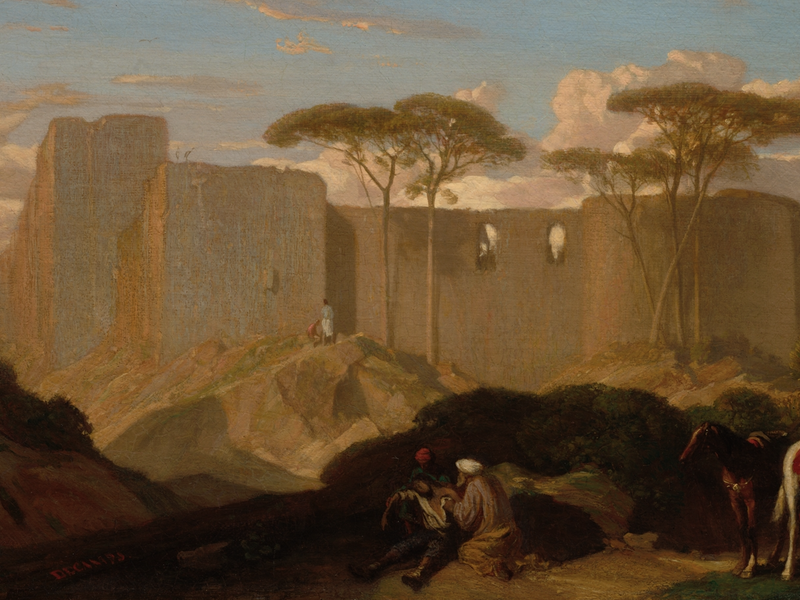
The story of the Good Samaritan (Lk. 10:25-37) is one of the best known and most loved of Jesus’ parables. I am not going to attempt to exegete the passage, as that has been done admirably and ably by others. Rather, I want to briefly examine what bearing the passage…

by Rich LuskJune 7, 2003
kelly-sikkema-gpoh17dxqdm-unsplash
1 Corinthians

The Grace of Judgment According to Works

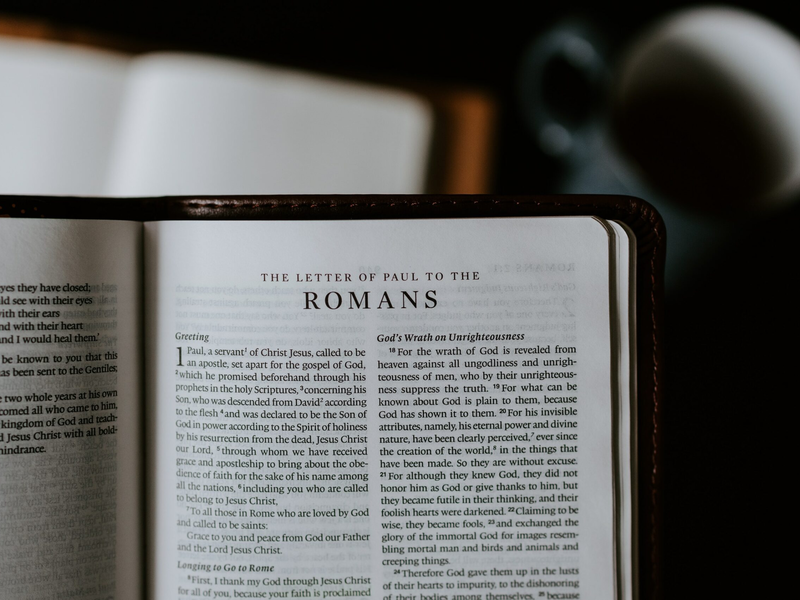
In Romans 2.6-16, Paul writes, He will render to each one according to his works: to those who by patience in well-doing seek for glory and honor and immortality, he will give eternal life; but for those who are self-seeking and do not obey the truth, but obey unrighteousness, there…

by Mark HorneJune 7, 2003
karsten-wurth-imegmbunara-unsplash
Matthew

The Extra Mile: Matthew 5:38-42

It was still dark as David approached the crest of the little ridge. The eastern horizon was not even gray. It was early. But he knew this trail well. Every morning before dawn and every evening before dark, he would walk down to the well and carry water back to…

by Jeff MeyersJune 7, 2003
briana-tozour-mrfapsuyy8a-unsplash
Romans

Romans and God's Covenant Loyalty

The theme of Romans is the righteousness of God (Rom. 1:16-17). That is to say, Romans is something of a theodicy. Paul is defending God’s covenant faithfulness, particularly in light of Jewish unfaithfulness. How does it work? Without getting into exegetical details, we can still sketch out the big picture.…

by Rich LuskJune 6, 2003
jan-kahanek-g3o5ztrk2e4-unsplash
Federal Vision

Putting the New Perspective into Perspective: Some Thoughts on Second Temple Judaism

The New Perspective on Paul (NPP) is a loosely defined movement held together primarily by a common understanding of Second Temple Judaism. All NPP theologians basically adhere, with varying degrees of intensity and consistency, to Ed Sanders’ claims with regard to the nature of pre-70 A.D. Judaism. Sanders has sought…

by Rich LuskJune 6, 2003

Showing page 229 of 309

See all

Showing page 10 of 43

See all
History

Tensions of Modernity

Whitney (the book is Francis Bacon and Modernity , Yale, 1986) offers some additional meditations on the meaning of “modern” particularly as it relates to Bacon. He defines modernity in terms of the tension between innovation and tradition, the frustration that arises from the revolutionary’s effort to start afresh and…

August 29, 2006
History

Revolutionary Reform

Whitney on Bacon again: “Reform invites analogy and multiple levels of meaning as it variously connects old and new; it exposes the poverty of brute facts by, for one thing, fixing knowledge in a hierarchy of literary kinds or genres. Reformative visions in history grow in part out of biblical…

August 29, 2006
History

Bacon the Prophet

In his defense of the legitimacy of the modern age, Hans Blumenberg attempts to pry apart the legitimate kernel ideas of modernity from the illegitimate, mostly medieval and superstitious, husks by which the kernel ideas were often expressed. Whether this works for any early modern thinker, it does not work,…

August 29, 2006
History

Honor in Therapeutic culture

Bowman examines a scene from The Sopranos where John “Johnny Sack” Sacramoni seeks permission, from Tony Soprano among others to “clip” Ralph Cifaretto for jokingly insulting his wife’s weight, which has done damage to her “body image, self esteem.” None of his superiors will bite, and Bowman notes that the…

August 28, 2006
History

Honor and the Right

There’s a scene in Malory where Launcelot has been caught in Guenevere’s bedroom by his enemies, Aggravayne and Mordred, and in the ensuing altercation Launcelot kills 14 knights, all but Mordred, who is wounded. Summoned to appear before Arthur, Launcelot still protests his innocence: “Those who told you such tales…

August 28, 2006
Philosophy

Virtue and Violence

Mandeville made explicit the connection between violence and ancient virtue that Milbank and others have commented on: “The Word Moral, without Doubt, comes from Mos, and signifies every Thing that relates to Manners: The Word Ethick is synonimous with Moral, and is derived from [Greek: ithik], which is exactly the…

August 28, 2006

Showing page 1802 of 2212

Browse by Category

In Medias Res

Your weekly digest for all things Theopolis.

Donate

Theopolis is nearly 100% donor-supported. Consider joining us on our mission.