Theopolis Logo

Writing

Explore our collection of theological essays, biblical studies, and reflections on faith and culture.

See all
elijah-1200x630-min
Biblical Horizons

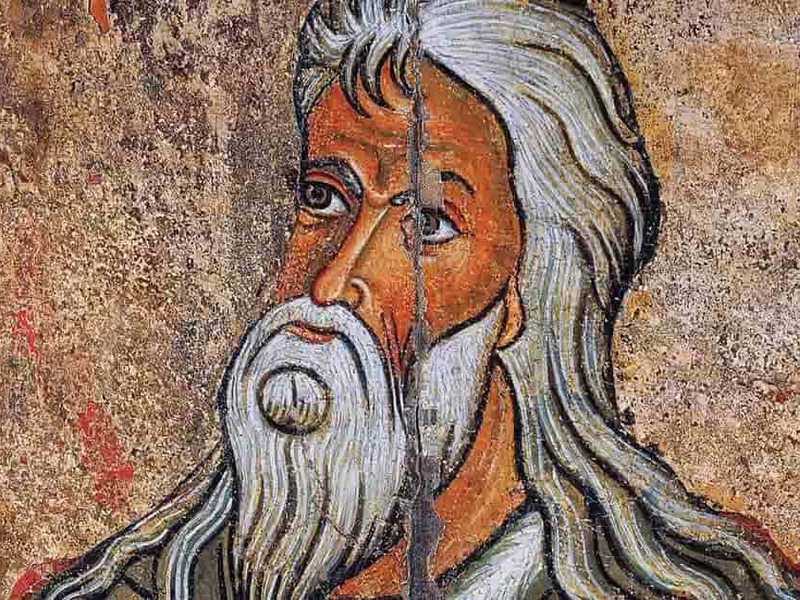
Elijah’s Exodus

1 Kings 17, which abruptly introduces Elijah into the history of the northern kingdom, is a carefully constructed literary unit. In its basic structure, it follows a clear exodus-return pattern. Like Jacob and his sons, Elijah was driven out of the land by a famine (vv. 1-4). In exile, Elijah…

by Peter LeithartJune 17, 1992

ales-krivec-4mibe6zg5r0-unsplash
Biblical Studies

All Things New

Now the Pharisees, who were lovers of money, were listening to all these things and they were scoffing at Him. And He said to them, "You are those who justify yourselves in the sight of men, but God knows your hearts; for that which is highly esteemed among men is…

by Mark HorneJune 6, 1992
aaron-burden-h8s0pf2rcqs-unsplash
Biblical Chronology

Chronologies and Kings, Part 11: The Knots of 2 Kings 11-14

In the year 3119, Ahaziah of Judah and Jehoram of Israel were both slain by Jehu as he carried out his God-appointed task of eliminating the seed and house of Ahab (2 Kings 9:13-33). Since the kings of Israel are usually counted as beginning their reign in the same year…

by James B. JordanMay 24, 1992
trnava-university-beeyeib-am8-unsplash
Biblical Studies

Gleanings from Robert Alter’s "Art of Biblical Narrative"

One of the most important developments in Biblical studies in recent years has been a movement of scholars devoted to studying the literary techniques of the Biblical writers. Tremper Longman, III of Westminster Theological Seminary has treated this movement from a Reformed perspective in his Literary Approaches to Biblical Interpretation…

by Peter LeithartMay 17, 1992
ian-schneider-iqbc4vu4ypq-unsplash
Biblical Horizons

Tentmaking

And because [Paul] was of the same trade, he stayed with [Aquila and Priscilla] and they were working; for by trade they were tentmakers (Acts 18:3). The fact that Paul was by trade a tentmaker has usually been taken as the springboard for a discussion of whether pastors should have…

by James B. JordanApril 24, 1992
screen-shot-2022-05-12-at-12-07-23-pm
Biblical Studies

Chronologies and Kings, Part 10: Jehoram of Judah

I pointed out in Chronologies and Kings Part 9 that the years of Judah’s kings are given in chronological fashion. "When we read of a Judahite king’s reign as lasting 4 years, it means that 4 years of the chronology have been given to him, and there is no chronological…

by James B. JordanApril 24, 1992

Showing page 290 of 309

See all

Showing page 10 of 43

See all
History

Modernity of Postmodernism

Postmodern reading is characterized by a hermeneutics of suspicion, but in this postmodern critics are adopting a stance (sometimes quite consciously) rooted in Marxist and Freudian theory. Butler says, “in concentrating on the notion of hidden contradiction, many postmodernists allied themselves to two highly disputable, and certainly totalizing, 19th-century ideologies.”

August 9, 2006
History

On Getting it wrong

Butler argues that “many postmodern ideas” are “at best confused, and at worst simply untrue.” But he’s pretty sanguine about that: “the essential leading ideas of many cultural epochs are open to the same criticism” - he mentions the Romantic notion of Imagination or the fascination with mesmerism in medical…

August 9, 2006
History

Parochial Postmodernism

Butler points out that postmodernism’s claims that grand narratives are passe is very culturally specific, even parochial, and cannot be sustained as a sociological claim: “allegiances to large-scale, totalizing religious and naturalist beliefs are currently responsible for so much repression, violence, and war . . . . It is obvious…

August 9, 2006
History

Postmodern historiography

After reviewing some of the more radical proposals for a postmodern historiography, Christopher Butler, no friend to postmodernism, makes the sensible suggestion that “Postmodern relativism needn’t mean that anything goes, or that faction and fiction are the same as history. What it does mean is that we should be more…

August 9, 2006

Matthew’s genealogy

In his midrashic/lectionary treatment of Matthew, M. D. Goulder suggests that “The three fourteens are to a Jew who had read Daniel six weeks of generations; and if six, then looking forward to a seventh, to make a week of weeks . . . . This, then, is to be…

August 8, 2006

Matthew’s genealogy

In his midrashic/lectionary treatment of Matthew, M. D. Goulder suggests that “The three fourteens are to a Jew who had read Daniel six weeks of generations; and if six, then looking forward to a seventh, to make a week of weeks . . . . This, then, is to be…

August 8, 2006

Showing page 1816 of 2212

Browse by Category

In Medias Res

Your weekly digest for all things Theopolis.

Donate

Theopolis is nearly 100% donor-supported. Consider joining us on our mission.