Theopolis Logo

Writing

Explore our collection of theological essays, biblical studies, and reflections on faith and culture.

See all
31-03-0213
Hermeneutics

Apocalyptic Eyes

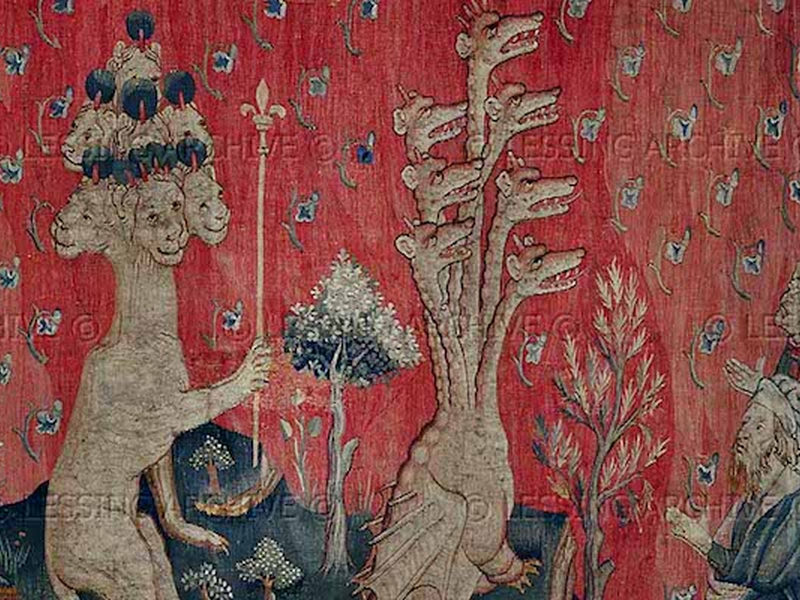
Flying scrolls. Red horses. Beasts coming out of the sea. Winged women. The list goes on. Apocalyptic literature in the Bible is like a cross between science fiction and Marvel comics. And the Bible has a fair bit of this sort of thing. Daniel sees visions in Babylon, Zechariah sees…

by Toby SumpterNovember 4, 2014

bhm-skyline-2
Theopolis News

New Name, New Look

Trinity House Institute has taken a new name, the Theopolis Institute. This striking new name expresses our unique vision and mission and captures the unified purpose behind all our specific programs and activities. We still have Bible, liturgy, and culture in our tagline. We still offer the same courses on…

by TheopolisNovember 4, 2014
istock_000012860926small
Atonement

Not Fearing the Devil

Adam Kotsko offers a socio-political variation on the Christus Victor atonement theory in his 2010 study, The Politics of Redemption: The Social Logic of Salvation . He does this by explaining "the devil" in terms of the Hegelian concept of "objective spirit," Geist . As Kotsko puts it, Geist "refers…

by Peter LeithartOctober 13, 2014
jez-timms-8muutamcwu4-unsplash
Leviticus

The Meaning of Sacrifice

Two factors keep Nahtali Meshel from discussing the meaning of sacrifice until late in his The "Grammar" of Sacrifice . The first has to do with the texts he draws from: "P says little about the meaning of its rituals" (174). The other has to do with the grammatical theory…

by Peter LeithartOctober 8, 2014
jez-timms-8muutamcwu4-unsplash
Leviticus

Praxemics

Chapter 5 of Naphtali Meshel's The "Grammar" of Sacrifice focuses on "praxemics," the physical actions of sacrificial ritual. Praxemes are constituted by six elements: an "atomact," an elementary physical act or gesture; an actor; an object that is acted up; a target for the action and often for the object…

by Peter LeithartOctober 6, 2014
markus-winkler-aid-xyrtlec-unsplash
Leviticus

Jugation and Hierarchy

Two chapters of Naphtali Meshel’s The “Grammar” of Sacrifice cover what he calls “jugation” and “hierarchies.” The first involves the addition of other materials to an animal offering. Jugates include wine, cereal, and oil that are added to the animals (zoemes) that are offered in sacrifice. Some jugates are coordinated…

by Peter LeithartOctober 1, 2014

Showing page 167 of 309

See all

Showing page 10 of 43

See all
Theology

Exhortation

When he talks about prayer, Calvin emphasizes that everything in Scripture encourages us to pray. Our condition encourages us to pray: We have no good in ourselves, no hope for salvation in our own efforts; and therefore we must seek help from outside ourselves. The gift of Jesus encourages us…

August 6, 2006

Matthew and Stephen

Assuming that Matthew was composed very early in the history of the church - in the early 30s, I suspect - it fits neatly into the early persecution situation of the church. As a retelling of Israel’s history, it mimics Stephen’s sermon, which presents the history of Israel as a…

August 5, 2006

Partners with God

Albert Wolters suggests in an old Calvin Theological Journal article that Peter’s phrase “partakers of divine nature” should be understood covenantally, rather than ontologically. “Partaker” should be rendered “partner” and “divine nature” is simply a circumlocution for “God.” We become partners with God when we are delivered from the world.

August 4, 2006

Overshadowing

David Daube suggests in his book on the New Testament and rabbinic Judaism that the image of the Spirit “overshadowing” Mary is ultimately drawn from the image of Boaz covering Ruth with the wing of his garment. The Lord spreads his skirt over Mary - who, like Ruth, calls herself…

August 4, 2006
Biblical Studies

Wrestling with God

The story of Israel is the story of her repeated rejection of Yahweh’s emissaries, and thus of Yahweh himself. The gospel is the announcement that Yahweh will not allow Himself to be rejected: Resurrection is the I in the TULIP. Jacob, the first Israel, wrestled with everyone, and found he…

August 4, 2006

Typology and history

In his classic essay on the “Reasonableness of Typology,” GWH Lampe argued that critical scholarship reintroduced history into biblical interpretation: “In place of the unhistorical attitude which saw the Bible as a vast harmonious complex of prophecy and fulfillment, type and antitype, allegorical picture and spiritual reality, fused together by…

August 4, 2006

Showing page 1818 of 2212

Browse by Category

In Medias Res

Your weekly digest for all things Theopolis.

Donate

Theopolis is nearly 100% donor-supported. Consider joining us on our mission.