Theopolis Logo

Writing

Explore our collection of theological essays, biblical studies, and reflections on faith and culture.

See all
tanner-mardis-xuxghzhibn4-unsplash-1-2
Biblical Studies

Tweets-turned-Notes on the Bible’s Chronology

Summary In what follows, I will consider the “year-stamps” employed in Scripture, i.e., statements of the form, “Such-and-such an event took place in the Xth year of Y.” In the process, I will suggest some ways in which the Biblical narrative might relate to events in the extra-Biblical world, though…

by James BejonJuly 16, 2019
durer-prodigal-son-2
Luke

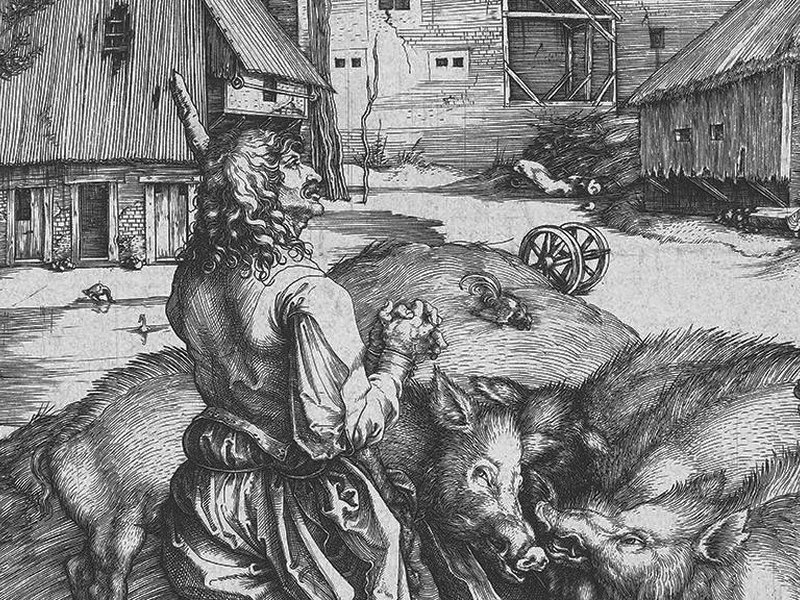
Perspectives on the Prodigal, (Part 2)

In the first essay on the parable of the Prodigal Son, I suggested that the problems commentators and others encounter in interpreting Jesus three-part parable are not accidental. These are not just problems in our ignorance of cultural background. They are intentional features of the stories —stories designed to poke…

by Ralph Allan SmithJuly 11, 2019
durer-prodigal-son-2
Luke

Perspectives on the Prodigal, (Part 1)

The story of the Prodigal Son is perhaps the most well-known story in the Bible. As others have observed, it may also be one of the most misunderstood. In two short essays, I will point out features of this story that are commonly neglected, aspects of Jesus’ parable that might…

by Ralph Allan SmithJuly 9, 2019
de-rijke-man-en-de-arme-lazarus-by-jacopo-da-ponte-16th-century
Luke

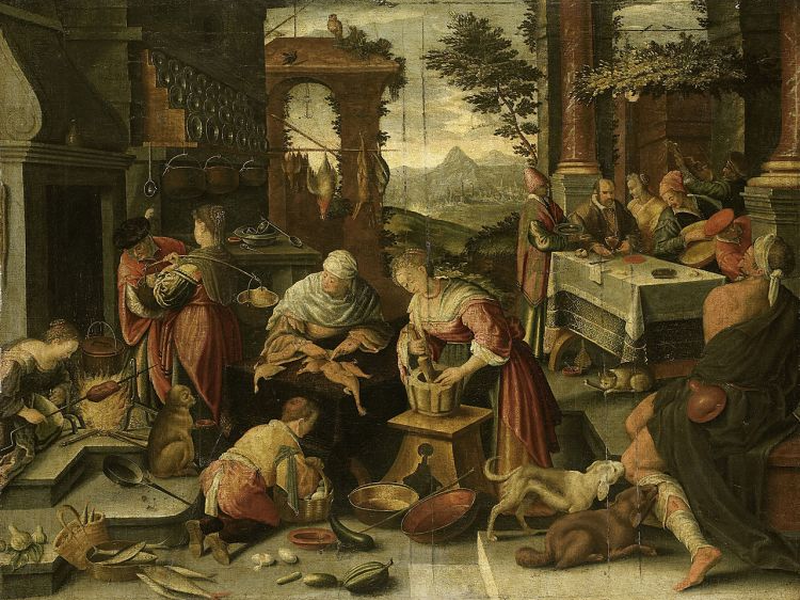
Lazarus and the Rich Man

The parable of Lazarus and the nameless rich man is not an independent story. It is part of a long context that begins in Luke 15:1, where Jesus is eating with tax collectors and sinners and the scribes and Pharisees grumble. In response to their hardheartedness, Jesus tells a three-part…

by Ralph Allan SmithJuly 4, 2019
aaron-burden-uynrnfdkjwg-unsplash
Luke

Everybody has Dropsy - Luke 14:1-24

The Bible is written so that even when a reader cannot pick up on what might be deeper or more detailed aspects of a text, there is virtually always a message to be heard. In the ancient world, where the “reader” of Scripture would likely be a church official facing…

by Ralph Allan SmithJuly 2, 2019
communion
Biblical Theology

Fruit Trees and Grain Plants

The distinction between garden (or vineyard) and field begins in Genesis 2. This relates to the ordering of the formless world. Plants of the field are contrasted with the garden planted by God in Genesis 2:5&8. Later on, under the Old Covenant the Israelites will be required to keep their…

by James B. JordanJune 27, 2019

Showing page 77 of 309

See all

Showing page 10 of 43

See all

Spirit, Charity, Grace

Peter Lombard argued (Book 1, distinction 17 of the Sentences ) that the Spirit is both the love by which God loves us and the origin of the love by which we love Him: “the Holy Spirit is the Love [amor] of the Father and the Son, by which They…

May 18, 2006
History

Dissent and Disestablishment

In another chapter of the same book, Larsen argues that British secularization promoted by Dissenters within England, and on specifically theological grounds. According to the “Protestant Dissenters’ Catechism” (published 1772, by Samuel Palmer), a church is “a congregation, or voluntary soceity of Christians, who meet together to attend gospel ordinances…

May 18, 2006
History

Strauss in England

In his book Contested Christianity (Baylor, 2004), Wheaton historian Timothy Larsen examines the reception of DF Strauss’s Life of Jesus in England. He suggests that only Darwin’s Origin of Species rivals Strauss’s book as a challenge to orthodoxy in Victorian England. Yet, the book’s impact had less to do with…

May 18, 2006

Road to Wittenberg revisited

In response to my comments about the “road to Rome” charge, Eric Enlow of Handong International Law School writes: “I would connect sacramentalism with the road to Rome for an empirical reason. The individuals that I have known who have been most interested in sacramentalism have converted to Roman Catholicism.…

May 16, 2006

Sermon Outline, Sixth Sunday of Easter

INTRODUCTION Manasseh undergoes a demonic “repentance”: Verse 3 says “he turned, he built,” using the Hebrew verb that normally designates repentance (“turn”). He “repents” of Hezekiah’s reforms. Because of this, the Lord determines to repeat in Jerusalem what he did in Shiloh (v. 12; cf. 1 Samuel 3:11; Jeremiah 19:3).…

May 15, 2006

Eucharistic Meditation, Fifth Sunday of Easter

2 Kings 20:8-11: Now Hezekiah said to Isaiah, What will be the sign that the Lord will heal me, and that I shall go up to the house of the Lord the third day? And Isaiah said, This shall be the sign to you from the Lord, that the Lord…

May 14, 2006

Showing page 1841 of 2212

Browse by Category

In Medias Res

Your weekly digest for all things Theopolis.

Donate

Theopolis is nearly 100% donor-supported. Consider joining us on our mission.