Theopolis Logo

Writing

Explore our collection of theological essays, biblical studies, and reflections on faith and culture.

See all
tanner-mardis-xuxghzhibn4-unsplash-1-2
Biblical Studies

Tweets-turned-Notes on the Bible’s Chronology

Summary In what follows, I will consider the “year-stamps” employed in Scripture, i.e., statements of the form, “Such-and-such an event took place in the Xth year of Y.” In the process, I will suggest some ways in which the Biblical narrative might relate to events in the extra-Biblical world, though…

by James BejonJuly 16, 2019
durer-prodigal-son-2
Luke

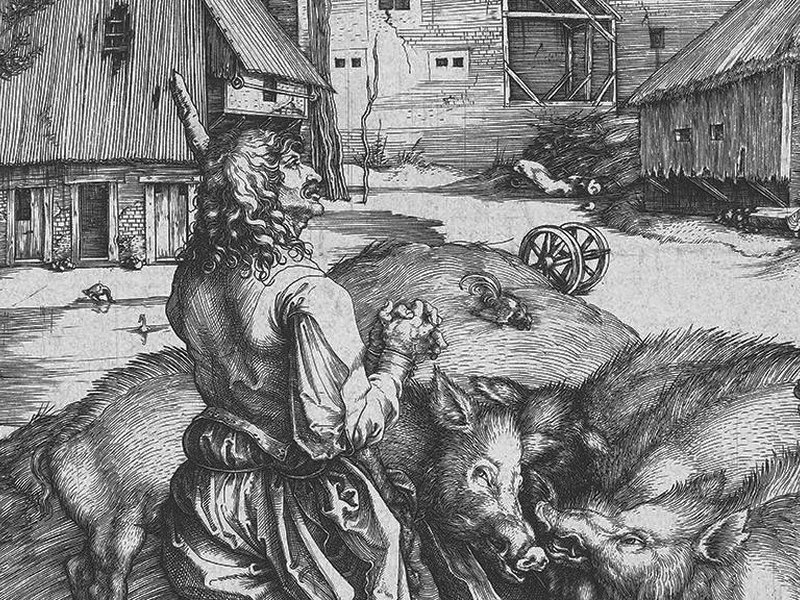
Perspectives on the Prodigal, (Part 2)

In the first essay on the parable of the Prodigal Son, I suggested that the problems commentators and others encounter in interpreting Jesus three-part parable are not accidental. These are not just problems in our ignorance of cultural background. They are intentional features of the stories —stories designed to poke…

by Ralph Allan SmithJuly 11, 2019
durer-prodigal-son-2
Luke

Perspectives on the Prodigal, (Part 1)

The story of the Prodigal Son is perhaps the most well-known story in the Bible. As others have observed, it may also be one of the most misunderstood. In two short essays, I will point out features of this story that are commonly neglected, aspects of Jesus’ parable that might…

by Ralph Allan SmithJuly 9, 2019
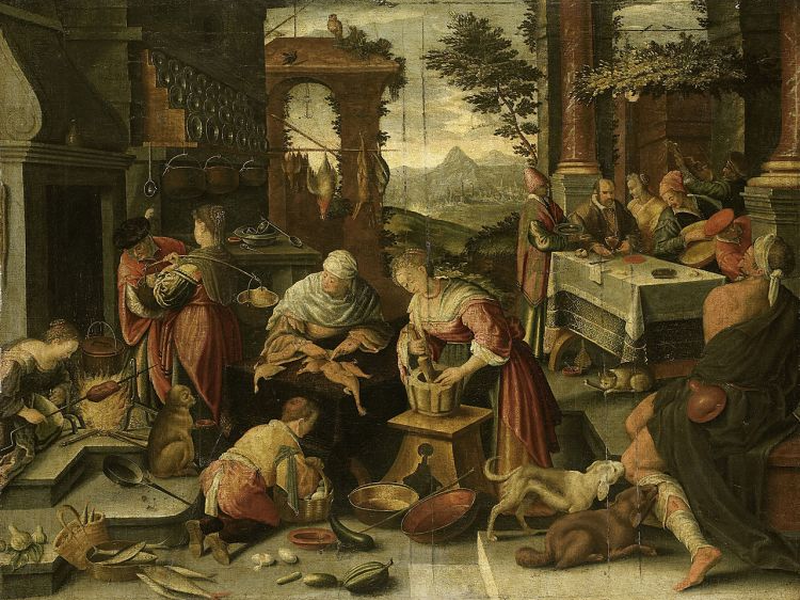
de-rijke-man-en-de-arme-lazarus-by-jacopo-da-ponte-16th-century
Luke

Lazarus and the Rich Man

The parable of Lazarus and the nameless rich man is not an independent story. It is part of a long context that begins in Luke 15:1, where Jesus is eating with tax collectors and sinners and the scribes and Pharisees grumble. In response to their hardheartedness, Jesus tells a three-part…

by Ralph Allan SmithJuly 4, 2019
aaron-burden-uynrnfdkjwg-unsplash
Luke

Everybody has Dropsy - Luke 14:1-24

The Bible is written so that even when a reader cannot pick up on what might be deeper or more detailed aspects of a text, there is virtually always a message to be heard. In the ancient world, where the “reader” of Scripture would likely be a church official facing…

by Ralph Allan SmithJuly 2, 2019
communion
Biblical Theology

Fruit Trees and Grain Plants

The distinction between garden (or vineyard) and field begins in Genesis 2. This relates to the ordering of the formless world. Plants of the field are contrasted with the garden planted by God in Genesis 2:5&8. Later on, under the Old Covenant the Israelites will be required to keep their…

by James B. JordanJune 27, 2019

Showing page 77 of 309

See all

Showing page 10 of 43

See all

Exhortation

The church calendar is essentially a calendar of feast days, preceded by days of preparation for feasting. Advent is a time of preparation for the feast of Christmas, when we celebrate the Father’s gift of His Son; Lent is a time of preparation for the feast of Easter, when we…

February 26, 2006
History

Postmodern mathesis, 2

Kumar argues that postmodernism is characterized by a contempt for the past, and by an embrace of the “depthless present.” The result is an obsession with space: “The plane of the timeless present is the spatial. If things do not get their significance from their place in history, they can…

February 25, 2006
History

Reflexive modernization

Ulrich Beck suggests that the contemporary world is less post-modern than radicalized modernity, a modernity that has become self-conscious and self-reflexive. He writes: “Just as modernization dissolved the structure of feudal society in the nineteenth century and produced the industrial society, modernization today is dissolving industrial society and another modernity…

February 25, 2006

Jehoahaz/Ahaziah

Though not altogether obvious in English, the names Jehoahaz and Ahaziah are variations of the same name (cf. 2 Kings 13). Jeho = iah, both references to Yahweh’s name, and the verb “ahaz” is common to both. “Ahaz” means “to seize, to lay hold,” and the name “Yah lays hold”…

February 25, 2006

Pre-Lent

Many Christians observe the last few Sundays before Lent as “pre-Lenten” Sundays. This might look slightly daft: After all, Lent is itself a period of preparation for Easter, and if we need a time of preparation for the time of preparation, perhaps we also need a pre-pre-Lent to prepare for…

February 25, 2006
History

Post and modernism

Ihab Hassan contrasted modernism and postmodernism by reference to Authority and Anarchy. He suggested, in Kumar’s summary, that postmodernism “involved a tendency toward ‘Indeterminacy,’ a compound of pluralism, eclecticism, randomness and revolt. Indeterminacy also connoted ‘deformation,’ a stress on decreation, difference, discontinuity and ‘detotalization’ which together add up to a…

February 24, 2006

Showing page 1876 of 2212

Browse by Category

In Medias Res

Your weekly digest for all things Theopolis.

Donate

Theopolis is nearly 100% donor-supported. Consider joining us on our mission.