Theopolis Logo

Writing

Explore our collection of theological essays, biblical studies, and reflections on faith and culture.

See all
medievalilluminatedmanuscript
Biblical Studies

The Art of Why

“We have a God who hides things because He loves to be sought out, chewed out and found out.” As Christians, we are rightly taught that we must not question God’s Word. The problem is that the Scriptures record many things which appear to have been given to us for…

by Mike BullMay 12, 2015
last-supper
Revelation

Eucharistic Harvest

The book of Revelation is a liturgy. John begins “in the Spirit” on the “Lord’s day” (1:10). Jesus appears, and Jesus tells him to record messages to seven churches, words of encouragement and rebuke, like the call to worship and confession at the beginning of a Christian liturgy. In chapter…

by Peter LeithartMay 7, 2015
sunrise-2
Creation

Maker of Heaven and Earth, (Part 5)

In my previous posts, I looked at the theme of creation as it is found in a sequence of psalms devoted to Yahweh’s Kingship (Psalms 93-100). Among other matters, these psalms declare that when the Kingdom of Israel’s God comes, it is the Kingdom of the world’s own Creator .…

by Stephen LongMay 7, 2015
13071-probablyvalentindeboulogne-saintpaulwritinghi-1
Deuteronomy

Paul the Levir

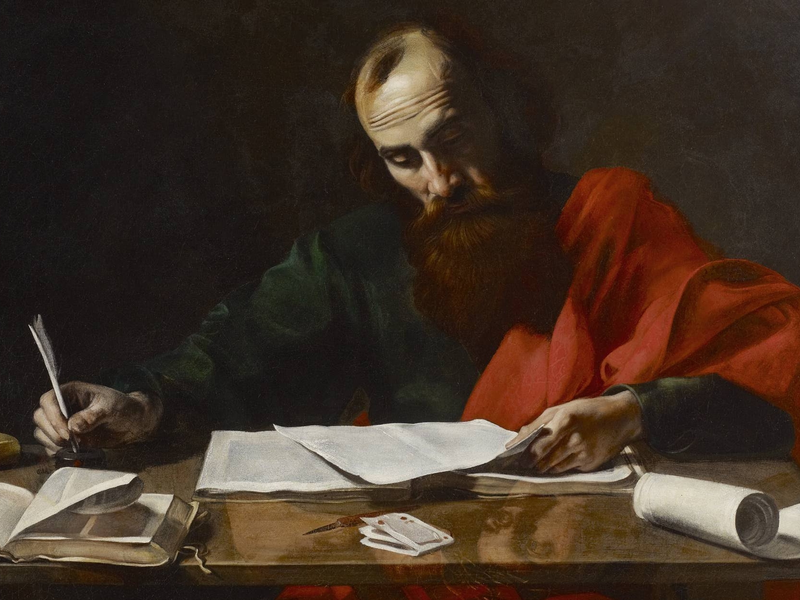
The church in Corinth was a pastoral nightmare. Factionalism, sexual immorality, incipient syncretism, using the church as a stage for self-promotion, and denial of the final resurrection were just some of the problems. In Paul’s first letter to the Corinthian church, he confronts each of these problems directly and in…

by Bill SmithMay 5, 2015
creation-eve
Covenant

Covenant Structure in Genesis 2

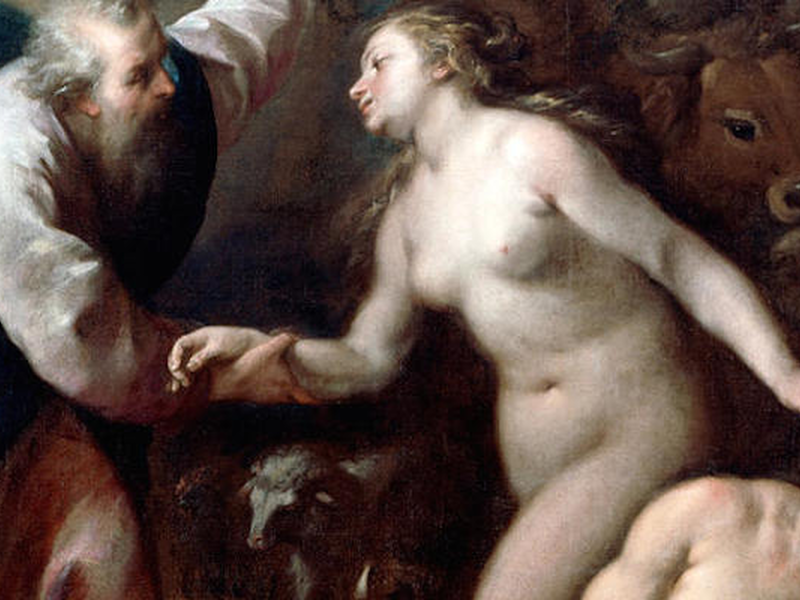
The first chapters of the Word of God have a poetic rhythm. This is used to discredit their accuracy as historical narrative, but the truth is that these same rhythms continue far beyond the book of Genesis. In fact, the later texts shed light on the frustratingly succinct account of…

by Mike BullApril 30, 2015
light-bulb
Creation

Must A Light Bulb Be "Oriented Toward Illumination"?

Mr. Martian: What’s that there? Mr. Edison: (Edison holds up a standard, 60 watt lightbulb). It’s a lightbulb. Mr. Martian: A “lightbulb” you say? What exactly is a “lightbulb”? Mr. Edison: A lightbulb is an object used to illuminate a dark area, say a room. It’s made primarily of filament…

by Gerald HiestandApril 28, 2015

Showing page 154 of 309

See all

Showing page 10 of 43

See all

Age of Silver

D avid's plan for the temple is partly a floor plan. He gives Solomon the pattern for the “porch” and its associated buildings, treasuries, rooms, courts (1 Chronicles 28:11-12). The plan also includes instructions for organizing the priests and Levites (28:13a) and for the utensils of service for the temple…

March 14, 2017

Sources of Inequality

I n his recently-published The Great Leveller , Walter Scheidel summarizes evidence from archeology and anthropological studies to answer the question, Has inequality always been with us? The answer is: Sort of yes. Inequality is a constant in societies that farm and herd. But farming and land ownership weren't the…

March 14, 2017

Classicists and Romantics

D avid gives Solomon the “plan” (Heb. tabnit ) for the temple. Unlike Moses, David doesn't have to climb a mountain to get it (cf. Exodus 25:9, 40). It comes from “the spirit ( ruach ) with him” (1 Chronicles 28:12), and from a “writing” from the Lord that comes…

March 13, 2017

Nietzsche, Destroyer of Idols

I n an essay in the journal European Legacy , Norman Fiering summarizes the thought of Eugen Rosenstock-Huessy on biography. Fiering asks whether there are recurring patterns in the lives of significant individuals, and, relying on Rosenstock-Huessy, calls attention to moments of “conversion” (not necessarily religious) and “grace” (unexpected encounters…

March 10, 2017

Modernist Puritanism

I n his 1971 study of Modernist architecture, The Golden City , Henry Hope Reed observed that Modernists transferred moral categories to architecture. Buildings could be “honest” (if they revealed their structure on the surface) or “false” (if they hid structure under ornamentation). Purity was invoked regularly as a positive…

March 10, 2017

Happy Gothic

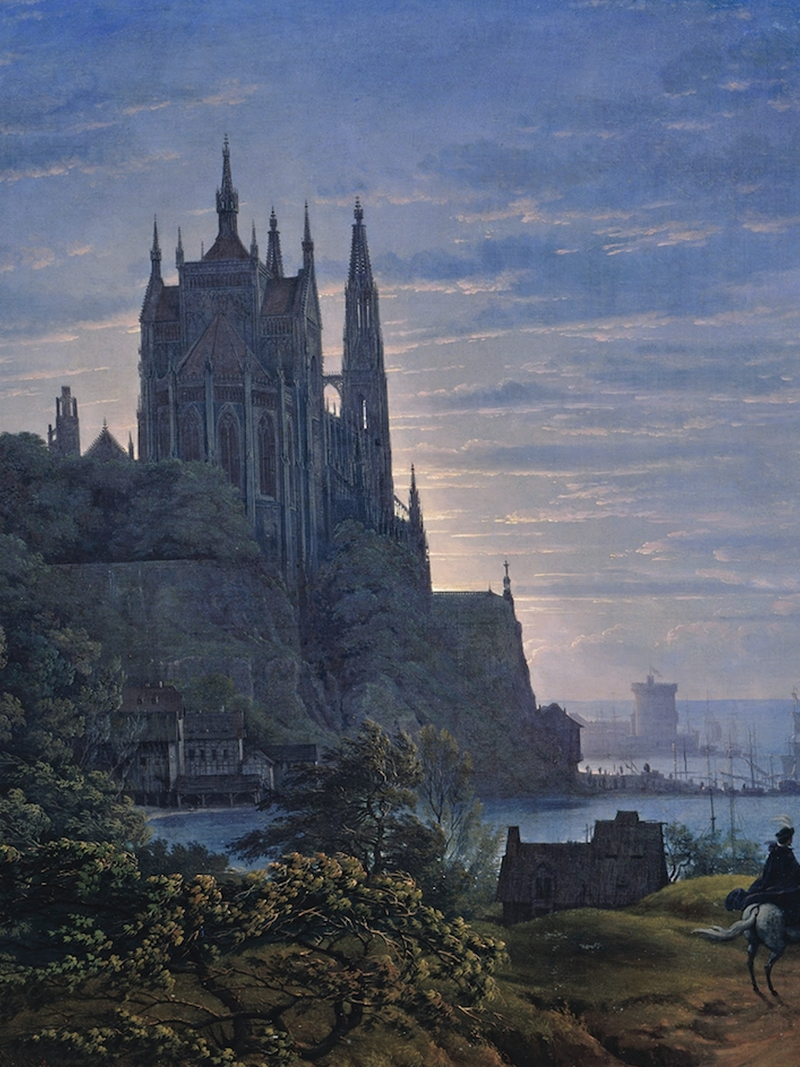
W hat is “the Gothic”? Answers vary, and that is, Catherine Spooner argues (in Post-Millennial Gothic ), because Gothic bears “multivalent meanings” and “has adapted and changed with the times” (9–10). This isn't a recent development: “After Gothic's initial phase of popularity fizzled out around 1820, it quickly renewed itself…

March 10, 2017

Showing page 197 of 2212

Browse by Category

In Medias Res

Your weekly digest for all things Theopolis.

Donate

Theopolis is nearly 100% donor-supported. Consider joining us on our mission.