Theopolis Logo

Writing

Explore our collection of theological essays, biblical studies, and reflections on faith and culture.

See all
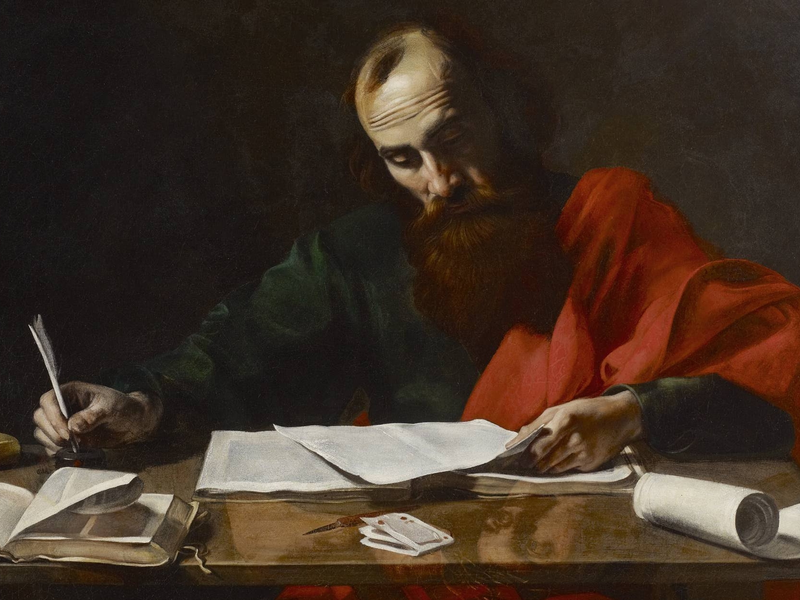
13071-probablyvalentindeboulogne-saintpaulwritinghi-1
Apologetics

Why Did Saul of Tarsus Identify Jesus of Nazareth with the God of Israel?

The god of Israel was not just any god. Two thousand years of Christian history, with it’s besetting philosophical temptations, and full-blown deist and transcendentalist and universalist problems, have obscured the fact that, in itself, the identity of the true god (or gods) cannot be predetermined, any more than the…

by Mark HorneNovember 15, 1998

ivan-aleksic-16yxcjsoaek-unsplash
Biblical Horizons

Crisis Time: Patriarchal Prologue, Part 3

Jacob and Solomon God gave wealth and possessions to Jacob, and then threatened to take them all away at Peniel. Jacob wrestled with God, and through prayer Jacob saw through the crisis by faith and was made victor (Hosea 12:4). The Kingdom period in Israel concerns the same themes. We…

by James B. JordanNovember 4, 1998
Exodus

The Third Word

In our study of the historical impact and unfolding of the Ten Words of God, we now arrive at the Third Word. The Third Word prohibits hypocrisy, and when we realize this, we can see right away that disobeying the Third Word is closely tied to the situation of Israel…

by James B. JordanNovember 4, 1998
kiwihug-l4gw27xzn1i-unsplash
Biblical Horizons

Crisis Time: Patriarchal Prologue, Part 2

Abraham and Joshua In our previous two essays, we considered aspects of the lives of Abraham and Jacob, as these display how God works with men in history. These two men carry in themselves all the future of Israel, so to speak, and their lives at the individual level correspond…

by James B. JordanOctober 4, 1998
maxime-gilbert-x-4nyxvz4r0-unsplash
Biblical Horizons

The Case Against Western Civilization, Part 7

Part 5: Laying New Foundations in a Dying World (continued) Physical Training Though it is seldom recognized any more, the fact is that no liberal arts and no science is possible apart from peace, and peace is only possible if there is a strong military presence that protects a nation.…

by James B. JordanOctober 4, 1998
screenshot-2023-09-11-at-11-34-45-am
Biblical Horizons

Crisis Time: Patriarchal Prologue, Part 1

Last month, in our essay " Patriarchal Dominion ," we observed the flow from Abraham to Jacob to Joseph. Our concern here is to advance our understanding of that narrative flow. I should mention that I am assuming much that is found in my book Primeval Saints: Studies in the…

by James B. JordanSeptember 4, 1998

Showing page 247 of 309

See all

Showing page 10 of 43

See all

Day of Wrath (Romans 2)

What about taking “day of wrath” in Romans 2 as AD 70? Some arguments: 1) Dunn lists the verses that use similar phrases for “wrath and indignation” and “tribulation and distress,” and most of them are about historical judgments on Israel. There’s a cluster of uses in Deut 28:55ff, which…

November 7, 2003
Theology

Intellectualism and Voluntarism both arise

Intellectualism and voluntarism both arise from the same theological error: from the assumption that there is some realm that is independent and autonomous. This is most obvious with intellectualism: For intellectualists, things have indepdendent value that God recognizes and evaluates. Voluntarists are, however, making the same error. They assume that…

November 6, 2003

Studebaker on Pauw

Steve Studebaker writers in the Scottish Journal of Theology (56:3) about Edwards’s trinitarian theology, and includes an extended critique of Amy Plantinga Pauw’s treatment of Edwards’s incipient “social trinitarianism.” According to Studebaker, Pauw’s analysis only works if one assumes that the history of Trinitarian theology can be sketched out as…

November 5, 2003

The Olive Tree (Romans 11)

In the same issue of JSNT, Philip Esler examines ancient oleiculture to illumine Paul’s use of the olive tree image in Romans 11. When he describes branches being grafted into an olive tree, Paul refers to a common practice. But the normal practice is to graft cultivated olive branches onto…

November 5, 2003

Acts 20:20

Jerome Neyrey has an interesting article on Acts 20:20 in the current issue of JSNT. He examines the cultural background to Paul’s use of the phrase “in public and from house to house” by examining various expressions in Greek and Latin writers that correspond to modern “public” and “private.” These,…

November 5, 2003
Literature

Modernity

To what extent is modernity merely a recovery of the tragic? Tragedy, to my knowledge, simply didn’t exist in the medieval world. Drama revived late in the medieval period, but tragedy was reintroduced by the Renaissance. In Shakespeare, the tragic is set in a larger Christian comic setting, with profoundly…

November 5, 2003

Showing page 2170 of 2212

Browse by Category

In Medias Res

Your weekly digest for all things Theopolis.

Donate

Theopolis is nearly 100% donor-supported. Consider joining us on our mission.