Theopolis Logo

Writing

Explore our collection of theological essays, biblical studies, and reflections on faith and culture.

See all
paul-2
Romans

Notes on Scary Stuff in Romans 9

What shall we say then? Is there injustice on God’s part? By no means! For he says to Moses, “I will have mercy on whom I have mercy, and I will have compassion on whom I have compassion.” So then it depends not on human will or exertion, but on…

by Mark HorneFebruary 5, 2015
lunch-counter
American Politics

Covenants of Exclusion

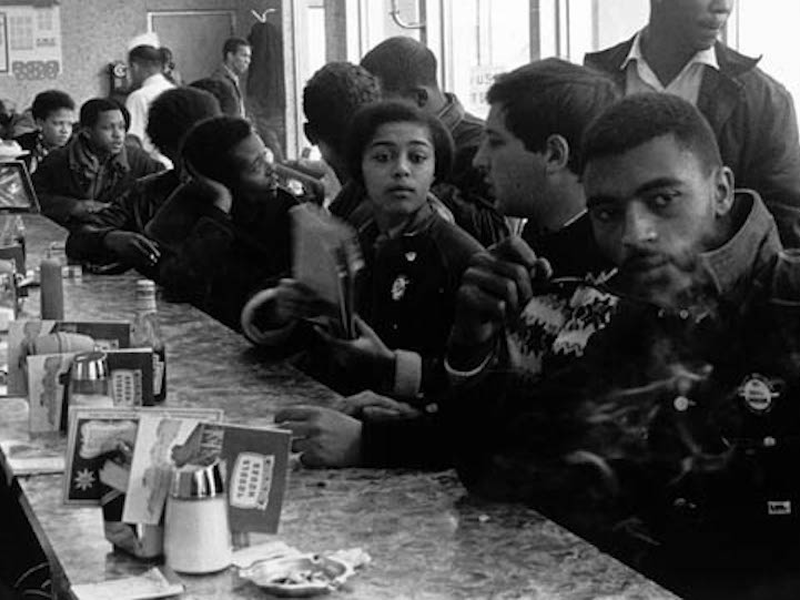
A hundred years ago, William Warley signed a contract to buy a house in Louisville, Kentucky from Charles Buchanan, a white man. Before closing the sale, Warley, who was black, learned that the lot was subject to a city ordinance barring blacks from occupying the premises if most of the…

by Brendan O'DonnellFebruary 3, 2015
shakespeare-2
Literature

The Bard and the Book

I concluded the first essay on this topic by saying that I would introduce three books about Shakespeare and the Bible, but I decided to introduce four instead. The three books become four are: Naseeb Shaheen, Biblical References in Shakespeare’s Plays (London: Associated University Presses, 1999) ; Hannibal Hamlin, The…

by Ralph Allan SmithJanuary 29, 2015
augustine-2
Augustine

Augustine on Pagan Virtue

My children attend a classical Christian school, situated in the independent “free church” evangelical tradition. Over the past few years they have been growing in their acquaintance with the world of Homer, Plato, Virgil, and Livy. They enjoy it, and I envy it. The school is a great school. My…

by Gerald HiestandJanuary 27, 2015
prodigal-son
Atonement

The Prodigal and the Cross

The Prodigal Son parable (Luke 15) has been a favorite of liberal theologians for a couple of centuries. It seems to be a parable designed for liberal sensibilities: An indulgent, accepting Father; forgiveness extended without a cross; a surly older brother who might represent the "conservative" face of religion who…

by Peter LeithartJanuary 22, 2015
sky-from-bridge
Ascension

Underground Man, Ascended Man

“I want now to tell you, gentlemen, whether you care to hear it or not, why I could not even become an insect. I tell you solemnly, that I have many times tried to become an insect. But I was not equal even to that. I swear, gentlemen, that to…

by Richard BledsoeJanuary 20, 2015

Showing page 161 of 309

See all

Showing page 10 of 43

See all

Tangled

E mma Tarlo's recent Entangled is a study of the global market in human hair. In a TLS review , Kathryn Hughes describes a “multi-billion-dollar global hair market.” Tarlo explores “the processes by which the greasy hairballs unpicked in Mandalay get refashioned into ‘frothy toppers' and ‘dome bowlers' in New…

December 2, 2016

Stop!

“S cott Alexander” (a pseudonym) applies some common sense the media characterization of Trump as an “openly racist” candidate dedicated to courting the KKK. He estimates, for instance, that there are 3-5000 Klansman in the US. Over the course of the campaign, he estimates that at least 14,000 articles were…

December 2, 2016

Three Forms of Madness

I n an editorial introduction to King Lear , GK Hunter observes that the play depicts three forms of madness. First, “The Fool has a quality of savage innocence that the other two lack. . . . His stock consists in the main of songs and riddles, nonsense-rhymes and a…

December 2, 2016

Slapstick Tragedy

A lexander Leggatt ( King Lear ) captures the oddity of King Lear by calling attention to the blunt physicality of the play: “The tortured body is a recurring image. . . . According to J.I.M. Stewart, ‘The blinding of Gloucester represents a sort of crystallizing of this element of…

December 2, 2016

Structure and Theme in Lear

N ote #1: Act 1, scene 2 of King Lear , which initiates Edmund's plots against father Gloucester and brother Edgar, is structured chiastically: A. Edmund's first soliloquy. B. Edmund with Gloucester, accusing Edgar. C. Edmund's second soliloquy. B'. Edmund with Edgar, sowing suspicion that Gloucester is suspicious of Edgar.…

December 2, 2016

Freak of History

Diarmaid MacCulloch starts his study of the Reformation, All Things Made New , with a sketch of the medieval world. It's a bit rosy, emphasizing the unity of medieval Europe: “The most noticeable characteristic of Western Europe in what we call the Middle Ages was its cultural and religious unity…

December 2, 2016

Showing page 227 of 2212

Browse by Category

In Medias Res

Your weekly digest for all things Theopolis.

Donate

Theopolis is nearly 100% donor-supported. Consider joining us on our mission.