Theopolis Logo

Writing

Explore our collection of theological essays, biblical studies, and reflections on faith and culture.

See all
e99a7415
Church Calendar

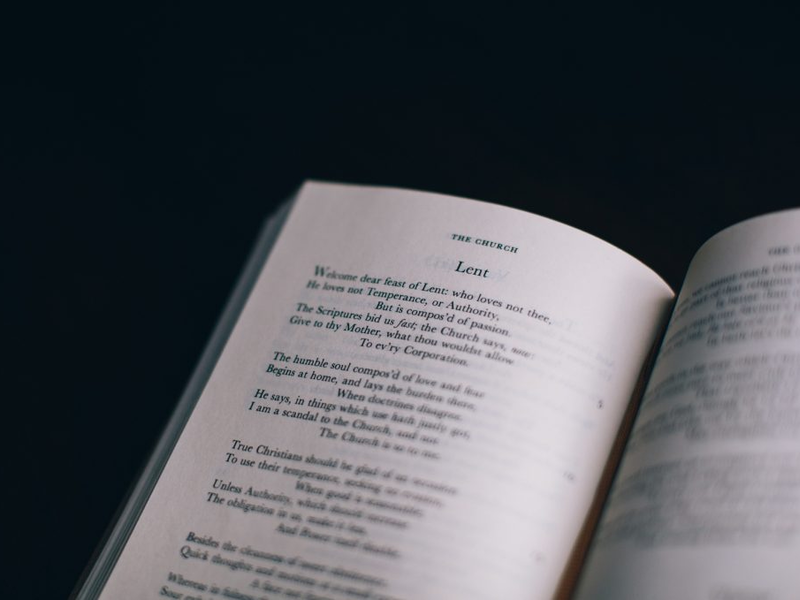
Herbertian Lessons for Lent

I live in an area where Mardi Gras is in full swing, and I can remember from my upbringing that Fat Tuesday was a last ditch effort at debauchery before the pseudo-spiritual practice of “giving something up for Lent” really began. In my youth I would give up some kind…

by Brian G DaigleFebruary 13, 2018

screen-shot-2018-02-08-at-9-58-52-am
Biblical Theology

Of Wine and Wineskins

Part 1: Observations from the Texts (Matthew 9:14-17, Mark 2:18-22, Luke 5:33-39) The precipitating context for the new wine/old wineskins discussion is people asking Jesus why His disciples did not fast. His immediate answer is that you can’t get the friends of the groom to fast at the bachelor party…

by Tim NicholsFebruary 8, 2018
businessman
Culture

True Progress

Simply, “progress” means to move forward. In that sense, a slug can progress from one end of the sidewalk to the other. But for us in twenty-first century America, progress means something else. For us, it is almost a synonym for goodness. The slug can only “progress” if the other…

by Christian LeithartFebruary 6, 2018
woman-bw
Abortion

On Abortion and Real Love

I have the privilege of being able to counsel a lot of women who are seeking abortions. I can tell you that the majority of them are seeking to end their pregnancies not because they feel like it would be a fun thing to do, but because they are scared…

by MargaretAnn HesterFebruary 1, 2018
screen-shot-2018-01-29-at-3-03-21-pm
Culture

What Pastors Could Learn From Jordan Peterson

Last night, along with a few online friends, I watched this debate on the meaning of life between William Lane Craig, Rebecca Goldstein, and Jordan Peterson, hosted by Wycliffe College. While watching it, and reflecting upon Peterson’s work more generally (about which I’ve written in the past ), I was…

by Alastair RobertsJanuary 30, 2018
greg-rakozy-ompaz-dn-9i-unsplash-2
Epistemology

Seeking Integration in a Fragmented World

I’m glad to have been invited to contribute regularly to the Theopolis Institute website. Thank you, readers, for welcoming and joining what I hope will be a venture of integration. Integration itself is what I want to explore. And for me personally, this is the shape of my current integrative…

by Esther Lightcap MeekJanuary 25, 2018

Showing page 99 of 309

See all

Showing page 10 of 43

See all

Sacrilege or Exaltation

T he Hebrew word ma’al is a key term in Chronicles. It means “act of unfaithfulness” or “sacrilege,” and is the sin that leads to Saul's fall (he ma’aled a ma’al , 1 Chronicles 10:13) and to the exile of Judah, whose officials and priests ma’aled a ma’al (2 Chronicles…

November 7, 2016
Reformational Catholicism

End of Protestantism

M y End of Protestantism (the book) deals with a number of the questions Doug Wilson raises in his brief review . Here I correct several of Doug’s misrepresentations and clarify some points, but mainly point to fuller discussions in the book. First, on John 17: Doug says that I’m…

November 7, 2016
American Politics

American Prestige in Freefall

W riting in The Australian , Paul Kelly views the state of American politics from Down Under. He gets some things wrong, I think, but he also nails some of the cultural and political toxins of which the 2016 Presidential debate is symptomatic. He lays much of the blame on…

November 4, 2016

Pain and Negation

I n her The Body in Pain , Elaine Scarry describes the “aversiveness” of our experience of pain. By that, she means that pain is sheerly negative, experienced as something set against us. Even though it is in us, it’s not us. Scarry writes: The first, the most essential, aspect…

November 4, 2016

Aging and the Unmaking of the World

A ge obliterates and collapses our world, writes Elaine Scarry in The Body in Pain (32-3): “the body works to obliterate the world and self of the old person. Something of this world dissolution is already at work even in the tendency of those in late middle age, no longer…

November 4, 2016

Divine Sentience

I n several places in Scripture, idols are characterized by their sensory deprivation (Psalms 115; 135). They have eyes but cannot see, ears but cannot hear prayer, noses but cannot smell incense of sacrifice. By implication, Yahweh the living God can do all these things. Elaine Scarry points out (…

November 4, 2016

Showing page 235 of 2212

Browse by Category

In Medias Res

Your weekly digest for all things Theopolis.

Donate

Theopolis is nearly 100% donor-supported. Consider joining us on our mission.