Theopolis Logo

Writing

Explore our collection of theological essays, biblical studies, and reflections on faith and culture.

See all
last-supper
Luke

Table Talk

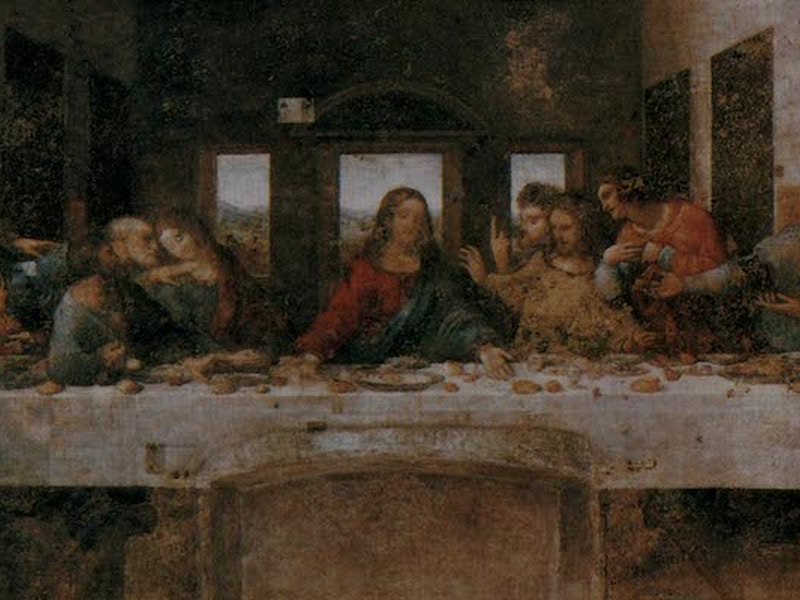
Along His journey to Jerusalem, Jesus stops frequently to have meals, three times with Pharisees (7:37-50; 11:37-54; 14:1-35). Meals were central to Jesus’ ministry. He comes “eating and drinking” (Luke 7:34). While His meals are not just for refreshment, they are opportunities for teaching the protocols of the kingdom. Meals…

by Peter LeithartApril 19, 2016

music-violin
Biblical Theology

A Musical Case for Typological Realism, (Part 4)

Time as a realm of participation can be difficult for us imaginatively to grasp. While music is a profoundly temporal art, exploring the medium of time like no other, most of our temporal experience seems decidedly unmusical in character, disjointed and unorchestrated. The form in which we naturally discover time…

by Alastair RobertsApril 14, 2016
John

Jesus' Burial Clothes

John devotes much attention to Jesus’ burial clothes. He tells us that Nicodemus brought about a hundred pounds of myrrh and aloes to spice Jesus body, and that He was bound in linen wrappings. We find out that His body and His head were wrapped separately. (John 19:39-40; 20:6-7). When…

by James B. JordanApril 12, 2016
clock
Biblical Theology

A Musical Case for Typological Realism, (Part 3)

Thinking about time in terms of music also helps us to appreciate its unity and inner relations. Henri Bergson observes our cultural habit of dividing time into discrete moments, and conceiving of these as if akin to objects in a spatial succession. [1] Against such a notion, Bergson argues for…

by Alastair RobertsApril 7, 2016
screen-shot-2016-03-31-at-9-32-11-am
Biblical Theology

A Musical Case for Typological Realism, (Part 2)

As we attend to these and other aspects of music’s temporality, Begbie suggests, we will find means by which to resist some of our habitual modern ways of conceptualizing time, most especially our tendency to conceive of time as if it were a homogeneous set of technologically quantifiable units laid…

by Alastair RobertsMarch 31, 2016
biblioteca-vasconcelos-crop
Biblical Theology

Systematic Typology (Part Three)

The Hidden Dimension In many fields of scientific study, the apparent complications and contradictions are dispelled once the internal logic is perceived. Biblical hermeneutics is no different, since the author of Creation is the Author of the Word. The Bible’s literary labyrinth radiates organically from an algorithm so simple it…

by Mike BullMarch 29, 2016

Showing page 133 of 309

See all

Showing page 10 of 43

See all

Is Anonymity Still a Thing?

T he literary world is atwitter this week with the revelation of the real identity of Elena Ferrante, the pseudonym used by the author of the acclaimed Neopolitan Quartet. Italian journalist Claudio Gatti reported on his months-long investigation in the New York Review . Gatti’s conclusion, based on real estate…

October 7, 2016
Liberalism

Infantilism and Anti-Paternalism

J ohn Milbank and Adrian Pabst ( Politics of Virtue , 17) claim that “politics should revert to its ancient character as a ‘politics of the soul,’ concerned above all to nurture virtuous citizens, just as parents are concerned above all with the character of their children, precisely because they…

October 7, 2016

Disembedding

J ohn Milbank and Adrian Pabst ( Politics of Virtue , 47) observe that the liberal state claims to release “the economic and social spheres to be pre-politically themselves as natural, meaning true to human biological needs and inclinations.” In fact, however, it “politically produces this sphere of man as…

October 7, 2016

Scarcity

S carcity is one of the central premises of economic theory. John Milbank and Adrian Pabst see the premise of scarcity as one of a triad of pessimistic assumptions that found liberal order - the other two are “ontological violence and natural egoism” ( Politics of Virtue , 48). They…

October 7, 2016

Your Brain On Paper

M atthew Crawford ( The World Beyond Your Head ) observes that we can do simple mathematics in our heads. We can even multiply bigger numbers by breaking them down into smaller ones. At some point, though, most of us lost track: “If one has to multiply 356 by 911,…

October 7, 2016

God's Gift to God

1 Chronicles 17 is the Chronicler’s account of the Davidic covenant, Yahweh’s commitment to the Davidic dynasty. In his response to the Lord’s pledge, David summarizes the aims of the exodus (v. 21). Following the Hebrew word order, we can see a somewhat irregular chiasm: A. And what one nation…

October 6, 2016

Showing page 246 of 2212

Browse by Category

In Medias Res

Your weekly digest for all things Theopolis.

Donate

Theopolis is nearly 100% donor-supported. Consider joining us on our mission.