Theopolis Logo

Writing

Explore our collection of theological essays, biblical studies, and reflections on faith and culture.

See all
cloister

Gatekeepers

1 Chronicles 9:1 seems to bring the genealogies of 1 Chronicles to an end. The Chronicler has recorded the genealogy of the human race from Adam, focusing on the descendants of Abraham through Jacob. Summing it all up, he says, “So all Israel was enrolled by genealogies; and behold, they…

by Peter LeithartJune 21, 2016
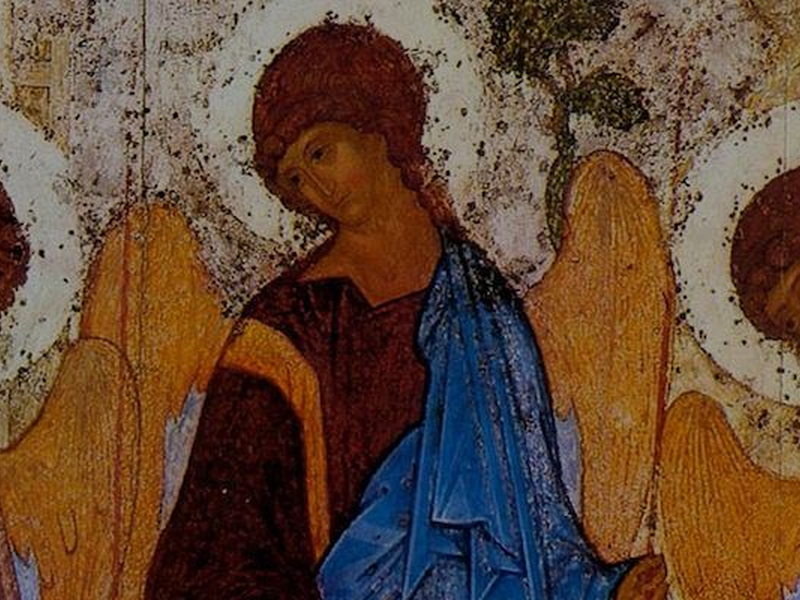
trinity-1-2
Trinity

Are the Divine Persons Persons?

The “personalist” understanding of the Trinity, articulated most influentially in the work of John Zizioulas, has fallen on hard times. Recent scholars have attacked Zizioulas’s idea that Cappadocian Trinitarianism represented an ontological revolution, hammering on the distinction between divine and human personhood. Michel Barnes’s conclusion is the most drastic of…

by Peter LeithartJune 16, 2016
img_4660-2
Architecture

On Biblical Theology

Biblical Theology is often defined as the historical unfolding of God’s revelation, or of God’s revelation and of the history of his covenantal redemption and transformation of humanity and the world. In practice, Biblical Theology is usually broader than this, and also includes the study of literary structure and of…

by James B. JordanJune 14, 2016
laughing_statue_by_xxbobbiie-d5f0meh-2
Humor

Wise Laughter

We are made to be happy. Created to enter into the eternal joy of God, our whole being inclines to that end, but the fallen world has put forth barriers and by our own sin we bar ourselves from that endless delight, and death blinds us to that reality. Yet…

by Remy WilkinsJune 7, 2016
img_7664
Liturgy

Why Theopolis? Take Two

At the end of Revelation, John sees the heavenly city descending to earth. The city shines with the brilliance of God's glory, which lightens the nations, so that kings bring their glory to the city. This is not a vision of the final new heaven and new earth. It's a…

by Peter LeithartJune 2, 2016
trinity-1-2
Attributes of God

How Can We Talk About God?

“No one has ever seen God,” writes John (John 1:18). If this is the case, then how can we speak about God? Some people say we actually cannot. Or at least we cannot speak about God positively, i.e. who He is. We can only say who or what God is…

by Bogumil JarmulakMay 31, 2016

Showing page 130 of 309

See all

Showing page 10 of 43

See all

Copernican Revolution

In the introduction to his Meditations on the Sacraments , Karl Rahner describes what he calls the “Copernican revolution” in sacramental theology. To explain the shift in perspective, he asks how Christians have generally experienced the sacraments. According to Rahner, “the average Christian” believes “both externally and internally, human life…

May 24, 2016

The Center

S tewart Alsop begins his book on Washington, DC, The Center , by observing that DC wasn't always the center: “during the long prewar political doldrums, the era of the doughface Presidents, it was no true center of power. Nor was it in the decades between Abraham Lincoln and Theodore…

May 24, 2016

Plato's Compositions

J B Kennedy's The Musical Structure of Plato's Dialogues is a kind of Bible Code for classical philosophy. In a 2010 article in Apeiron (“Plato, Pythagoreanism, and Stichometry”), Kennedy lays out the basic argument. Kennedy's argument begins from the observation that Greek prose writers, like poets, composed their works in…

May 23, 2016

Singing Numbers

S ome gleanings from CJ Labuschagne's Numerical Secrets of the Bible on the Psalms. On Psalm 23: “the three words in the phrase ki a atta immadi, ‘ for you are with me' (23:4), are situated in the mathematical center of the text, with 26 words preceding them and 26…

May 20, 2016

The Crisis of Theological Education

B ack in the 1990s, seminaries seemed to be thriving. A 1994 cover piece in Christianity Today reported , “In 1992, the Association of Theological Schools (ATS) reported a 9.8 percent enrollment increase over 1991, the largest single increase ever recorded. There was a full-time-equivalent enrollment of 46,400 students in…

May 20, 2016
Eucharist

Triple Body

H enri de Lubac's Corpus Mysticum is a densely detailed study of the changing punctuation of the medieval theology of the triple body of Christ. “Body of Christ” has a threefold significance: His historical body, in which He lived, died, and rose again; His sacramental body, the bread of the…

May 20, 2016

Showing page 287 of 2212

Browse by Category

In Medias Res

Your weekly digest for all things Theopolis.

Donate

Theopolis is nearly 100% donor-supported. Consider joining us on our mission.