Theopolis Logo

Writing

Explore our collection of theological essays, biblical studies, and reflections on faith and culture.

See all
tanner-mardis-xuxghzhibn4-unsplash-1-2
Biblical Studies

Tweets-turned-Notes on the Bible’s Chronology

Summary In what follows, I will consider the “year-stamps” employed in Scripture, i.e., statements of the form, “Such-and-such an event took place in the Xth year of Y.” In the process, I will suggest some ways in which the Biblical narrative might relate to events in the extra-Biblical world, though…

by James BejonJuly 16, 2019
durer-prodigal-son-2
Luke

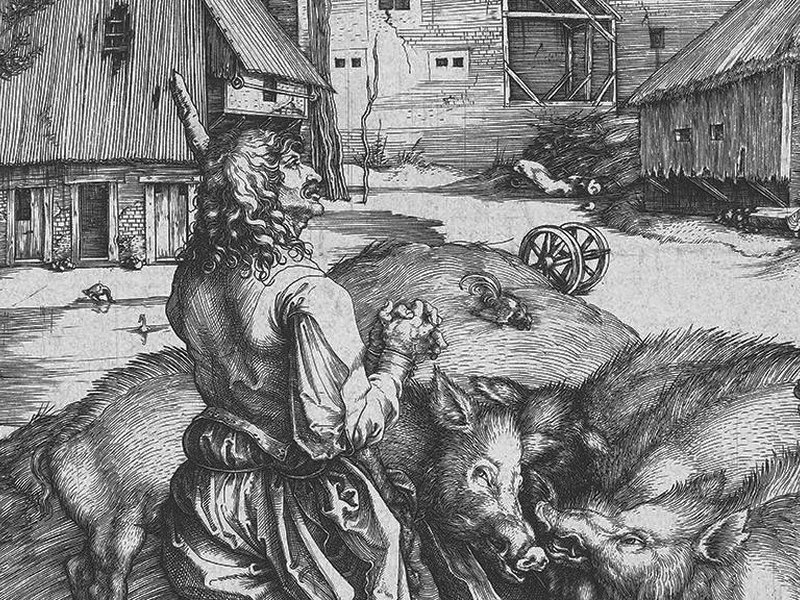
Perspectives on the Prodigal, (Part 2)

In the first essay on the parable of the Prodigal Son, I suggested that the problems commentators and others encounter in interpreting Jesus three-part parable are not accidental. These are not just problems in our ignorance of cultural background. They are intentional features of the stories —stories designed to poke…

by Ralph Allan SmithJuly 11, 2019
durer-prodigal-son-2
Luke

Perspectives on the Prodigal, (Part 1)

The story of the Prodigal Son is perhaps the most well-known story in the Bible. As others have observed, it may also be one of the most misunderstood. In two short essays, I will point out features of this story that are commonly neglected, aspects of Jesus’ parable that might…

by Ralph Allan SmithJuly 9, 2019
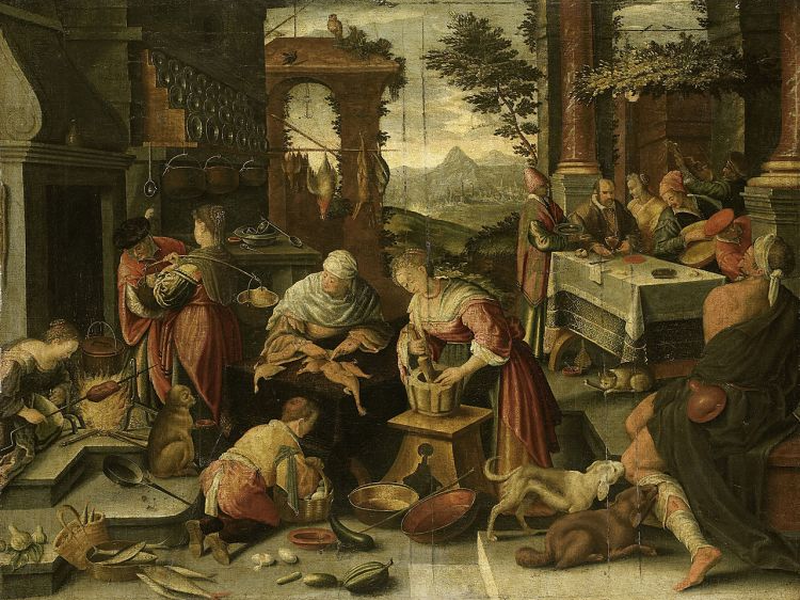
de-rijke-man-en-de-arme-lazarus-by-jacopo-da-ponte-16th-century
Luke

Lazarus and the Rich Man

The parable of Lazarus and the nameless rich man is not an independent story. It is part of a long context that begins in Luke 15:1, where Jesus is eating with tax collectors and sinners and the scribes and Pharisees grumble. In response to their hardheartedness, Jesus tells a three-part…

by Ralph Allan SmithJuly 4, 2019
aaron-burden-uynrnfdkjwg-unsplash
Luke

Everybody has Dropsy - Luke 14:1-24

The Bible is written so that even when a reader cannot pick up on what might be deeper or more detailed aspects of a text, there is virtually always a message to be heard. In the ancient world, where the “reader” of Scripture would likely be a church official facing…

by Ralph Allan SmithJuly 2, 2019
communion
Biblical Theology

Fruit Trees and Grain Plants

The distinction between garden (or vineyard) and field begins in Genesis 2. This relates to the ordering of the formless world. Plants of the field are contrasted with the garden planted by God in Genesis 2:5&8. Later on, under the Old Covenant the Israelites will be required to keep their…

by James B. JordanJune 27, 2019

Showing page 77 of 309

See all

Showing page 10 of 43

See all

Descending

Revelation uses the verb “descend” ( katabaino ) ten times, often with the specification that something descends “from heaven.” Cities come down from the sky, and angels, and dragons, and fire. The ten uses of the verb are in a fairly neat chiastic pattern: A. New Jerusalem will descend, 3:12…

February 2, 2016

Poetry, Liturgy, Spontaneity

More grist for the discussion of Protestantism and writing, taken from my review of Lori Branch, Rituals of Spontaneity . See the whole review here . Focusing on English literary culture and religion, Branch examines the formation of an “ideology of spontaneity” from the Reformation attacks on ritual through Puritan…

February 2, 2016
Economics

Economic Liturgies

“We must continue to develop nonmythological narratives that synthesize and interpret our experience. These narratives must be based on the facts as we currently know them,” argues Scott Gustafson in At the Altar of Wall Street . He thinks Marx and Schumpeter offer some coordinates for a “demythologizing” of economics…

February 2, 2016

Trump of the Lie

What does Trump do if he loses the Iowa caucuses today? asks Michael Kruse over at Politico . Kruse says that he will do what he always does: “He will deny and distort and belittle his critics and change the subject. He will say that he won.” Paul Holmes, who…

February 1, 2016

Of White Horses and their Riders

Twice in Revelation, John sees a rider on a white horse. The first comes in response to a call from the lion cherub and the Lamb's opening of the first seal (Revelation 6:1-2). He is alone, has a bow and receives a crown as he goes out conquering and to…

February 1, 2016

Protestants, Writing, Sacraments

My two-part essay on why Protestants can't write got a lot more attention last week than it did when first published in Credenda/Agenda . Clarifications are in order. Behind the bluster, bombast, and hyperbole of the essay lie an assumption, an assertion, and an argument. The assumption is that liturgy…

February 1, 2016

Showing page 326 of 2212

Browse by Category

In Medias Res

Your weekly digest for all things Theopolis.

Donate

Theopolis is nearly 100% donor-supported. Consider joining us on our mission.