Theopolis Logo

Writing

Explore our collection of theological essays, biblical studies, and reflections on faith and culture.

See all
31-03-0213
Hermeneutics

Apocalyptic Eyes

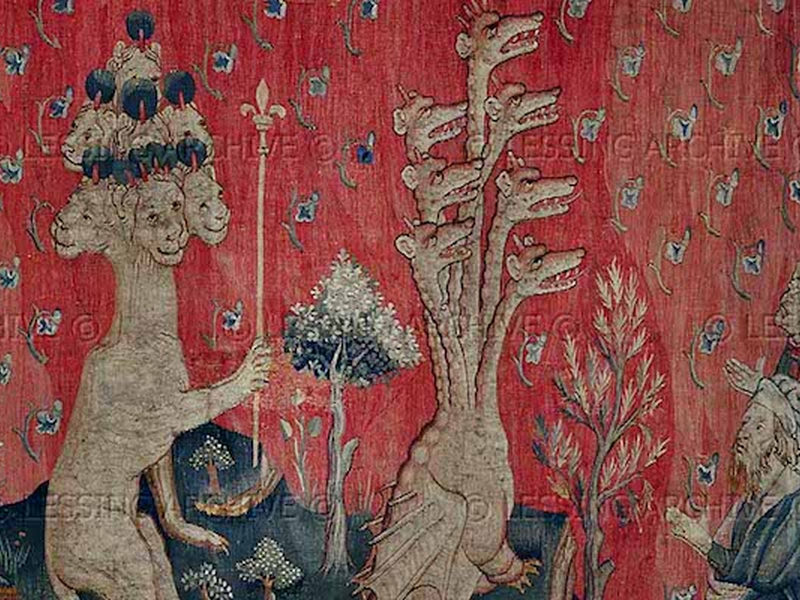
Flying scrolls. Red horses. Beasts coming out of the sea. Winged women. The list goes on. Apocalyptic literature in the Bible is like a cross between science fiction and Marvel comics. And the Bible has a fair bit of this sort of thing. Daniel sees visions in Babylon, Zechariah sees…

by Toby SumpterNovember 4, 2014

bhm-skyline-2
Theopolis News

New Name, New Look

Trinity House Institute has taken a new name, the Theopolis Institute. This striking new name expresses our unique vision and mission and captures the unified purpose behind all our specific programs and activities. We still have Bible, liturgy, and culture in our tagline. We still offer the same courses on…

by TheopolisNovember 4, 2014
istock_000012860926small
Atonement

Not Fearing the Devil

Adam Kotsko offers a socio-political variation on the Christus Victor atonement theory in his 2010 study, The Politics of Redemption: The Social Logic of Salvation . He does this by explaining "the devil" in terms of the Hegelian concept of "objective spirit," Geist . As Kotsko puts it, Geist "refers…

by Peter LeithartOctober 13, 2014
jez-timms-8muutamcwu4-unsplash
Leviticus

The Meaning of Sacrifice

Two factors keep Nahtali Meshel from discussing the meaning of sacrifice until late in his The "Grammar" of Sacrifice . The first has to do with the texts he draws from: "P says little about the meaning of its rituals" (174). The other has to do with the grammatical theory…

by Peter LeithartOctober 8, 2014
jez-timms-8muutamcwu4-unsplash
Leviticus

Praxemics

Chapter 5 of Naphtali Meshel's The "Grammar" of Sacrifice focuses on "praxemics," the physical actions of sacrificial ritual. Praxemes are constituted by six elements: an "atomact," an elementary physical act or gesture; an actor; an object that is acted up; a target for the action and often for the object…

by Peter LeithartOctober 6, 2014
markus-winkler-aid-xyrtlec-unsplash
Leviticus

Jugation and Hierarchy

Two chapters of Naphtali Meshel’s The “Grammar” of Sacrifice cover what he calls “jugation” and “hierarchies.” The first involves the addition of other materials to an animal offering. Jugates include wine, cereal, and oil that are added to the animals (zoemes) that are offered in sacrifice. Some jugates are coordinated…

by Peter LeithartOctober 1, 2014

Showing page 167 of 309

See all

Showing page 10 of 43

See all

Heavenly Court, Caesar's Court

David Aune has argued that the heavenly court scene of Revelation 4-5 “bears such a striking resemblance to the ceremonial of the imperial court and cult that the latter can only be a parody of the former” (5). He proposes this against the main “major competing view” that “the heavenly…

January 11, 2016

Culture and Biology in Judith Butler

Will Rees says in his TLS review of Judith Butler's Senses of the Subject that the “biggest topic of discussion” has been Butler's writing style, which he characterizes as “torturous.” It's not just the style. In her poststructuralist early work, Butler argues that “gender identities are constructed by the machinations…

January 11, 2016

The Church in Britain's Future

The Economist reports on “an immigrant-led surge in London churchgoing. Weekly participation in Christian services in the capital has grown by 16% since 2005. Most devout Londoners (88%) worship outside the ranks of the established church whose spires pierce the skyline; about a third are Pentecostal.” It is the same…

January 11, 2016

Anti-Kantian

Drawing on the work of CS Peirce, Giovanni Maddalena ( The Philosophy of Gesture ) argues that pragmatism must be understood as more than an anti-Cartesian movement in philosophy. To the critique of Descartes, it adds a critique of Kant. He summarizes Peirce's critique. Kant is a nominalist, which means…

January 8, 2016

Doctrina sacra

The Summa Theologica of Thomas Aquinas has a clear surface structure. A first part, two parts of the second part, and a third part. But that obvious structure doesn't tell the whole story. Thomas explains the structure of the treatise at the outset (1, 2): “Because the chief aim of…

January 8, 2016

Tribes, Tongues, Peoples, Nations

In his Climax of Prophecy , Richard Bauckham’s devotes a long, complicated, fascinating chapter to an analysis of the phrase “tribes, tongues, nations, peoples” (and variations) in Revelation. The arrangement of the lists varies, but the variations are not random. They reinforce substantive connections between different parts of the book.…

January 8, 2016

Showing page 334 of 2212

Browse by Category

In Medias Res

Your weekly digest for all things Theopolis.

Donate

Theopolis is nearly 100% donor-supported. Consider joining us on our mission.