Theopolis Logo

Writing

Explore our collection of theological essays, biblical studies, and reflections on faith and culture.

See all
last-supper
Luke

Table Talk

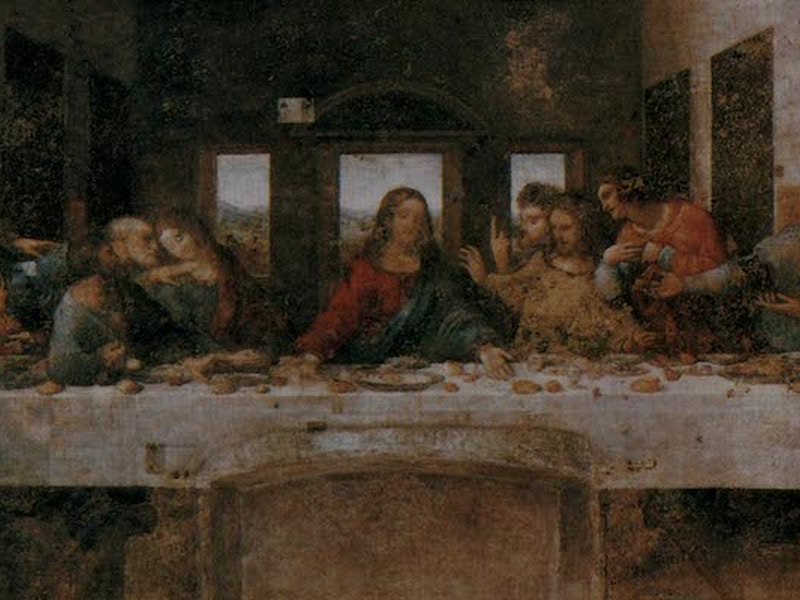
Along His journey to Jerusalem, Jesus stops frequently to have meals, three times with Pharisees (7:37-50; 11:37-54; 14:1-35). Meals were central to Jesus’ ministry. He comes “eating and drinking” (Luke 7:34). While His meals are not just for refreshment, they are opportunities for teaching the protocols of the kingdom. Meals…

by Peter LeithartApril 19, 2016
music-violin
Biblical Theology

A Musical Case for Typological Realism, (Part 4)

Time as a realm of participation can be difficult for us imaginatively to grasp. While music is a profoundly temporal art, exploring the medium of time like no other, most of our temporal experience seems decidedly unmusical in character, disjointed and unorchestrated. The form in which we naturally discover time…

by Alastair RobertsApril 14, 2016
John

Jesus' Burial Clothes

John devotes much attention to Jesus’ burial clothes. He tells us that Nicodemus brought about a hundred pounds of myrrh and aloes to spice Jesus body, and that He was bound in linen wrappings. We find out that His body and His head were wrapped separately. (John 19:39-40; 20:6-7). When…

by James B. JordanApril 12, 2016
clock
Biblical Theology

A Musical Case for Typological Realism, (Part 3)

Thinking about time in terms of music also helps us to appreciate its unity and inner relations. Henri Bergson observes our cultural habit of dividing time into discrete moments, and conceiving of these as if akin to objects in a spatial succession. [1] Against such a notion, Bergson argues for…

by Alastair RobertsApril 7, 2016
screen-shot-2016-03-31-at-9-32-11-am
Biblical Theology

A Musical Case for Typological Realism, (Part 2)

As we attend to these and other aspects of music’s temporality, Begbie suggests, we will find means by which to resist some of our habitual modern ways of conceptualizing time, most especially our tendency to conceive of time as if it were a homogeneous set of technologically quantifiable units laid…

by Alastair RobertsMarch 31, 2016
biblioteca-vasconcelos-crop
Biblical Theology

Systematic Typology (Part Three)

The Hidden Dimension In many fields of scientific study, the apparent complications and contradictions are dispelled once the internal logic is perceived. Biblical hermeneutics is no different, since the author of Creation is the Author of the Word. The Bible’s literary labyrinth radiates organically from an algorithm so simple it…

by Mike BullMarch 29, 2016

Showing page 133 of 309

See all

Showing page 10 of 43

See all

Confessing Trinity

The point of Trinitarian theology is not simply that there are three instead of one. We can’t just plug our pre-conceptions about God into the Trinity, and say that now we are Trinitarian. We can’t assume Deism, the idea that God is a watchmaker who leaves the world to run…

December 15, 2015

The Common-Sensical Bishop Berkeley, 1

. He There is often a gap between the popular perception of a philosopher’s teaching and his own conception of his teaching. But the gap in Berkeley’s case is particularly wide. On the one hand, there is his own professed plan to justify common sense and combat skepticism. He reiterates…

December 15, 2015

Fathers and Sons in Ulysses

Joyce's Ulysses has a pendulum structure. JH Raleigh (in an essay in Joyce's Ulysses , 102) points out the contrast of filius and mater as these are the poles around which the action is organized: “solitary and single vs conjoined, both licitly and illicitly; homeless rover vs statonary huswife (husey);…

December 14, 2015

The God who Predestines

Paul begins the substance of the letter to the Ephesians by “blessing” God (1:3). As is well known, in Greek, verses 3-14 form a single long sentence, with one verb, “Blessed” (v. 3). This reflects a form of Jewish prayer, called the Berekah. It is not a request for God…

December 14, 2015

Rhetoric, Classical and Christian

In his The Invention of Christian Discourse , Vernon Robbins explains how and why Christian discourse and rhetoric diverged from classical models. Ryan Leif Hanson summarizes the argument in Silence and Praise : “Classical rhetoric understands the basic social reality of persons as based in the Graeco-Roman urban environment. In…

December 14, 2015

Retreat from Scripture

Marilynne Robinson is a theological anomaly. A self-confessed Calvinist, admirer of Calvin and Edwards, defender of original sin and predestination (which, she says right, is not determinism), she is also a self-described liberal Christian who tends to take predictably liberal positions on moral and political question and to use sneering…

December 11, 2015

Showing page 341 of 2212

Browse by Category

In Medias Res

Your weekly digest for all things Theopolis.

Donate

Theopolis is nearly 100% donor-supported. Consider joining us on our mission.