Theopolis Logo

Writing

Explore our collection of theological essays, biblical studies, and reflections on faith and culture.

See all
tanner-mardis-xuxghzhibn4-unsplash-1-2
Biblical Studies

Tweets-turned-Notes on the Bible’s Chronology

Summary In what follows, I will consider the “year-stamps” employed in Scripture, i.e., statements of the form, “Such-and-such an event took place in the Xth year of Y.” In the process, I will suggest some ways in which the Biblical narrative might relate to events in the extra-Biblical world, though…

by James BejonJuly 16, 2019
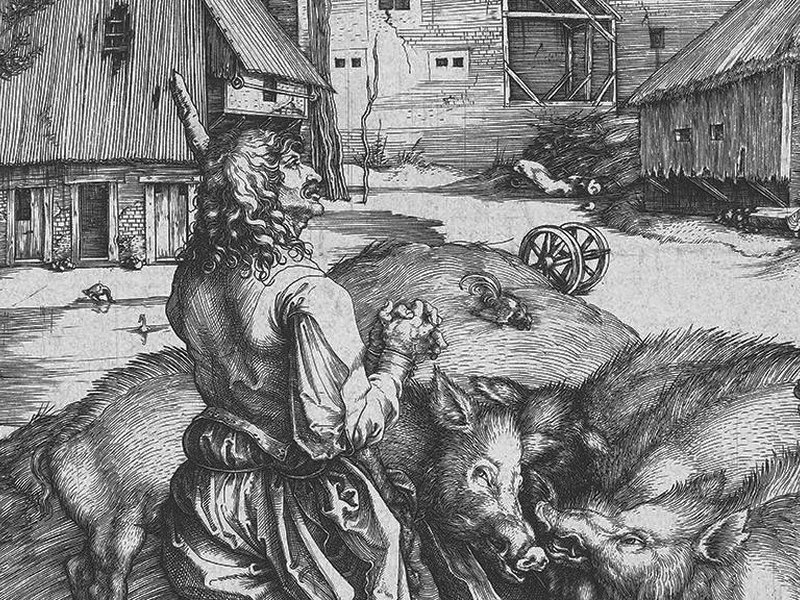
durer-prodigal-son-2
Luke

Perspectives on the Prodigal, (Part 2)

In the first essay on the parable of the Prodigal Son, I suggested that the problems commentators and others encounter in interpreting Jesus three-part parable are not accidental. These are not just problems in our ignorance of cultural background. They are intentional features of the stories —stories designed to poke…

by Ralph Allan SmithJuly 11, 2019
durer-prodigal-son-2
Luke

Perspectives on the Prodigal, (Part 1)

The story of the Prodigal Son is perhaps the most well-known story in the Bible. As others have observed, it may also be one of the most misunderstood. In two short essays, I will point out features of this story that are commonly neglected, aspects of Jesus’ parable that might…

by Ralph Allan SmithJuly 9, 2019
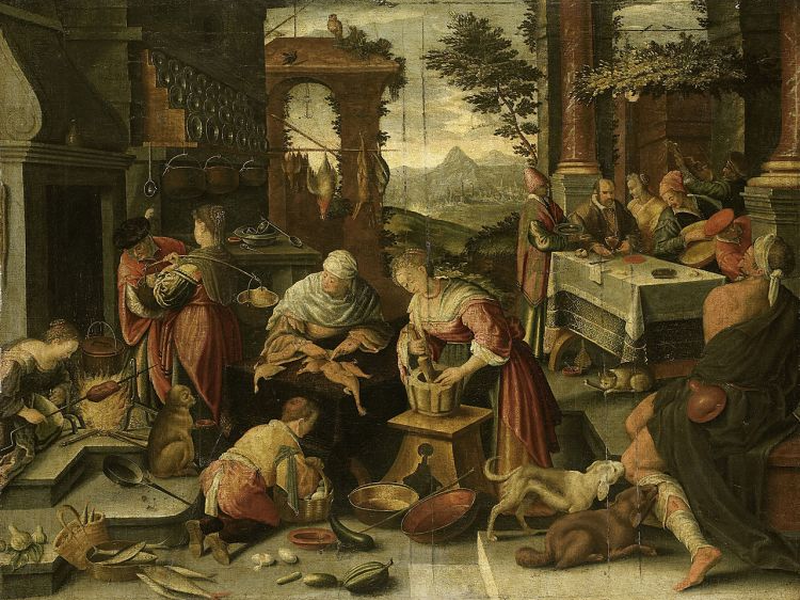
de-rijke-man-en-de-arme-lazarus-by-jacopo-da-ponte-16th-century
Luke

Lazarus and the Rich Man

The parable of Lazarus and the nameless rich man is not an independent story. It is part of a long context that begins in Luke 15:1, where Jesus is eating with tax collectors and sinners and the scribes and Pharisees grumble. In response to their hardheartedness, Jesus tells a three-part…

by Ralph Allan SmithJuly 4, 2019
aaron-burden-uynrnfdkjwg-unsplash
Luke

Everybody has Dropsy - Luke 14:1-24

The Bible is written so that even when a reader cannot pick up on what might be deeper or more detailed aspects of a text, there is virtually always a message to be heard. In the ancient world, where the “reader” of Scripture would likely be a church official facing…

by Ralph Allan SmithJuly 2, 2019
communion
Biblical Theology

Fruit Trees and Grain Plants

The distinction between garden (or vineyard) and field begins in Genesis 2. This relates to the ordering of the formless world. Plants of the field are contrasted with the garden planted by God in Genesis 2:5&8. Later on, under the Old Covenant the Israelites will be required to keep their…

by James B. JordanJune 27, 2019

Showing page 77 of 309

See all

Showing page 10 of 43

See all
American Religion

America and the Outsiders

Laurence Moore's Religious Outsiders and the Making of Americans is a study of American religion that is not considered “mainstream” or “mainline”—Mormons, Catholics, Jews, Christian Science, Fundamentalists, Black churches. The goal is not to fill in a gap. The goal is to challenge the assumption that the “mainline” should function…

September 21, 2015

Sabbath

After John introduces the new scene – “I saw another sign in the heaven, great and marvelous” – the sign is described with two clauses (Revelation 15:1). The first is, woodenly translated, “angels seven having plagues seven the last”; and the second it “in them finished the passion of God.”…

September 21, 2015
Christendom

Christendom v. Christendom

Both Old and New Testaments, writes David Martin ( Pentecostalism , 12) include principles that “by persistent extension and deepening . . . can divest systems of authority of their justification and turn law into a matter of inward judgement and sincerity rather than external observance.” “Rend your heart and…

September 21, 2015

Blindness and Sight

Greek myths valorize blindness. Tiresias is a blind seer, and when Oedipus finally “sees,” he becomes Tiresias, digging out his eyes with Jocasta's brooches. The bard who sings of the Trojan War in the Odyssey is, like Homer himself, blind. For the Greeks, the sightless are the true seers. Scripture…

September 18, 2015

Power, Propaganda, Pack

The saints playing harps and singing on the fiery firmament are there because they are victorious over three enemies: the beast, the image of the beast, and the number of the beast's name (Revelation 15:2). When we look back at how those three are presented earlier in Revelation, we realize…

September 18, 2015

Girard and the Gospel

Girard's theory of scapegoating as the great virtue of explaining how the death of Jesus can remake human society. By refusing to acknowledge sin, Jesus becomes the innocent scapegoat, and thereby exposes the scapegoat mechanism for what it is. That exposure is the good news, and undoes the perverse dynamics…

September 18, 2015

Showing page 374 of 2212

Browse by Category

In Medias Res

Your weekly digest for all things Theopolis.

Donate

Theopolis is nearly 100% donor-supported. Consider joining us on our mission.