Theopolis Logo

Writing

Explore our collection of theological essays, biblical studies, and reflections on faith and culture.

See all
chris-bair-ndczc5739ck-unsplash
Ephesians

“Be Holy for I am Holy”

Below is an excerpt from Mark Horne’s manuscript from his forthcoming commentary on Ephesians, specifically on Paul’s reference to Christians as “saints” (Ephesians 1:1). “Paul, an apostle of Christ Jesus by the will of God, to the saints who are in Ephesus, and are faithful in Christ Jesus.” Paul greets…

by Mark HorneMarch 25, 2025
300129rgsdl
Exodus

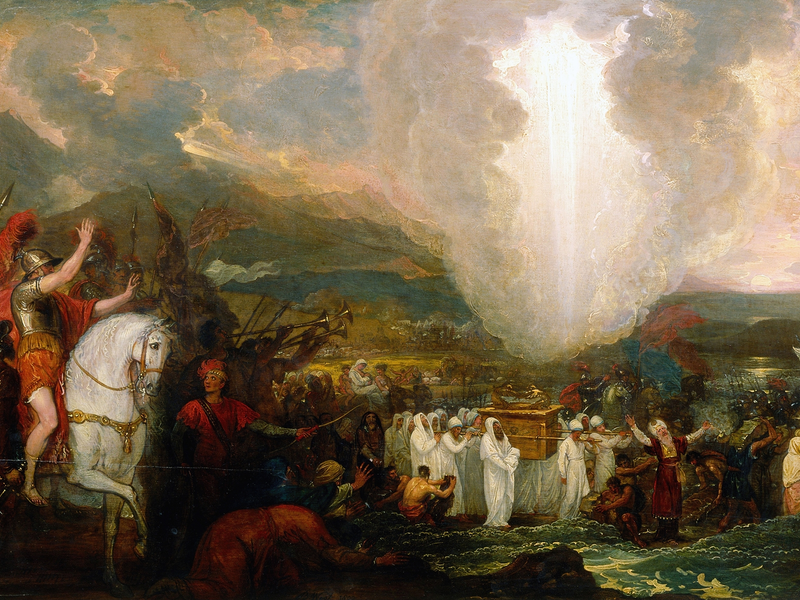
The Perishable in the Ark of the Covenant

There was nothing in the ark except the two tablets that Moses put there at Horeb, where the LORD made a covenant with the people of Israel, when they came out of Egypt (2 Chronicles 5:10). When Solomon finally brought the ark of the covenant to the finished temple in…

by Jonathan WhiteMarch 18, 2025
tim-marshall-k2u71wv2ei4-unsplash
Exodus

The Stages of a Man’s Life and the Second Table of the Law

In As You Like It , Shakespeare famously describes the seven ages of a man’s life. The division of man’s life into stages is not an invention by Shakespeare, nor merely a common medieval artifice, but an expression of the real journey taken in life. Shakespeare seems to divide up…

by Ryan HandermannMarch 13, 2025
brent-cox-2plebdf1nba-unsplash
Christology

The Essence of God’s Image

Is there a chief characteristic which best illumines the image of God in Man? What is it exactly that makes Man as a lens through which to see God? Moses thoughtfully and deliberately escorts the reader to the characteristic showcased above all else: humility. Though much ink has been spilled…

by Ben LoveladyMarch 11, 2025
josh-applegate-toksfdmznkg-unsplash
Liturgy

Two Ways of Being Liturgical: A Baptist Response to the High Church Exodus

Note: This essay is adapted from a talk delivered at the Howell E. Jackson Committee conference on “Foundations of Baptist Education,” held at Union University, Oct. 4-5, 2024. It’s no secret that evangelicals are converting to High Church traditions, a term I will use to refer to Anglo-Catholicism, Roman Catholicism,…

by Ryan SinniMarch 4, 2025
raimond-klavins-mdlseox3vzo-unsplash
Icons

Don’t Convert: Icons and Images in the Early Church

In recent years, there has been a flurry of conversions from Protestant Christianity towards Eastern Orthodoxy and Roman Catholicism, at least in part due to their supposed early church heritage relative to Protestantism. In the words of Rod Dreher, a former Methodist who converted to Eastern Orthodoxy, “Many evangelicals seek…

by John CarpenterFebruary 25, 2025

Showing page 12 of 309

See all

Showing page 10 of 43

See all

Fated Adventure

According to Michael Nerlich ( Ideology of Adventure ), “all figures of the Greek and Latin novels of adventure are ‘involuntary’ adventurers.” Mikhail Bakhtin too ( Dialogic Imagination ) emphasizes that in earlier adventures “an individual can be nothing other than completely passive, completely unchanging” and function as “merely the…

May 1, 2015

Siegfried in Victory and Defeat

Winder McConnell ( Nibelungenleid , 98-99) sketches the changing uses of the epic in the mid-20 th century: “During the Weimar Republic, the themes and motifs of the Nibelungenlied had been employed by authors of antirepublican persuasion to express optimism for Germany’s future, but poets and dramatists sympathetic to the…

May 1, 2015

Wagner, Tristan, Love

In an essay in A Companion to Gottfried of Strassburg's Tristan , Ulrich Muller argues that “In Tristan und Isolde Wagner radically transformed the meaning and message of Gottfried’s romance, just as he had in Parsifal. As cast by Gottfried (and in all medieval versions), the lovers and their love…

May 1, 2015

Art of Divine Love

Andreas Capellanus literally wrote the book on the Art of Courtly Love , but the concluding Book 3 suggests that the book was a cautionary tale throughout. Capellanus closes the treatise with an exhortation to Walter, the man to whom the book is addressed to abstain from the desires of…

April 30, 2015

Liberal Arts in Middle Ages

Even today, when historians have abandoned the idea, many regard the Middle Ages as a time dark and ignorant, the huddled masses in shadows until the burst of light that came with the Renaissance and then the Enlightenment. For centuries, it is often thought, medieval thinkers knew little of the…

April 30, 2015

Allegorizing Homer

Allegorization was one of the techniques medieval used, adapted from ancient writers, to incorporate pagan writing in a biblical framework. As Ernst Curtius ( European Literature and the Latin Middle Ages ) writes, “the Middle Ages subjected profane writers to allegorical interpretation exactly as it did the Bible, and .…

April 30, 2015

Showing page 432 of 2212

Browse by Category

In Medias Res

Your weekly digest for all things Theopolis.

Donate

Theopolis is nearly 100% donor-supported. Consider joining us on our mission.