Theopolis Logo

Writing

Explore our collection of theological essays, biblical studies, and reflections on faith and culture.

See all
last-supper
Luke

Table Talk

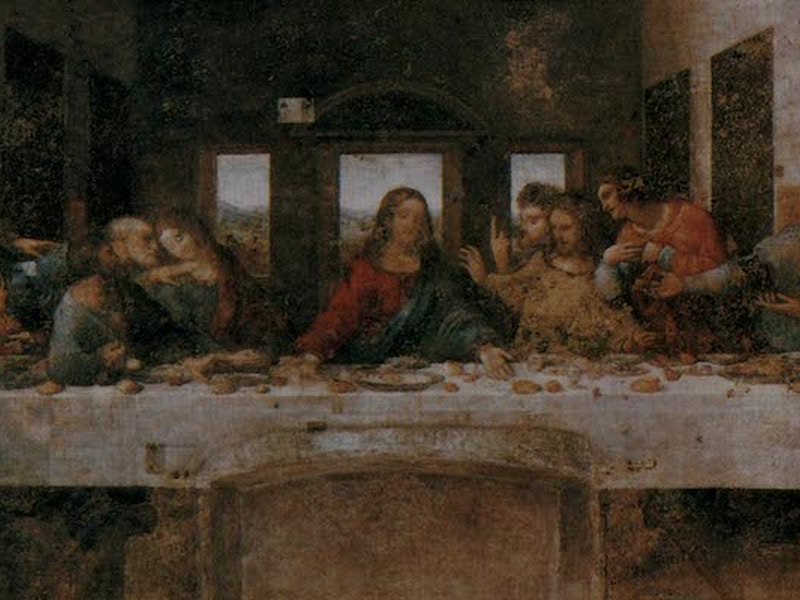
Along His journey to Jerusalem, Jesus stops frequently to have meals, three times with Pharisees (7:37-50; 11:37-54; 14:1-35). Meals were central to Jesus’ ministry. He comes “eating and drinking” (Luke 7:34). While His meals are not just for refreshment, they are opportunities for teaching the protocols of the kingdom. Meals…

by Peter LeithartApril 19, 2016

music-violin
Biblical Theology

A Musical Case for Typological Realism, (Part 4)

Time as a realm of participation can be difficult for us imaginatively to grasp. While music is a profoundly temporal art, exploring the medium of time like no other, most of our temporal experience seems decidedly unmusical in character, disjointed and unorchestrated. The form in which we naturally discover time…

by Alastair RobertsApril 14, 2016
John

Jesus' Burial Clothes

John devotes much attention to Jesus’ burial clothes. He tells us that Nicodemus brought about a hundred pounds of myrrh and aloes to spice Jesus body, and that He was bound in linen wrappings. We find out that His body and His head were wrapped separately. (John 19:39-40; 20:6-7). When…

by James B. JordanApril 12, 2016
clock
Biblical Theology

A Musical Case for Typological Realism, (Part 3)

Thinking about time in terms of music also helps us to appreciate its unity and inner relations. Henri Bergson observes our cultural habit of dividing time into discrete moments, and conceiving of these as if akin to objects in a spatial succession. [1] Against such a notion, Bergson argues for…

by Alastair RobertsApril 7, 2016
screen-shot-2016-03-31-at-9-32-11-am
Biblical Theology

A Musical Case for Typological Realism, (Part 2)

As we attend to these and other aspects of music’s temporality, Begbie suggests, we will find means by which to resist some of our habitual modern ways of conceptualizing time, most especially our tendency to conceive of time as if it were a homogeneous set of technologically quantifiable units laid…

by Alastair RobertsMarch 31, 2016
biblioteca-vasconcelos-crop
Biblical Theology

Systematic Typology (Part Three)

The Hidden Dimension In many fields of scientific study, the apparent complications and contradictions are dispelled once the internal logic is perceived. Biblical hermeneutics is no different, since the author of Creation is the Author of the Word. The Bible’s literary labyrinth radiates organically from an algorithm so simple it…

by Mike BullMarch 29, 2016

Showing page 133 of 309

See all

Showing page 10 of 43

See all

Sacramentum et Imperator

In a 2005 article, Daniel Van Slyke explores the use of sacramentum in non-Christian writers from the ancient world. He reiterates the common observation that the term is most often used in military contexts to describe the engagement of soldiers to military service. Livy, for instance, writes that during a…

April 9, 2015

Post-Nominalist Theology

John Milbank is no nominalist, yet in Beyond Secular Order he insists that the nominalists raised questions that could not simply be answered by a return to Thomas. He points to four questions: Do creatures stand “outside” God in any sense? Does analogy violate the law of non-contradiction (2 things…

April 9, 2015

Gender Arianism again

My little post on Gender Arianism created some buzz. Some of the responses missed my argument. But that was partly my fault for making the argument so briefly and (perhaps) opaquely. Here's what I hope is a somewhat clearer statement of the argument. In Deep Comedy , I argued that…

April 9, 2015

Can't Keep Him Out

It is widely believed that if the world is a causally closed system, then God cannot be involved in the world. He cannot introduce new information. William Dembski ( Being As Communion ) disputes the conclusion. He concedes that “causal closure in a deterministic universe precludes what may be called…

April 8, 2015

Gender Arianism

Arians say that the Son isn't eternal God, but a high-level creature. There is a twofold assumption behind Arianism: First, that the Absolute must be un-related. A related Absolute becomes relative to the one to whom it is related. Trinitarian theology rejected this premise and followed Scripture in affirming an…

April 8, 2015

Paul and “Judaizing”

In his Beginnings of Judaism , Shaye Cohen devotes a chapter to ancient usages of the meaning of the term ioudaizein . It appears only once in extant classical sources, once in the LXX of Esther, once in Paul, two times in Josephus. Most of the ancient uses are from…

April 8, 2015

Showing page 442 of 2212

Browse by Category

In Medias Res

Your weekly digest for all things Theopolis.

Donate

Theopolis is nearly 100% donor-supported. Consider joining us on our mission.