Theopolis Logo

Writing

Explore our collection of theological essays, biblical studies, and reflections on faith and culture.

See all
kelly-sikkema-mdadgzyxcve-unsplash
Biblical Horizons

Entropy and Depravity

What do you think of the way "creation science" uses the "second law of thermodynamics" to argue that human society will become more and more depraved, and that the universe is running down? Creation Science is not monolithic, and so it would be unfair to say that everyone working in…

by James B. JordanOctober 24, 1992

kelly-sikkema-mdadgzyxcve-unsplash
Deuteronomy

The Firstborn Son’s Double Portion

From time to time we receive questions that are interesting, and that other people would also be interested in. I'll [address] two such questions in this issue [and the next]. I recently made a will which, in the event that my wife does not survive me, grants my eldest son…

by James B. JordanOctober 24, 1992

ivan-aleksic-16yxcjsoaek-unsplash
Biblical Studies

Meredith G. Kline and the Myth of the Old Testament

As we go from Old Testament chronology to New Testament chronology, it will be a good idea to examine a deep-seated myth that is profoundly intertwined with Biblical Christianity. I have in mind the myth that there is in the Bible such a thing as a collection of books called…

by James B. JordanOctober 24, 1992

trnava-university-beeyeib-am8-unsplash
Biblical Studies

Umberto Cassuto and the Documentary Hypothesis

Several years ago, the Wall Street Journal gave prominent recognition to a book called Who Wrote the Bible? The book was a popularization of the famous "Documentary Hypothesis," which claims that the Pentateuch was not the work of Moses, but was a (rather incompetent) pastiche of contradictory sources written much…

by Peter LeithartSeptember 17, 1992
screen-shot-2022-05-12-at-12-07-23-pm
James

Creation Symbolism in the Epistle of James

The epistle of James has long presented dificulties for New Testament scholars. Its seemingly moralistic tone, its apparent inattention to theological concerns, its defense of "justification by works" all have made it dificult for interpreters to discern its compatibility with other New Testament books. Luther’s dismissal of James as an…

by Peter LeithartSeptember 17, 1992
niko-manuelides-shglp3tjxrs-unsplash
Leviticus

The Lamb of God, (Part 2)

Why the Lamb? But why the lamb? We have seen that the bull was the offering for the sins of priests, especially as they represented the nation before God in His house. Wasn’t Christ the greatest of all men? Wasn’t He the Great High Priest? Should He not rather be…

by James B. JordanAugust 24, 1992

Showing page 288 of 309

See all

Showing page 10 of 43

See all

Anointed Bread

Leviticus is the oilest book of the Bible. The Hebrew shemen is used 42 times (6 x 7); the closest competitor is Numbers, with 34 uses. The uses of shemen are clustered. Leviticus 2 uses the word 9 times, all with reference to the preparation of the tribute offering (…

March 25, 2019
egptian-art

Broken Noses

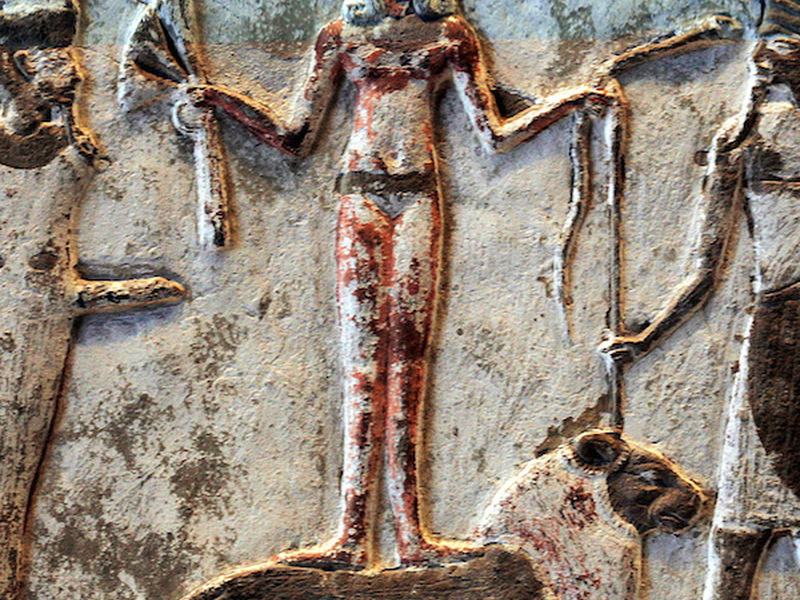
Why do so many Egyptian statues have broken noses? Julia Wolkoff summarizes the answer of Brooklyn Museum curator Edward Bleiberg. Noses protrude, and so are more apt to be knocked off accidentally, but the pattern is too consistent to be accident. Erosion could account for some, but not all. Bleiberg…

March 20, 2019
13714bedda625c2ec1816f0890ed72f4-snow-storms-image-photography
Ecclesiology

Ecclesial Ethics

Some snippets from Philip Turner's Christian Ethics and the Church . The premise of Turner's book is well summarized by a passage he quotes from Sabina Lovibond's Ethical Formation : "The ethical, let us say, pertains to what people learn to value through immersion in a community acquainted with ideas…

March 13, 2019

Nose to Nose

Levitical offerings send a "soothing aroma" ( reyach nichoach ) to Yahweh. Israel needs to produce good smells because her sin is noxious to Yahweh. When Israel rebels, His "nose burns." By slaughtering a substitute animal and turing it to smoke, Israel soothes Yahweh's hot nose. But that can't be…

March 11, 2019
Pneumatology

Reading in the Spirit

“Spiritual reading” is usually associated with patristic, monastic, and medieval modes of reading. It's fruitful, however, to shift the focus and ask what the Spirit has to do with our reading. The Spirit is the enlivening breath of God, the water of God who makes us into a fruitful garden.…

March 6, 2019
capitol-dc
Liberalism

Liberalism and Ecclesia

Liberalism is "in origin primarily a refusal of ecclesial power." So write John Milbank and Adrian Pabst ( Politics of Virtue , 31). In refusing ecclesial power, early modern political theorists renounced the arrangement of Latin Christendom. The "first polity knowing no bounds and truly based upon the rule of…

March 4, 2019

Showing page 46 of 2212

Browse by Category

In Medias Res

Your weekly digest for all things Theopolis.

Donate

Theopolis is nearly 100% donor-supported. Consider joining us on our mission.