Theopolis Logo

Writing

Explore our collection of theological essays, biblical studies, and reflections on faith and culture.

See all
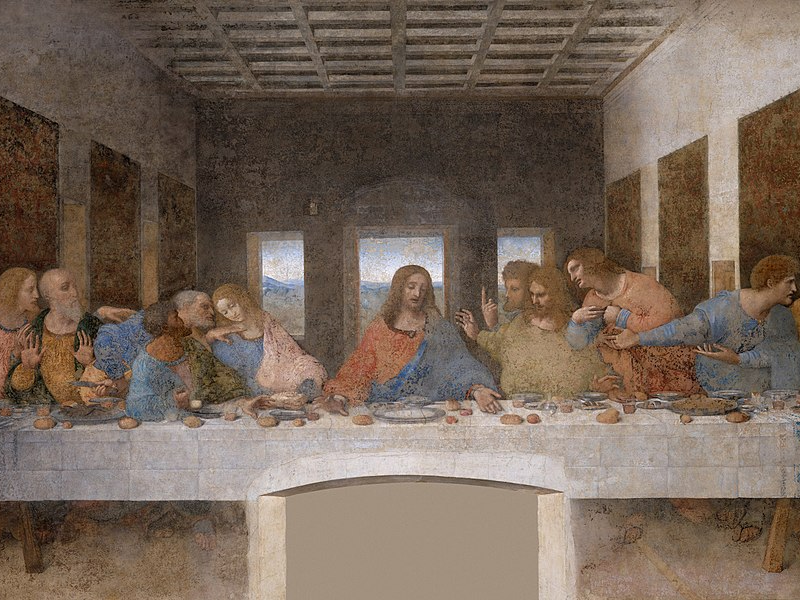
the_last_supper_-_leonardo_da_vinci_-_high_resolution_32x16-2
Biblical Horizons

Was the Last Supper a Passover?

Some readers of my essay, “ Strange and Glorious New Rites ,” have written to object that I have strained a gnat and swallowed a camel. I have strained out the gnat of a possible link to the memorial bread of the minchah (Lev. 2), while overlooking the camel that…

by James B. JordanMarch 22, 2011

screenshot-2023-09-19-at-10-48-12-am
Biblical Horizons

Planetary Judgments

In his lectures on Comparative Religion, Eugen Rosenstock-Huessy points to five fundamental gods that were over ancient man and still can dominate us today, and which must be respected. When we sin, we respect these gods more than we respect the Creator, disobeying the First Word: “You will have no…

by James B. JordanMarch 22, 2011

timothy-eberly-djj49s6ud2o-unsplash
Biblical Studies

Notes on the Book of Judges

A. Israel’s failure to hold land against the Canaanites. Progressive compromise, leading to judgment. 1:1–2:5. B. Israel’s idolatry, the cycle of judges, and war as God’s chastisement. 2:6–3:6. C. Northern Gentiles (Mesopotamia), and Othniel. 3:7-11. D. Lot: Moab, and Ehud. 3:12-13. E. Minor judge: Shamgar. 3:31. F. Canaanites opposed. Women…

by James B. JordanMarch 21, 2011
briana-tozour-mrfapsuyy8a-unsplash
Biblical Horizons

Principalities and Powers, (Part 2)

The great question for the emerging East, for Asia and other awakening third world areas, for an emerging nation like China is, “what fate awaits them?” They are now emerging from an analogous paganism that the West emerged from centuries ago. Here an amazing quotation from David Aikman, the Time…

by Richard BledsoeMarch 15, 2011
sinitta-leunen-dvibhmzsy8e-unsplash
Colossians

The Principalities and Powers, Part I

Paul contends that with the death of Christ on the Cross, there was an overcoming of the Principalities and the Powers (Col. 2:15). A great deal has been written on this subject over the last 60 years. What was for a long time either ignored, or regarded by liberal scholars…

by Richard BledsoeMarch 10, 2011
jimpreaching
Biblical Horizons

Eating and Drinking Together

One of the odd customs that has arisen in the 20th century is that many evangelical churches warp the rites of the Lord’s Supper by insisting that everyone wait so that they eat and drink together. Supposedly this is to emphasize the unity of the Church. This practice has no…

by James B. JordanMarch 3, 2011

Showing page 205 of 309

See all

Showing page 10 of 43

See all

De-Priesting, Re-Priesting

When Aaron and his sons were ordained, they were washed, vested, and anointed (Leviticus 8:6-9). When Aaron approached the Most Holy Place on the Day of Atonement, he puts on linen clothes and washes (16:4). There is no anointing, he removes the garments of glory. The ordination rite goes in…

February 19, 2014

Faith, Not Sight

Faith is the discernment of things unseen. Faith looks for a city yet to come, not made with hands. To any visible arrangement of things, faith stands with Faust in his refusal of “Stay, you are so fair.” Faith says to every human construction, “Good, but not it .” Faith’s…

February 19, 2014

Incinerating enemies

In a contribution to Ancient Mediterranean Sacrifice , David Frankfurter analyzes several contexts of Egyptian religion on the way to a critique of the whole category of “sacrifice.” In some of these contexts, no animals were slaughtered; no violence done. In some contexts, though, animals were killed. He elaborates on…

February 18, 2014

Symbolic rites

Jonathan Klawans asserts in an essay in Ancient Mediterranean Sacrifice that “symbolic action was an undeniably central feature of ancient Israelite culture” (114). As evidence, he points to passages in the Hebrew Bible that highlight the memorial function of rituals. Passover, Sukkot, Sabbath, circumcision, phylacteries are all presents as communicative…

February 18, 2014

Sacrifice or Silence

In his treatise On Abstinence from Killing Animals , Porphyry states a principle of philosophical sacrifice: Different strokes for different deities. For “intelligible gods,” the best worship is “hymn-singing in words,” since “sacrifice is an offering to each god from what he has given, with which he sustains us and…

February 18, 2014

Backfire

John Steven explains at Slate why the ceasefire in South Sudan, like many ceasefires, could well backfire” “The cease-fire is making it worse. Indeed, this uncomfortable truth isn’t even unique to South Sudan. Cease-fires almost always make a conflict worse, delaying political deals, prolonging the killing, and ensuring that the…

February 18, 2014

Showing page 679 of 2212

Browse by Category

In Medias Res

Your weekly digest for all things Theopolis.

Donate

Theopolis is nearly 100% donor-supported. Consider joining us on our mission.