Theopolis Logo

Writing

Explore our collection of theological essays, biblical studies, and reflections on faith and culture.

See all
sinitta-leunen-dvibhmzsy8e-unsplash
Epistemology

A Cheer for the Mystics

Mystical theologians are often unguarded, extreme, un-nuanced, pressing to the edges of heresy, sometimes beyond. Still, the mystics are worthy of study. Why? Many reasons. Unlike some late medieval and post-Reformation dogmaticians, mystical theologians are often instinctively and richly Trinitarian. Historical-critical approaches to Scripture left mystical theologians virtually untouched; mystics…

by Peter LeithartSeptember 2, 2013
portrait-of-william-shakespeare-1564-1616-ca-1865
Literature

Shadow and Substance in Shakespeare's Venice

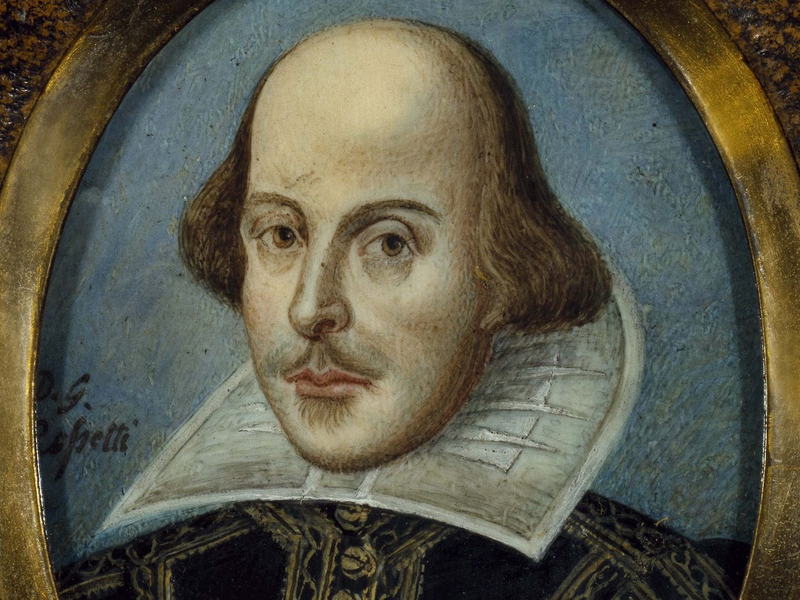
Portia of Belmont is a “lady richly left,” as Bassanio says of her in the first Act of The Merchant of Venice . Plus, she’s beautiful and wise. Suitors clamber to Belmont in hope. Her father knew it would be so, and in his will set up a fairy-tale test…

by Peter LeithartAugust 28, 2013
carlo-alberto-burato-smdx3gleu_m-unsplash
Liturgy

Liturgy Traps

[fve]http://vimeo.com/72195198[/fve]

by James B. JordanAugust 26, 2013
screen-shot-2022-05-12-at-12-07-23-pm
Deuteronomy

Victory Food

In the nature of the case, “the” Christian meditation on Deuteronomy 14:1-21 cannot be written. Meditation offers too many possibilities, opens too many doors. There is not one and only one correct set of associations for a Christian to consider when thinking of Deuteronomy 14:1-21. We could, for example, consider…

by Ralph Allan SmithAugust 21, 2013
aaron-burden-1ebsmyrau-s-unsplash
Romans

David's Sin and Israel's Salvation, Part I

Having retold the story of the cumulative sin of Israel leading to the great atonement on the cross, Paul then reemphasizes that, just as both Jew and Gentiles were locked into sin and judgment, now they are both justified by faith: Then what becomes of our boasting? It is excluded.…

by Mark HorneAugust 20, 2013
ben-white-w8qqn1pmqh0-unsplash
Deuteronomy

You are what you eat

Deuteronomy 14 is full of allusions to events of Israel’s history and other portions of Scripture. What would an Israelite learn by mediation on these allusions? The answer, I believe, is at least fourfold. Faith, Worship, War For the ancient Israelite first hearing Moses’ sermon, or perhaps hearing it read…

by Ralph Allan SmithAugust 15, 2013

Showing page 189 of 309

See all

Showing page 11 of 43

See all

German Reforvolution

Eugen Rosenstock-Huessy claims that the German Reformation qualifies for inclusion as one of the epochal revolutions of Western history ( Out of Revolution ). This is so partly because the German Reformation gave to Europe a new social role, the civil servant: “In the German revolution the drab, grey life…

October 25, 2017

Preaching, An Art of Division

The following is an excerpt from Peter Leithart's forthcoming two-volume commentary on Revelation (T&T Clark). Y ou must prophesy again concerning many peoples and nations and tongues and kings,” a voice tells John (Rev. 10:11). Then someone gives him a “reed like a rod” and instructs him to measure (11:1).…

October 24, 2017

Deep Comedy

The following is an excerpt from the introduction to my Deep Comedy (Canon, 2006). Viewed as a whole, the Christian account of history is eschatological not only in the sense that it comes to a definitive and everlasting end, but in the sense that the end is a glorified beginning,…

October 24, 2017

Time, Natural and Social

"To date," writes Norbert Elias in his Essay on Time , "enquiries into the sociology of time are almost non-existent” (38). This deficit, he suggests, is due to a dichotomy of the natural and human worlds, a dichotomy reflected in academic specializations (71). He blames the “conventional tendency to explore…

October 23, 2017

Two Kingdoms, Two Christs?

David VanDrunen, has worked out an understanding of natural law and the “two kingdoms” Christologically. He writes, “The Son of God rules the temporal kingdom as an eternal member of the Divine Trinity but does not rule it in his capacity as the incarnate mediator/redeemer” ( Natural Law and the…

October 20, 2017

Love Uber Alles

Benedict rejects the notion that Catholic social theory treats social and political institutions – the state, the economy, civil society, for instance – as – autonomous, extrinsically-related “subjects” with different logics. On this view, the economy would be the sphere of wealth-generation, politics the sphere of power, and civil society…

October 20, 2017

Showing page 130 of 2212

Browse by Category

In Medias Res

Your weekly digest for all things Theopolis.

Donate

Theopolis is nearly 100% donor-supported. Consider joining us on our mission.