Theopolis Logo

Writing

Explore our collection of theological essays, biblical studies, and reflections on faith and culture.

See all
sixteen-miles-out-al48tflf4e8-unsplash
Food

Gluttony In The Bible (As Opposed To Gluttony In The American Church)

In the Bible, fatness is such a blessing, that it is especially hard to understand why wicked men are permitted to enjoy such a state. It requires a theodicy and faith in God. Thus: “For they have no pangs until death; their bodies are fat and sleek . They are…

by Mark HorneAugust 12, 2013

jeremy-yap-j39x2xx_8cq-unsplash
How to Worship

Biblical Worship (Video with James B. Jordan)

[fve]http://vimeo.com/71901553[/fve]

by Peter LeithartAugust 8, 2013
chris-bair-ndczc5739ck-unsplash
Deuteronomy

Holy Things for Holy People

The allusion to the Exodus story is contained in the first words of Deuteronomy 14:1 — “ye are the sons of Yahweh your God” — as well as in 14:2 in the use of the technical term translated “treasured possession,” “His own possession,” “peculiar people,” “precious people,” and so forth.…

by Ralph Allan SmithAugust 5, 2013
adam-and-eve-in-the-garden-of-eden-wenzel-peter
Deuteronomy

Forbidden Foods

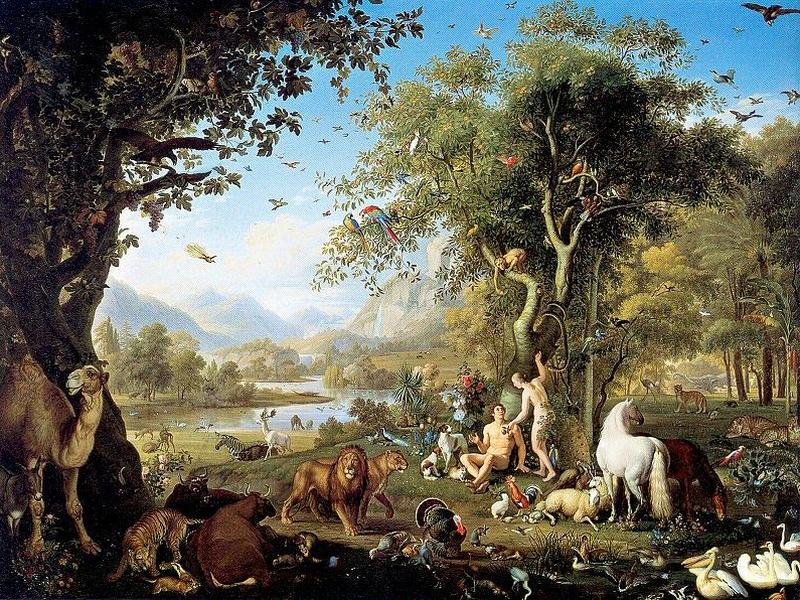
I have argued that Deuteronomy 14:1-21 is an independent literary unit that applies the Third Word to the lives of Israelites from the time of Moses and Joshua. In this short pericope, Moses suggests broad and deep meaning by means of literary allusion to the stories of the creation and…

by Ralph Allan SmithJuly 31, 2013
david-weber-fwuo_zluhnw-unsplash
How to Worship

Pro-Sacramental Reformation

In his recently republished The New Creation , the late, delightful Herbert McCabe defends the priesthood of the plebs as roundly as anyone could want. Citing Hebrews, he claims that "there is an essential difference between the Christian community and the community of the Old Law, or any other religious…

by Peter LeithartJuly 29, 2013
eric-ward-7kqe_8meex8-unsplash
Augustine

Sexual Idolatry

Augustine famously prayed, “Our hearts our restless until they rest in You.” True indeed. Being creatures, we inherently sense our ontological poverty—our innate condition of dependence—and are compelled to find a sense of security. And it is also true—as Augustine’s own narrative painfully illustrates—that one of the things we most…

by Gerald HiestandJuly 24, 2013

Showing page 190 of 309

See all

Showing page 11 of 43

See all

German Reforvolution

Eugen Rosenstock-Huessy claims that the German Reformation qualifies for inclusion as one of the epochal revolutions of Western history ( Out of Revolution ). This is so partly because the German Reformation gave to Europe a new social role, the civil servant: “In the German revolution the drab, grey life…

October 25, 2017

Preaching, An Art of Division

The following is an excerpt from Peter Leithart's forthcoming two-volume commentary on Revelation (T&T Clark). Y ou must prophesy again concerning many peoples and nations and tongues and kings,” a voice tells John (Rev. 10:11). Then someone gives him a “reed like a rod” and instructs him to measure (11:1).…

October 24, 2017

Deep Comedy

The following is an excerpt from the introduction to my Deep Comedy (Canon, 2006). Viewed as a whole, the Christian account of history is eschatological not only in the sense that it comes to a definitive and everlasting end, but in the sense that the end is a glorified beginning,…

October 24, 2017

Time, Natural and Social

"To date," writes Norbert Elias in his Essay on Time , "enquiries into the sociology of time are almost non-existent” (38). This deficit, he suggests, is due to a dichotomy of the natural and human worlds, a dichotomy reflected in academic specializations (71). He blames the “conventional tendency to explore…

October 23, 2017

Two Kingdoms, Two Christs?

David VanDrunen, has worked out an understanding of natural law and the “two kingdoms” Christologically. He writes, “The Son of God rules the temporal kingdom as an eternal member of the Divine Trinity but does not rule it in his capacity as the incarnate mediator/redeemer” ( Natural Law and the…

October 20, 2017

Love Uber Alles

Benedict rejects the notion that Catholic social theory treats social and political institutions – the state, the economy, civil society, for instance – as – autonomous, extrinsically-related “subjects” with different logics. On this view, the economy would be the sphere of wealth-generation, politics the sphere of power, and civil society…

October 20, 2017

Showing page 130 of 2212

Browse by Category

In Medias Res

Your weekly digest for all things Theopolis.

Donate

Theopolis is nearly 100% donor-supported. Consider joining us on our mission.