Theopolis Logo

Writing

Explore our collection of theological essays, biblical studies, and reflections on faith and culture.

See all
e99a9334
Advent

Stretching Christmas

For many people Christmas comes on December 25 and is over December 26. The tree is taken down along with the lights and the other decorations, and everyone begins setting the house in order for the new year. No more Christmas hymns. No more celebrations (well, until New Year’s Eve).…

by Steve WilkinsDecember 24, 2016
ascension
Advent

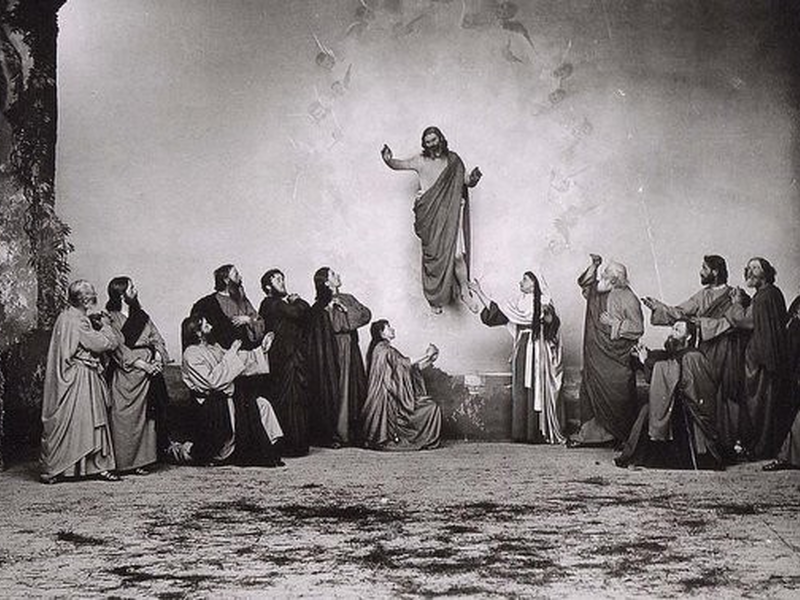
Ascension and Incarnation

The Ascension and the Incarnation should not be disconnected in our Christmas thinking or celebrations. As N.T. Wright notes, the ascension is "a central and vital feature without which all sorts of other things start to go demonstrably wrong. . . . where the ascension has been ignored or misunderstood,…

by Roy AtwoodDecember 23, 2016
nativity-rembrandt
Advent

Christmas Light

“In the Word was life, and the life was the light of men. And the light shines in the darkness.” Thus John describes the incarnation of the Son. He comes as the living and life-giving light of the world. That’s good news. In the beginning, God spoke and light shone…

by Peter LeithartDecember 23, 2016
nativity-chagall
Advent

The Spirit of Christmas

Christmas is all about Jesus. The angels announce Jesus’ birth, shepherds and wise men come to see Jesus, Herod wants to kill Jesus. We occasionally think of the Father who sent the Son, but we keep returning to the Son made flesh in Bethlehem’s manger. Meanwhile, as always, the Spirit…

by Peter LeithartDecember 22, 2016
nativity
Advent

The Humility of God

Christmas is about many things, but one of the chief things revealed in the gospel of Christmas is the humility of God. We don't often think of humility as an attribute of God. If God is glorious and exalted, we think, He must be haughty and proud and self-centered. We…

by Peter LeithartDecember 21, 2016
screenshot-2025-12-15-at-8-35-45-am
Advent

Advent of Unity

John famously begins his Gospel with a piece of theology: “In the beginning was the Word, and the Word was with God, and the Word was God.” Matthew starts with a genealogy. John celebrates Advent with a hymn, Matthew with a list. For John, Jesus is the Word of creation…

by Peter LeithartDecember 20, 2016

Showing page 120 of 309

See all

Showing page 11 of 43

See all
Literature

Hamlet, 3.4

This scene, like the scene that opens Act 3, shows Hamlet encountering a woman who in his mind has betrayed him. Again, he has been sent for, and probably suspects that it is another setup like the one with Ophelia. He has just come from the play, ready to drink…

February 16, 2006
Literature

Pierre and Hamlet

FO Matthiessen described Melville’s Pierre as “an American Hamlet,” a novel that attempts to “translate” Shakespeare into 19th-century American life. In part, this is a matter of Melville matching characters and plots: “Lucy’s pale innocence fails Pierre as Ophelia’s did Hamlet; the well-named Reverend Mr. Falsgrave’s cushioned voice of worldly…

February 16, 2006
Philosophy

Metaphysics of presence

Derrida, famously, challenges what he calls the metaphysics of presence. What is challenging is not the reality of presence as such, but the notion that we can arrive at some pure presence of a thing, a moment, a self that is unmixed with anything other than itself. A pure instant…

February 16, 2006
Philosophy

How Deconstruction Works

Culler offers an example from Nietzsche that provides an excellent example of the ju-jitsu of deconstruction. Nietzsche argues that causality is not something given, but is the product of a rhetorical operation, a chronological reversal ( chronologische Umdrehung ). I feel a pain, and go searching for a cause of…

February 15, 2006
Literature

New Criticism and theory

At the beginning of his book on Deconstruction , Jonathan Culler notes that critical theory, seen “as an attempt to establish the validity or invalidity of particular interpretive procedures,” is profoundly indebted to New Criticism: This movement “not only instilled the assumption that the purpose of literary study is the…

February 15, 2006
Literature

Thoughts on Beowulf

All page numbers are from the Heany translation. The central focus of the first two fights is Heorot, the mead-hall of Hrothgar. The mead-hall is the focus of a complex of imagery. (The last fight has a similar origin, as Beowulf’s hall is destroyed by the dragon. The house is…

February 15, 2006

Showing page 1884 of 2212

Browse by Category

In Medias Res

Your weekly digest for all things Theopolis.

Donate

Theopolis is nearly 100% donor-supported. Consider joining us on our mission.