Theopolis Logo

Writing

Explore our collection of theological essays, biblical studies, and reflections on faith and culture.

See all
sixteen-miles-out-al48tflf4e8-unsplash
Food

Gluttony In The Bible (As Opposed To Gluttony In The American Church)

In the Bible, fatness is such a blessing, that it is especially hard to understand why wicked men are permitted to enjoy such a state. It requires a theodicy and faith in God. Thus: “For they have no pangs until death; their bodies are fat and sleek . They are…

by Mark HorneAugust 12, 2013

jeremy-yap-j39x2xx_8cq-unsplash
How to Worship

Biblical Worship (Video with James B. Jordan)

[fve]http://vimeo.com/71901553[/fve]

by Peter LeithartAugust 8, 2013
chris-bair-ndczc5739ck-unsplash
Deuteronomy

Holy Things for Holy People

The allusion to the Exodus story is contained in the first words of Deuteronomy 14:1 — “ye are the sons of Yahweh your God” — as well as in 14:2 in the use of the technical term translated “treasured possession,” “His own possession,” “peculiar people,” “precious people,” and so forth.…

by Ralph Allan SmithAugust 5, 2013
adam-and-eve-in-the-garden-of-eden-wenzel-peter
Deuteronomy

Forbidden Foods

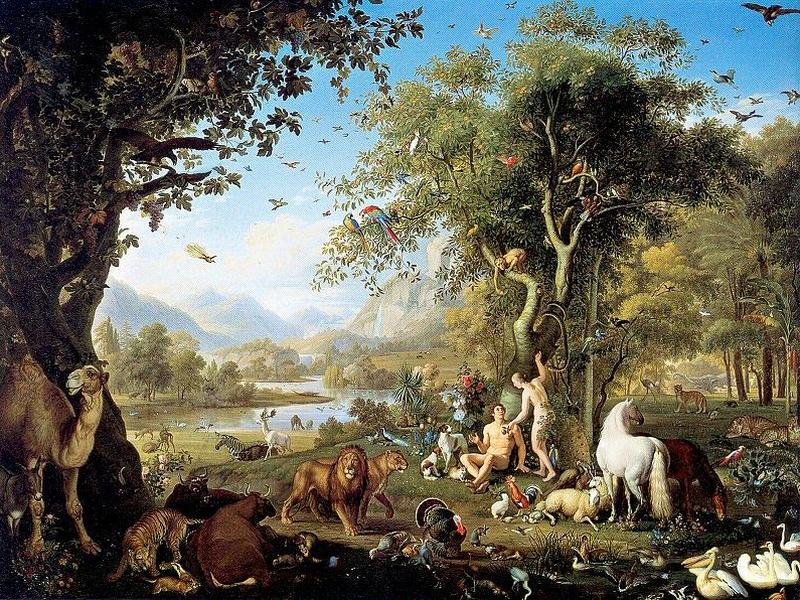
I have argued that Deuteronomy 14:1-21 is an independent literary unit that applies the Third Word to the lives of Israelites from the time of Moses and Joshua. In this short pericope, Moses suggests broad and deep meaning by means of literary allusion to the stories of the creation and…

by Ralph Allan SmithJuly 31, 2013
david-weber-fwuo_zluhnw-unsplash
How to Worship

Pro-Sacramental Reformation

In his recently republished The New Creation , the late, delightful Herbert McCabe defends the priesthood of the plebs as roundly as anyone could want. Citing Hebrews, he claims that "there is an essential difference between the Christian community and the community of the Old Law, or any other religious…

by Peter LeithartJuly 29, 2013
eric-ward-7kqe_8meex8-unsplash
Augustine

Sexual Idolatry

Augustine famously prayed, “Our hearts our restless until they rest in You.” True indeed. Being creatures, we inherently sense our ontological poverty—our innate condition of dependence—and are compelled to find a sense of security. And it is also true—as Augustine’s own narrative painfully illustrates—that one of the things we most…

by Gerald HiestandJuly 24, 2013

Showing page 190 of 309

See all

Showing page 11 of 43

See all

Exhortation, August 28

Hope is one of the traditional “theological virtues” – faith, hope and love. Hebrews 11 defines faith as hope, and for Paul “hope,” like Victor and Faith, is another name for Jesus (1 Timothy 1:1). In our sermon text, Paul encourages hope by saying God is able to do “exceeding…

August 28, 2005
Philosophy

Transcendence and Immanence

There’s a slight false step, in the midst of a very helpful point, in Bruce Ellis Benson’s superb Graven Ideologies : He has been explaining the “double transcendence” of Platonism - metaphysical (Truth’s being is beyong the sensible world) and epistemological (human beings can get beyond the sensible world to…

August 28, 2005
Music

But for Luther

In his Teaching Company tapes on Bach and the Baroque (recommended), Robert Greenberg suggests an historical sequence that accounts for the development of German music: Music for singing, which in the period was largely church music, must take account of the language in which the music is sung. German is…

August 27, 2005

Mystery of Christ

Is the “mystery of Christ” in Ephesians 3:4 a mystery about Christ or is Christ Himself the mystery? Let’s take the latter option - Christ Himself is the mystery (cf. Colossians 1:27). How does that connect with the way Paul unpacks the mystery in terms of Jew/Gentile union (v. 6)?…

August 27, 2005

Gifts of men

NT Wright points out that the ascent and descent language in Ephesians 4:7-10 is reminiscent of Moses ascending Mount Sinai and then descending with the tablets of the Ten Commandments. Jesus ascends to heaven, and when He returns He does not bring the law of commandments on tablets of stone,…

August 27, 2005
Literature

Tragedy and Time

Macbeth hopes that his one act of regicide will stop the flow of time - “if ‘twere done when ‘tis done, then ‘twere well it were done quickly.” But it can’t be done when it’s done; actions provoke reactions. He ends tragically because he cannot trammel up the consequence. Time…

August 27, 2005

Showing page 1951 of 2212

Browse by Category

In Medias Res

Your weekly digest for all things Theopolis.

Donate

Theopolis is nearly 100% donor-supported. Consider joining us on our mission.