Theopolis Logo

Writing

Explore our collection of theological essays, biblical studies, and reflections on faith and culture.

See all
tanner-mardis-xuxghzhibn4-unsplash-1-2
Biblical Studies

Tweets-turned-Notes on the Bible’s Chronology

Summary In what follows, I will consider the “year-stamps” employed in Scripture, i.e., statements of the form, “Such-and-such an event took place in the Xth year of Y.” In the process, I will suggest some ways in which the Biblical narrative might relate to events in the extra-Biblical world, though…

by James BejonJuly 16, 2019
durer-prodigal-son-2
Luke

Perspectives on the Prodigal, (Part 2)

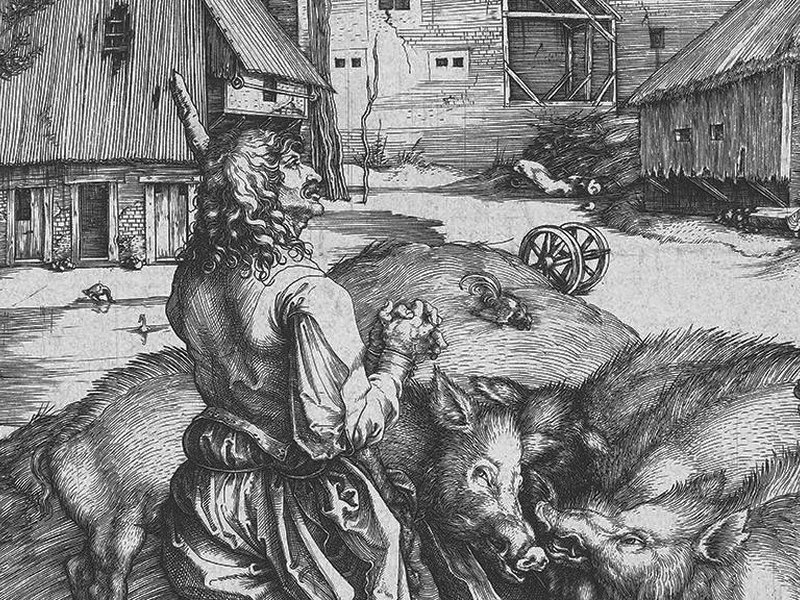
In the first essay on the parable of the Prodigal Son, I suggested that the problems commentators and others encounter in interpreting Jesus three-part parable are not accidental. These are not just problems in our ignorance of cultural background. They are intentional features of the stories —stories designed to poke…

by Ralph Allan SmithJuly 11, 2019
durer-prodigal-son-2
Luke

Perspectives on the Prodigal, (Part 1)

The story of the Prodigal Son is perhaps the most well-known story in the Bible. As others have observed, it may also be one of the most misunderstood. In two short essays, I will point out features of this story that are commonly neglected, aspects of Jesus’ parable that might…

by Ralph Allan SmithJuly 9, 2019
de-rijke-man-en-de-arme-lazarus-by-jacopo-da-ponte-16th-century
Luke

Lazarus and the Rich Man

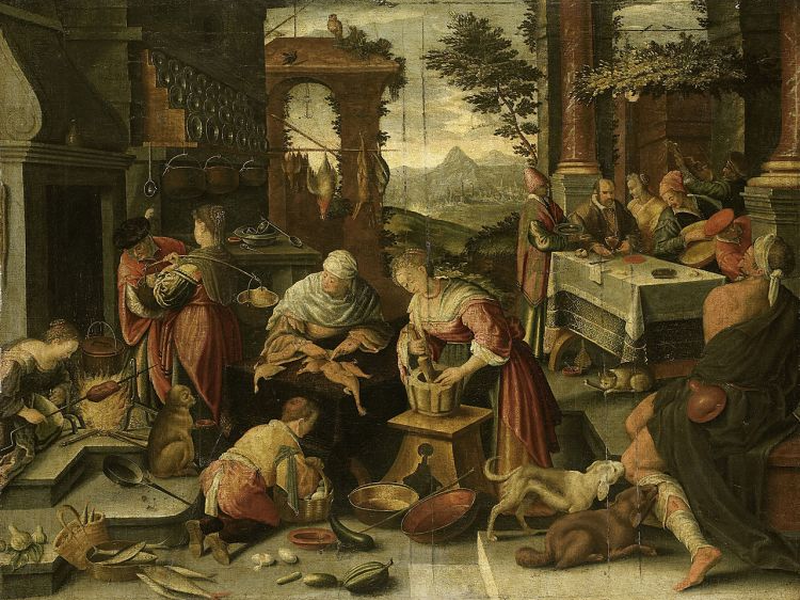
The parable of Lazarus and the nameless rich man is not an independent story. It is part of a long context that begins in Luke 15:1, where Jesus is eating with tax collectors and sinners and the scribes and Pharisees grumble. In response to their hardheartedness, Jesus tells a three-part…

by Ralph Allan SmithJuly 4, 2019
aaron-burden-uynrnfdkjwg-unsplash
Luke

Everybody has Dropsy - Luke 14:1-24

The Bible is written so that even when a reader cannot pick up on what might be deeper or more detailed aspects of a text, there is virtually always a message to be heard. In the ancient world, where the “reader” of Scripture would likely be a church official facing…

by Ralph Allan SmithJuly 2, 2019
communion
Biblical Theology

Fruit Trees and Grain Plants

The distinction between garden (or vineyard) and field begins in Genesis 2. This relates to the ordering of the formless world. Plants of the field are contrasted with the garden planted by God in Genesis 2:5&8. Later on, under the Old Covenant the Israelites will be required to keep their…

by James B. JordanJune 27, 2019

Showing page 77 of 309

See all

Showing page 11 of 43

See all

Heavenly Court, Caesar's Court

David Aune has argued that the heavenly court scene of Revelation 4-5 “bears such a striking resemblance to the ceremonial of the imperial court and cult that the latter can only be a parody of the former” (5). He proposes this against the main “major competing view” that “the heavenly…

January 11, 2016

Culture and Biology in Judith Butler

Will Rees says in his TLS review of Judith Butler's Senses of the Subject that the “biggest topic of discussion” has been Butler's writing style, which he characterizes as “torturous.” It's not just the style. In her poststructuralist early work, Butler argues that “gender identities are constructed by the machinations…

January 11, 2016

The Church in Britain's Future

The Economist reports on “an immigrant-led surge in London churchgoing. Weekly participation in Christian services in the capital has grown by 16% since 2005. Most devout Londoners (88%) worship outside the ranks of the established church whose spires pierce the skyline; about a third are Pentecostal.” It is the same…

January 11, 2016

Anti-Kantian

Drawing on the work of CS Peirce, Giovanni Maddalena ( The Philosophy of Gesture ) argues that pragmatism must be understood as more than an anti-Cartesian movement in philosophy. To the critique of Descartes, it adds a critique of Kant. He summarizes Peirce's critique. Kant is a nominalist, which means…

January 8, 2016

Doctrina sacra

The Summa Theologica of Thomas Aquinas has a clear surface structure. A first part, two parts of the second part, and a third part. But that obvious structure doesn't tell the whole story. Thomas explains the structure of the treatise at the outset (1, 2): “Because the chief aim of…

January 8, 2016

Tribes, Tongues, Peoples, Nations

In his Climax of Prophecy , Richard Bauckham’s devotes a long, complicated, fascinating chapter to an analysis of the phrase “tribes, tongues, nations, peoples” (and variations) in Revelation. The arrangement of the lists varies, but the variations are not random. They reinforce substantive connections between different parts of the book.…

January 8, 2016

Showing page 334 of 2212

Browse by Category

In Medias Res

Your weekly digest for all things Theopolis.

Donate

Theopolis is nearly 100% donor-supported. Consider joining us on our mission.