Theopolis Logo

Writing

Explore our collection of theological essays, biblical studies, and reflections on faith and culture.

See all
tanner-mardis-xuxghzhibn4-unsplash-1-2
Biblical Studies

Tweets-turned-Notes on the Bible’s Chronology

Summary In what follows, I will consider the “year-stamps” employed in Scripture, i.e., statements of the form, “Such-and-such an event took place in the Xth year of Y.” In the process, I will suggest some ways in which the Biblical narrative might relate to events in the extra-Biblical world, though…

by James BejonJuly 16, 2019
durer-prodigal-son-2
Luke

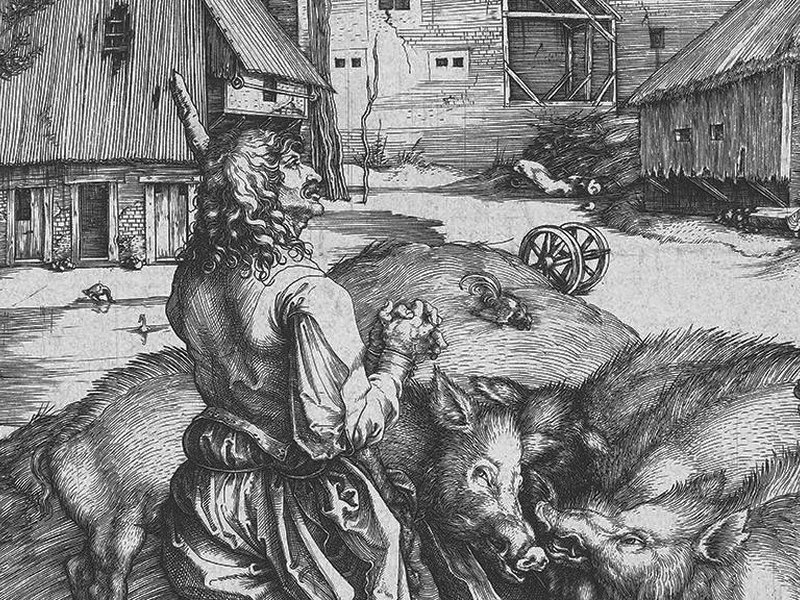
Perspectives on the Prodigal, (Part 2)

In the first essay on the parable of the Prodigal Son, I suggested that the problems commentators and others encounter in interpreting Jesus three-part parable are not accidental. These are not just problems in our ignorance of cultural background. They are intentional features of the stories —stories designed to poke…

by Ralph Allan SmithJuly 11, 2019
durer-prodigal-son-2
Luke

Perspectives on the Prodigal, (Part 1)

The story of the Prodigal Son is perhaps the most well-known story in the Bible. As others have observed, it may also be one of the most misunderstood. In two short essays, I will point out features of this story that are commonly neglected, aspects of Jesus’ parable that might…

by Ralph Allan SmithJuly 9, 2019
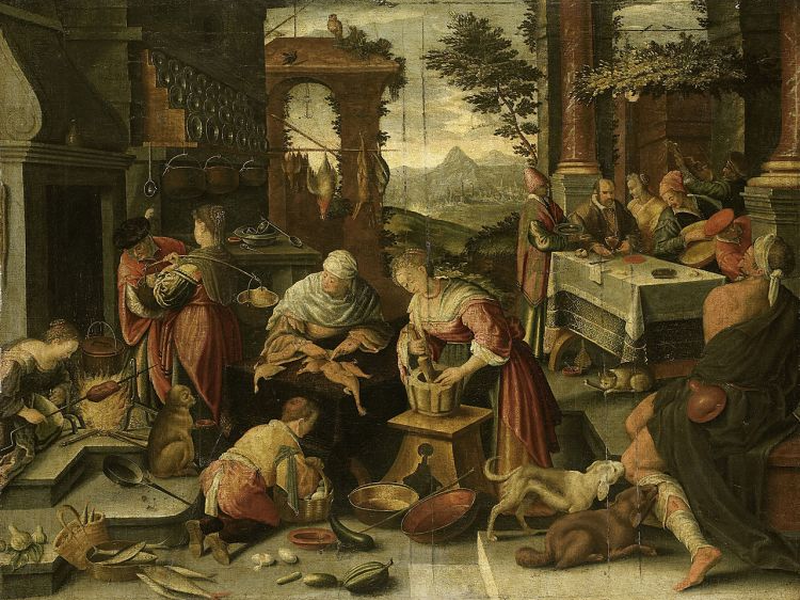
de-rijke-man-en-de-arme-lazarus-by-jacopo-da-ponte-16th-century
Luke

Lazarus and the Rich Man

The parable of Lazarus and the nameless rich man is not an independent story. It is part of a long context that begins in Luke 15:1, where Jesus is eating with tax collectors and sinners and the scribes and Pharisees grumble. In response to their hardheartedness, Jesus tells a three-part…

by Ralph Allan SmithJuly 4, 2019
aaron-burden-uynrnfdkjwg-unsplash
Luke

Everybody has Dropsy - Luke 14:1-24

The Bible is written so that even when a reader cannot pick up on what might be deeper or more detailed aspects of a text, there is virtually always a message to be heard. In the ancient world, where the “reader” of Scripture would likely be a church official facing…

by Ralph Allan SmithJuly 2, 2019
communion
Biblical Theology

Fruit Trees and Grain Plants

The distinction between garden (or vineyard) and field begins in Genesis 2. This relates to the ordering of the formless world. Plants of the field are contrasted with the garden planted by God in Genesis 2:5&8. Later on, under the Old Covenant the Israelites will be required to keep their…

by James B. JordanJune 27, 2019

Showing page 77 of 309

See all

Showing page 11 of 43

See all

Dualist Apocalyptic?

Ryan Leif Hansen doesn't think it's accurate to say that apocalyptic depictions of evil are “dualistic” ( Silence and Praise ). At the very least, the kind of dualism needs to be specified. Hansen writes, “evil is the result of a resistance to divine rule and order, and a transgressing…

December 17, 2015

John Knox

John Knox's influence on the modern world has been enormous. He shaped the Scottish Reformed church, and so shaped the faith and culture of the corners of the world to which Scottish Reformed missionaries and pastors spread. Yet, it's been nearly thirty years since we've seen a major biography. As…

December 17, 2015

The Common-Sensical Berkeley, 2

Berkeley is an anti-abstractionist. What is abstraction? Berkeley is basically taking on Locke, who argues (in Berkeley's telling) that our process of thought works something liek this: We have a particular thing that invariably has a combination of qualities. But those qualities are abstractions. We can see resemblances among things:…

December 16, 2015

Along the Trail of Trade

According to TLS reviewer David Morgan, Peter Frankopan's The Silk Roads is the fruit of teenage dissatisfaction with world history: “Frankopan tells us that as a teenager he became increasingly dissatisfied with the version of history he had been taught: essentially the ‘Rise of the West,' in which Greece led…

December 16, 2015

Walking the Walk

The gospel is all about teaching us to walk. Once we walked, zombie-like, in death and sin (Ephesians 2:1), but God raised us in Christ to walk in good works ( 2:10). We used to walk like the Gentiles, in darkness and dissipation, without God in the world. Now that…

December 16, 2015

Dickensian Typology

Dickens's Hard Times takes place in Coketown, a coal mining town, focused on a small cluster of characters. There’s Gradgrind, a leading citizen and MP and education reformer. The Gradgrind children, Tom and Louisa, have both been trained according to Gradgrind’s modern educational methods. Bounderby is the manager of one…

December 15, 2015

Showing page 340 of 2212

Browse by Category

In Medias Res

Your weekly digest for all things Theopolis.

Donate

Theopolis is nearly 100% donor-supported. Consider joining us on our mission.