Theopolis Logo

Writing

Explore our collection of theological essays, biblical studies, and reflections on faith and culture.

See all
sinitta-leunen-dvibhmzsy8e-unsplash
Epistemology

A Cheer for the Mystics

Mystical theologians are often unguarded, extreme, un-nuanced, pressing to the edges of heresy, sometimes beyond. Still, the mystics are worthy of study. Why? Many reasons. Unlike some late medieval and post-Reformation dogmaticians, mystical theologians are often instinctively and richly Trinitarian. Historical-critical approaches to Scripture left mystical theologians virtually untouched; mystics…

by Peter LeithartSeptember 2, 2013
portrait-of-william-shakespeare-1564-1616-ca-1865
Literature

Shadow and Substance in Shakespeare's Venice

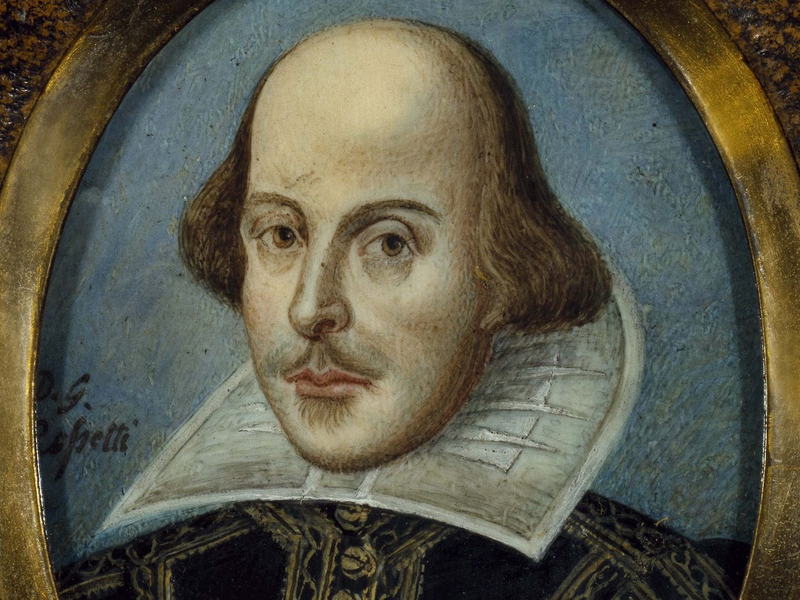
Portia of Belmont is a “lady richly left,” as Bassanio says of her in the first Act of The Merchant of Venice . Plus, she’s beautiful and wise. Suitors clamber to Belmont in hope. Her father knew it would be so, and in his will set up a fairy-tale test…

by Peter LeithartAugust 28, 2013
carlo-alberto-burato-smdx3gleu_m-unsplash
Liturgy

Liturgy Traps

[fve]http://vimeo.com/72195198[/fve]

by James B. JordanAugust 26, 2013
screen-shot-2022-05-12-at-12-07-23-pm
Deuteronomy

Victory Food

In the nature of the case, “the” Christian meditation on Deuteronomy 14:1-21 cannot be written. Meditation offers too many possibilities, opens too many doors. There is not one and only one correct set of associations for a Christian to consider when thinking of Deuteronomy 14:1-21. We could, for example, consider…

by Ralph Allan SmithAugust 21, 2013
aaron-burden-1ebsmyrau-s-unsplash
Romans

David's Sin and Israel's Salvation, Part I

Having retold the story of the cumulative sin of Israel leading to the great atonement on the cross, Paul then reemphasizes that, just as both Jew and Gentiles were locked into sin and judgment, now they are both justified by faith: Then what becomes of our boasting? It is excluded.…

by Mark HorneAugust 20, 2013
ben-white-w8qqn1pmqh0-unsplash
Deuteronomy

You are what you eat

Deuteronomy 14 is full of allusions to events of Israel’s history and other portions of Scripture. What would an Israelite learn by mediation on these allusions? The answer, I believe, is at least fourfold. Faith, Worship, War For the ancient Israelite first hearing Moses’ sermon, or perhaps hearing it read…

by Ralph Allan SmithAugust 15, 2013

Showing page 189 of 309

See all

Showing page 11 of 43

See all

Treason, Tyranny, Thanks

As early as Xenophon, ingratitude has seen as a cause of sedition, and during the middle ages the social and political context of feudalism strengthened this link. Xenophon wrote, “And they [the Persians] bring one another to trial also charged with an offense for which people hate one another most…

November 24, 2015

Creator and Creature

In a brief 2002 essay on “Creator and Creature,” reprinted in Theology as Revisionary Metaphysics , Robert Jenson admits that “we indeed need to move conceptually outside the biblical narrative as such,” but he argues that common ways of conceptualizing the Creator-creature distinction are self-contradictory, incoherent, or depart from the…

November 23, 2015

Chinese Future?

Is China poised to rule the world? Will its growing economic and political clout fundamentally transform the way the world whirls? Ho-fung Hung ( China Boom ) doesn't think so. On the contrary, China “has both helped to perpetuate the existing U.S.-centered global neoliberal order and reshaped the balance of…

November 23, 2015

Rousseau, Modernity, Music

The contributors to Rousseau and the Dilemmas of Modernity share a skepticism of accounts of “Rousseau the totalitarian” and “Rousseau the illiberal menace.” Positively, they share a conviction that Rousseau has great relevance to present day dilemmas. As editor Mark Hulliung says, “When it comes to whether we can attain…

November 23, 2015

When the World's Gone Crazy

Isaiah 19-20:6 is an oracle against Egypt. It's not good news for Egypt. Egypt will come under a savage king. The following verses evoke the plagues and the passage through the sea: waters dried up (v. 5), canals emit a stench as they did when the fish died in the…

November 20, 2015
Architecture

Pugin the Functionalist

Nikolaus Pevsner ( The Sources of Modern Architecture and Design ) quotes Augustus Welby Northmore Pugin, writing in 1841: “There should be no features about a building which are not necessary for convenience, construction, or propriety . . . The smallest detail should . . . serve a purpose, and…

November 20, 2015

Showing page 348 of 2212

Browse by Category

In Medias Res

Your weekly digest for all things Theopolis.

Donate

Theopolis is nearly 100% donor-supported. Consider joining us on our mission.