Theopolis Logo

Writing

Explore our collection of theological essays, biblical studies, and reflections on faith and culture.

See all
sixteen-miles-out-al48tflf4e8-unsplash
Food

Gluttony In The Bible (As Opposed To Gluttony In The American Church)

In the Bible, fatness is such a blessing, that it is especially hard to understand why wicked men are permitted to enjoy such a state. It requires a theodicy and faith in God. Thus: “For they have no pangs until death; their bodies are fat and sleek . They are…

by Mark HorneAugust 12, 2013

jeremy-yap-j39x2xx_8cq-unsplash
How to Worship

Biblical Worship (Video with James B. Jordan)

[fve]http://vimeo.com/71901553[/fve]

by Peter LeithartAugust 8, 2013
chris-bair-ndczc5739ck-unsplash
Deuteronomy

Holy Things for Holy People

The allusion to the Exodus story is contained in the first words of Deuteronomy 14:1 — “ye are the sons of Yahweh your God” — as well as in 14:2 in the use of the technical term translated “treasured possession,” “His own possession,” “peculiar people,” “precious people,” and so forth.…

by Ralph Allan SmithAugust 5, 2013
adam-and-eve-in-the-garden-of-eden-wenzel-peter
Deuteronomy

Forbidden Foods

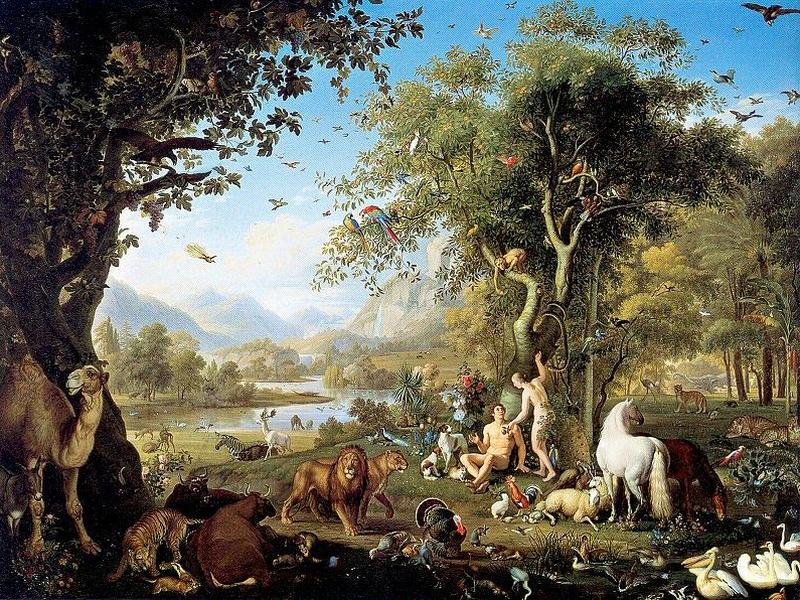
I have argued that Deuteronomy 14:1-21 is an independent literary unit that applies the Third Word to the lives of Israelites from the time of Moses and Joshua. In this short pericope, Moses suggests broad and deep meaning by means of literary allusion to the stories of the creation and…

by Ralph Allan SmithJuly 31, 2013
david-weber-fwuo_zluhnw-unsplash
How to Worship

Pro-Sacramental Reformation

In his recently republished The New Creation , the late, delightful Herbert McCabe defends the priesthood of the plebs as roundly as anyone could want. Citing Hebrews, he claims that "there is an essential difference between the Christian community and the community of the Old Law, or any other religious…

by Peter LeithartJuly 29, 2013
eric-ward-7kqe_8meex8-unsplash
Augustine

Sexual Idolatry

Augustine famously prayed, “Our hearts our restless until they rest in You.” True indeed. Being creatures, we inherently sense our ontological poverty—our innate condition of dependence—and are compelled to find a sense of security. And it is also true—as Augustine’s own narrative painfully illustrates—that one of the things we most…

by Gerald HiestandJuly 24, 2013

Showing page 190 of 309

See all

Showing page 11 of 43

See all

Incarnational Theology

The Incarnation of God by John Clark and Marcus Peter Johnson is an excellent book. This accessible book offers a mini-systematics from the perspective of the incarnation, showing how the incarnation affects our understanding of God and His attributes, atonement and salvation, church and sacraments. They end with a chapter…

March 16, 2015

The Disappearing Body

T he dead have gone missing from the realm of the living,” observes Candi Cann in Virtual Afterlives (xi). “They are, like their memorials, repackaged, the very disjuncture of death denies in its most crucial moment.” Death has moved from the home and family to the hospital and the funeral…

March 16, 2015

Post-Post-Secular Politics

William Viestenz's By the Grace of God joins a growing list of books that, invoking Carl Schmitt and others, argues that secular politics has never been secular, but always parasitic on sacred politics. Viestenz's book is not an exercise in theory, however, but a theoretically-attentive historical study of the Spain…

March 16, 2015

Giving God

God Himself is a Giver of Gifts. His eternal life is a life of give and counter-gift. Our God is the giving God. We can start with James 1:5, 17. Verse 17 tells us that every good thing and every gift is ultimately from God, who gives relentlessly, without reproaching…

March 13, 2015

In the Image of the Giver

Human beings are made in the image of the giving God, and this suggests that giving, reception, and return are part of the cycle of human existence as well. Man is created as a recipient of gifts; Adam’s very existence is a gift that God is not constrained to give,…

March 13, 2015

Members for Righteousness

We die to sin in baptism, Paul says. Liberated from sin, we are to devote the members of our bodies to God and His righteousness. We already participate in Jesus' resurrection; His resurrection power is already at work in our bodies (Romans 6). What might that mean? What does it…

March 13, 2015

Showing page 452 of 2212

Browse by Category

In Medias Res

Your weekly digest for all things Theopolis.

Donate

Theopolis is nearly 100% donor-supported. Consider joining us on our mission.