Theopolis Logo

Writing

Explore our collection of theological essays, biblical studies, and reflections on faith and culture.

See all
evangelists
Matthew

Dating Matthew, (Part 1)

When might the Gospel according to Matthew have been written? Of course, any answer can only be speculation, but that does not mean we are reduced to groundless opinion. In this series of articles I point the way to an approach different from the general consensus among scholars today which…

by Ralph Allan SmithNovember 22, 2016
hebrew-manuscript-3
Hermeneutics

Synopticity, (Part 2)

In my first essay on “synopticity” I offered a rather rough definition of the phenomenon and important, though not exhaustive examples. In this essay, I want to introduce broader aspects of the phenomenon of “synopticity.” The first example that I have in mind is conventional stories, stories of different historical…

by Ralph Allan SmithNovember 17, 2016
screen-shot-2016-03-31-at-9-32-11-am
Ascension

Brexit and the Binding of Satan, Part 4

Since the judgment of Babel was followed by the initiation of the circumcision, the impending end of the circumcision in AD70 explains the significance of the first century miracle of foreign tongues. Except for a few Aramaic “teasers” in the book of Daniel, the Word of God was monolingual and…

by Mike BullNovember 15, 2016
four-evangelists
Hermeneutics

Synopticity, (Part 1)

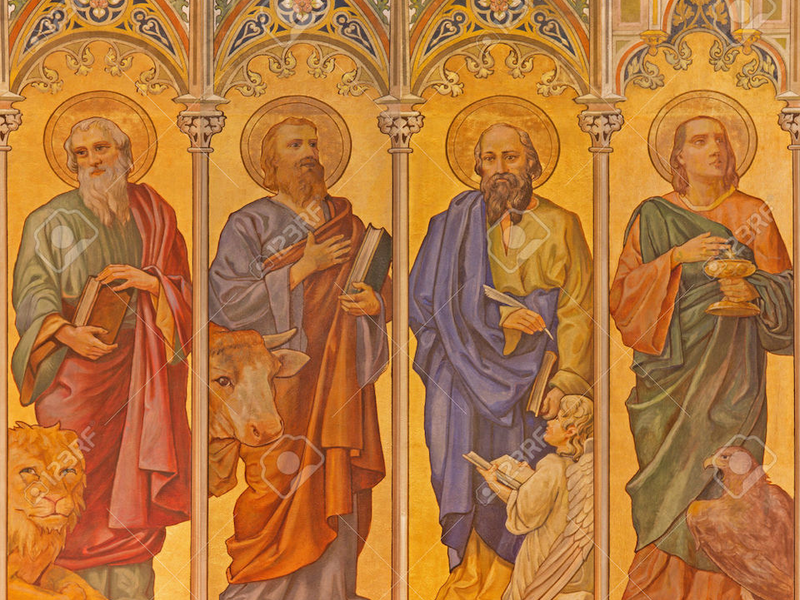
To the best of my knowledge “synopticity” is not a word used in theology or Biblical studies, but it seems an appropriate word to describe the kind of phenomena associated with the Synoptic Gospels, Matthew, Mark, and Luke. These three Gospels tell essentially the same story with significant — sometimes…

by Ralph Allan SmithNovember 10, 2016
laughing_statue_by_xxbobbiie-d5f0meh-2
Humor

Learning to Laugh

Humor is a funny thing. It is altogether familiar yet also mysterious. What makes us laugh? Why do we find things funny? There are academic fields of study dedicated to discovering what makes things humorous. These academicians even have a journal entitled International Journal of Humor Research . No joke.…

by Bill SmithNovember 8, 2016
chaucer
Literature

Flawed Means of Grace: Liturgy in The Pardoner's Tale

Out of all the characters in Geoffrey Chaucer’s The Canterbury Tales , the Pardoner has been called the “one lost soul.” The pious Parson, who closes out the collection of tales with a sermon on the seven deadly sins and how a sinner can absolve himself of them, connects the…

by Christian LeithartNovember 3, 2016

Showing page 122 of 309

See all

Showing page 12 of 43

See all

Philosophy On Trial

Speech exists that we may "lovingly create names," writes Eugen Rosenstock-Huessy ( In the Cross of Reality , 149). "Speaking is always courting" (149). Courtrooms exist for those times when speech falters. In a courtroom, speech turns from courtship to dispute and this setting changes the character of speech: "In…

December 1, 2017

Coriolanus and Christ

Jay Zysk's Shadow and Substance is a recent contribution to a growing literature linking early modern theology with early modern drama. Zysk focuses on the ways Reformation disputes about the Eucharist play into plays, how Eucharistic semiotics shapes understandings of bodies and signs, flesh and spirit, letter and figure, words…

December 1, 2017

Faith, Love, Marriage

For Luther, faith isn't mere assent to truth, nor even confidence and trust in a distant savior. As David Fink puts it, "Faith . . . becomes the unitive force," or, in Luther's words, it "takes hold of Christ and has Him present, enclosing Him as the ring encloses a…

December 1, 2017

Jerome's Perspective on Paul

In his analysis of Luther's treatment of Galatians (in Reformation Readings of Paul ), David Fink gives a brief overview of pre-Reformation interpretations of the letter. Jerome said that the letter "is concerned especially with establishing the 'cessation of the old Law and the introduction of the new Law.'" Jerome…

December 1, 2017

The True and the Made

Vico's claim that verum et factum convertuntur , "the true and the made are convertible," has been taken as a sign of the foundational atheism of modernity. Benedict XVI sees Vico's claim as a secularization, a turn from the uncreated truth that is God to constructed human things. As Robert…

December 1, 2017

The Faith of Liberalism

"Liberals and communists," writes Eugen Rosenstock-Huessy ( In the Cross of Reality ), "have in common that they wish to make do without church and dogma, and indeed without faith. . . . reason is enough, for we can say what we think" (141). Both retain the term "believe," but…

December 1, 2017

Showing page 118 of 2212

Browse by Category

In Medias Res

Your weekly digest for all things Theopolis.

Donate

Theopolis is nearly 100% donor-supported. Consider joining us on our mission.