Theopolis Logo

Writing

Explore our collection of theological essays, biblical studies, and reflections on faith and culture.

See all
tanner-mardis-xuxghzhibn4-unsplash-1-2
Biblical Studies

Tweets-turned-Notes on the Bible’s Chronology

Summary In what follows, I will consider the “year-stamps” employed in Scripture, i.e., statements of the form, “Such-and-such an event took place in the Xth year of Y.” In the process, I will suggest some ways in which the Biblical narrative might relate to events in the extra-Biblical world, though…

by James BejonJuly 16, 2019
durer-prodigal-son-2
Luke

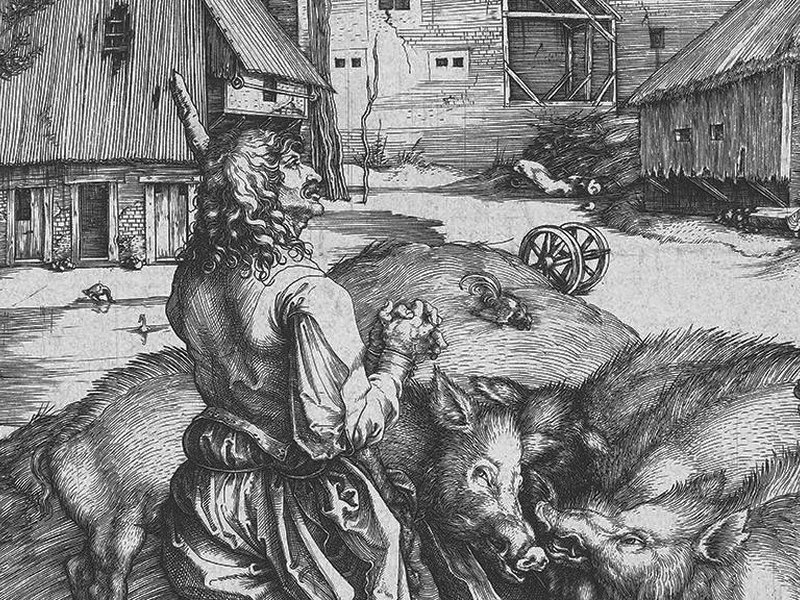
Perspectives on the Prodigal, (Part 2)

In the first essay on the parable of the Prodigal Son, I suggested that the problems commentators and others encounter in interpreting Jesus three-part parable are not accidental. These are not just problems in our ignorance of cultural background. They are intentional features of the stories —stories designed to poke…

by Ralph Allan SmithJuly 11, 2019
durer-prodigal-son-2
Luke

Perspectives on the Prodigal, (Part 1)

The story of the Prodigal Son is perhaps the most well-known story in the Bible. As others have observed, it may also be one of the most misunderstood. In two short essays, I will point out features of this story that are commonly neglected, aspects of Jesus’ parable that might…

by Ralph Allan SmithJuly 9, 2019
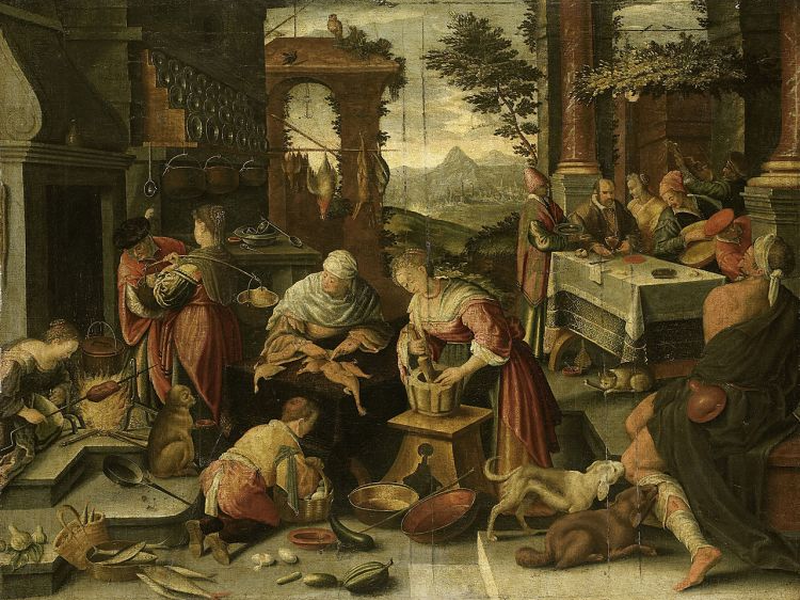
de-rijke-man-en-de-arme-lazarus-by-jacopo-da-ponte-16th-century
Luke

Lazarus and the Rich Man

The parable of Lazarus and the nameless rich man is not an independent story. It is part of a long context that begins in Luke 15:1, where Jesus is eating with tax collectors and sinners and the scribes and Pharisees grumble. In response to their hardheartedness, Jesus tells a three-part…

by Ralph Allan SmithJuly 4, 2019
aaron-burden-uynrnfdkjwg-unsplash
Luke

Everybody has Dropsy - Luke 14:1-24

The Bible is written so that even when a reader cannot pick up on what might be deeper or more detailed aspects of a text, there is virtually always a message to be heard. In the ancient world, where the “reader” of Scripture would likely be a church official facing…

by Ralph Allan SmithJuly 2, 2019
communion
Biblical Theology

Fruit Trees and Grain Plants

The distinction between garden (or vineyard) and field begins in Genesis 2. This relates to the ordering of the formless world. Plants of the field are contrasted with the garden planted by God in Genesis 2:5&8. Later on, under the Old Covenant the Israelites will be required to keep their…

by James B. JordanJune 27, 2019

Showing page 77 of 309

See all

Showing page 12 of 43

See all
History

Foucault’s eschatology

Berman offers this very sharp summary of Foucault’s work, whom he says is “about the only writer of the past decade who has had anything substantial to say about modernity” (Berman is writing in 1982). Then: “what he has to say is an endless, excruciating series of variations on the…

November 5, 2006
History

Flattened modernity

In the introduction to his All That Is Solid Melts Into Air , Marshall Berman argues that nineteenth century critics of modernity had a much richer grasp of the costs and promise of modernity than do twentieth century observers. Modern life is, Rousseau said, a whirlwind ( le tourbillon social…

November 5, 2006
History

Religious Liberty and the Whig Interpretation

The following is a portion of a lecture at the NSA disputatio. WHIGGISH HISTORY The Whigs were of course a loose British political alliance, the predecessor of today’s Liberal Democrats. The term was first applied, interestingly, to the Scottish Covenanters who marched on Edinburgh in 1648, and then to the…

November 3, 2006
American Religion

Innocent abroad

In a recent issue of TNR , Alan Wolfe reviewed David Kuo’s book telling the story of his service in the current Bush administration. Kuo worked in the office of faith-based initiatives, and though he left the administration he still praises Bush because of his Christian testimony. What strikes Wolfe…

November 3, 2006
History

World Cities again

Thinking again about Mike Featherstone’s comments on the fact that multiculturalism developed first in Southern Hemisphere cities (quoted in a post from September 2006), it strikes me that one of the dynamics of the current global situation is a reversal of colonialism. That’s true in the sense that Featherstone notes…

November 2, 2006
History

Mass culture

The point of theories of “mass culture” is not so much the “mass” as the “culture.” Goods and services may be distributed to a large number of people in economies where what is called “mass culture” doesn’t exist. When theorists use the phrase, they want to emphasize the fact that…

November 2, 2006

Showing page 1771 of 2212

Browse by Category

In Medias Res

Your weekly digest for all things Theopolis.

Donate

Theopolis is nearly 100% donor-supported. Consider joining us on our mission.