
Theopolis Logo

Writing

Explore our collection of theological essays, biblical studies, and reflections on faith and culture.

See all
trnava-university-beeyeib-am8-unsplash
Biblical Chronology

Meredith G. Kline Strikes Back, Part 2

In our first essay we looked at Kline’s flawed exegesis of Genesis 2:5 as it relates to Day 3 of creation. Now we turn to Kline’s new argument against a chronological reading of Genesis 1, as found, again, in "Space and Time in the Genesis Cosmogony," Perspectives on Science and…

by James B. JordanMarch 29, 1997
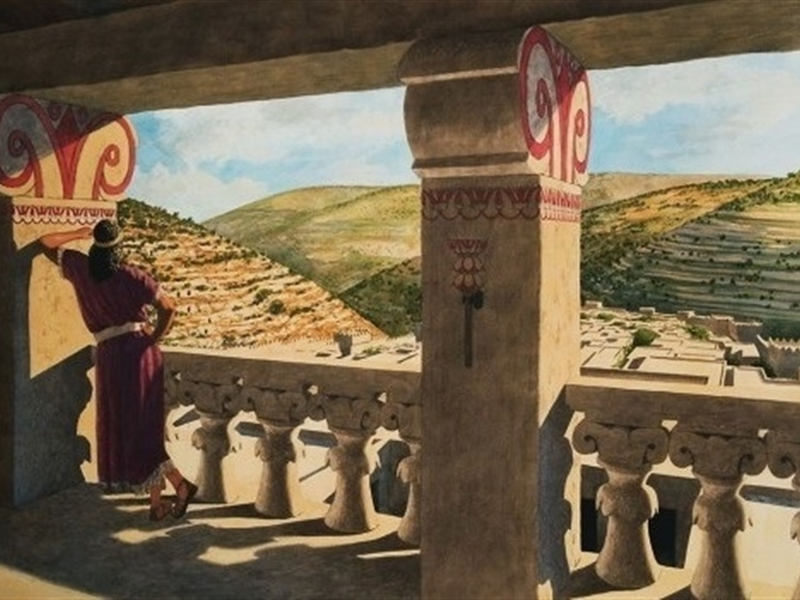
30211-bathsheba-800w-tn
Hermeneutics

Bathsheba: The Real Story

One of the advantages of paying very close attention to the details in the Bible, especially chronological and genealogical details, is that they can shed light on situations that don’t seem to make much sense apart from them. One such situation is that of Bathsheba. It appears that Bathsheba willingly…

by James B. JordanMarch 28, 1997
jonathan-cooper-ygxq7hfdjzq-unsplash
Church Calendar

Is the Church Year Biblical? | A Parking Lot Parable

Once upon a time, Jeff Meyers and Tony Rollins–old friends who had not seen each other for a few years–met in the parking lot of a neighborhood church. They were dropping off their pre-school children at the church for Mother’s Day Out. They were such conscientious and helpful fathers. As…

by Jeff MeyersMarch 20, 1997
annie-spratt-upxf6to3fea-unsplash
Daniel

The Allegory of Susanna

Years ago, when I was at the briefly-existing Geneva Divinity School, I taught a course in the Apocrypha. One thing that struck me at that time is that two of the stories are almost certainly religious allegories (as well as moral tales): Judith and Susanna. Since "Susanna" means "Lily," this…

by James B. JordanFebruary 28, 1997
serafima-lazarenko-_ivuwprfczi-unsplash
Biblical Horizons

A Blossom of Yahweh’s Field

Peter’s essay inspires me to write up some similar thoughts about the flower of the field. Rightly does Peter associate the almond with Yahweh’s garden, because the Garden of Eden is symbolically positioned as parallel to the Holy Place of the Tabernacle and Temple. To wit: Since Aaron’s rod blossomed…

by James B. JordanFebruary 28, 1997
trnava-university-beeyeib-am8-unsplash
Biblical Chronology

Meredith G. Kline Strikes Back, Part 1

We have had occasion to discuss the views of Meredith G. Kline previously in these newsletters, and now it is time to do so again. Kline teaches at Gordon-Conwell Theological Seminary and also at the Westminster Theological Seminaries (Philadelphia and San Diego). He is the author of some interesting insights…

by James B. JordanFebruary 28, 1997

Showing page 259 of 309

See all

Showing page 12 of 43

See all
Literature

Hamlet, 3.4

This scene, like the scene that opens Act 3, shows Hamlet encountering a woman who in his mind has betrayed him. Again, he has been sent for, and probably suspects that it is another setup like the one with Ophelia. He has just come from the play, ready to drink…

February 16, 2006
Literature

Pierre and Hamlet

FO Matthiessen described Melville’s Pierre as “an American Hamlet,” a novel that attempts to “translate” Shakespeare into 19th-century American life. In part, this is a matter of Melville matching characters and plots: “Lucy’s pale innocence fails Pierre as Ophelia’s did Hamlet; the well-named Reverend Mr. Falsgrave’s cushioned voice of worldly…

February 16, 2006
Philosophy

Metaphysics of presence

Derrida, famously, challenges what he calls the metaphysics of presence. What is challenging is not the reality of presence as such, but the notion that we can arrive at some pure presence of a thing, a moment, a self that is unmixed with anything other than itself. A pure instant…

February 16, 2006
Philosophy

How Deconstruction Works

Culler offers an example from Nietzsche that provides an excellent example of the ju-jitsu of deconstruction. Nietzsche argues that causality is not something given, but is the product of a rhetorical operation, a chronological reversal ( chronologische Umdrehung ). I feel a pain, and go searching for a cause of…

February 15, 2006
Literature

New Criticism and theory

At the beginning of his book on Deconstruction , Jonathan Culler notes that critical theory, seen “as an attempt to establish the validity or invalidity of particular interpretive procedures,” is profoundly indebted to New Criticism: This movement “not only instilled the assumption that the purpose of literary study is the…

February 15, 2006
Literature

Thoughts on Beowulf

All page numbers are from the Heany translation. The central focus of the first two fights is Heorot, the mead-hall of Hrothgar. The mead-hall is the focus of a complex of imagery. (The last fight has a similar origin, as Beowulf’s hall is destroyed by the dragon. The house is…

February 15, 2006

Showing page 1884 of 2212

Browse by Category

In Medias Res

Your weekly digest for all things Theopolis.

Donate

Theopolis is nearly 100% donor-supported. Consider joining us on our mission.