
Theopolis Logo

Writing

Explore our collection of theological essays, biblical studies, and reflections on faith and culture.

See all
giammarco-zeh-ljawhtg-unsplash
Biblical Horizons

OPEN BOOK: Views and Reviews

Isaac E. Mozeson, The Word: The Dictionary that Reveals the Hebrew Sources of English (Northvale, NJ: Jacob Aaronson Inc., 1995), 310 pp. Reviewed by James B. Jordan. Once there was only one language in the world, the language God spoke to Adam. At the Tower of Babel, there came to…

by James B. JordanJune 28, 1996
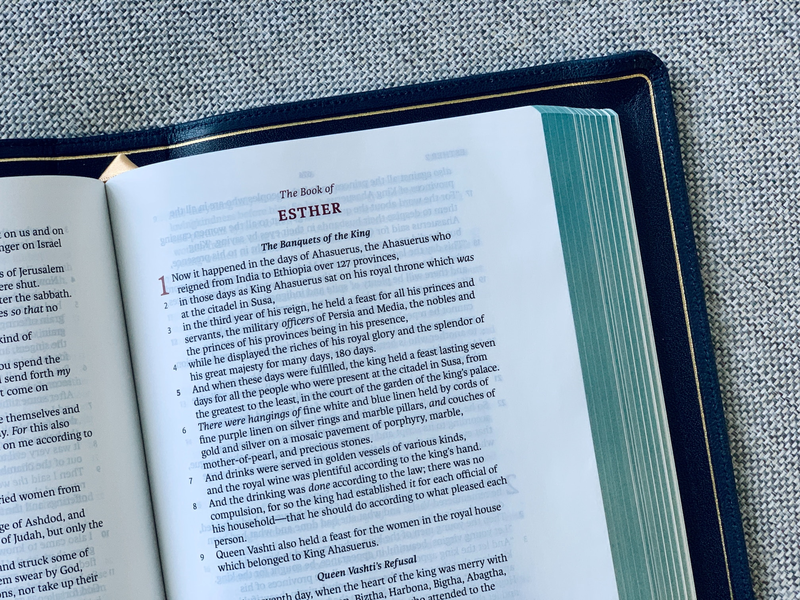
tim-wildsmith-j6jv-mkdzqs-unsplash
Esther

Esther: Historical & Chronological Comments (IV)

2. The Setting of the Book of Esther A. Xerxes (continued from previous issue) Ezra 6:14 says that the Jews finished building "according to the command of the God of Israel and the decree of Cyrus and Darius and Artaxerxes king of Persia." The problem with this verse is that…

by James B. JordanJune 28, 1996

ales-krivec-4mibe6zg5r0-unsplash
Acts

Jesus and Amalek

This essay goes with our previous study of the Amalek pattern back in Biblical Horizons No. 2. Since many do not have this essay, entitled "The Battle of Gog and Magog," let me cite the relevant paragraphs: Note in Genesis 12-15 that Abram moves into the land after escaping Pharaoh…

by James B. JordanJune 28, 1996

aaron-burden-1ebsmyrau-s-unsplash
Proverbs

The Strange Woman

Proverbs 7:6-23 is one of several passages early in the Proverbs in which Solomon warns his son about the wiles and dangers of the "strange woman." It is certainly quite proper to take these as straightforward warnings against sexual sins, and these are certainly warnings that need to be impressed…

by Peter LeithartJune 27, 1996
jan-kahanek-g3o5ztrk2e4-unsplash
Biblical Studies

Some Observations

1. In Luke 4:20 we read that after Jesus finished reading from Isaiah, "the eyes of all in the synagogue were fixed upon Him." This is usually taken in a psychological sense: They were amazed at Jesus somehow. I suggest that, as always, a merely psychological reading is a modern…

by James B. JordanMay 28, 1996
tim-wildsmith-j6jv-mkdzqs-unsplash
Esther

Esther: Historical & Chronological Comments (III)

2. The Setting of the Book of Esther Up to now we have assumed what we must prove, that the king in Esther is Darius the Great. While Biblical chronologists have usually taken this position, commentators on the book of Esther have often taken others as the king. One view,…

by James B. JordanMay 28, 1996

Showing page 265 of 309

See all

Showing page 12 of 43

See all

The Weapons of Our Warfare

In The Empty Men , his study of the heroic theme in the Bible, Gregory Mobley catalogs some of the odd weapons used by biblical warriors: “In Judges and 1 Samuel, the relative inferiority of the weapons of the biblical heroes is emphasized. Shamgar ben Anat is lauded for killing…

December 11, 2014

Individualist Collectivism

I have a great deal of sympathy with Jose Miranda’s claim (in Marx and the Bible ) that Paul is writing about justice in Romans, and that the apostles is concerned “with the problem of society . . . of human civilization. His anguish is over the injustice which reigns…

December 11, 2014

Baptized into the New Age

John Dunnill ( Body and Sacrifice , 128-9) argues that for Paul baptism is more than a “sign” of the new age: “For him, resurrection is the actual transformation of the mortal body of Jesus, the reversal of the deathward trend established by Adam: not merely the resuscitation of a…

December 10, 2014

Sacrificial death?

In some ways, Daniel Ullucci’s The Christian Rejection of Animal Sacrifice helpfully complicates our picture of views on ancient sacrifice, both pre-Christian and Christian. He challenges the standard narrative that claims that Christians straightforwardly and pretty much immediately recognized Jesus’ death as a final sacrifice, and pretty much immediately abandoned…

December 10, 2014

The Universe is a Kitchen

In a recent article in the Journal of the American Academy of Religion , Natalie Gummer lays out the sacrificial cosmology embodied in early Buddhist texts. The premise is that the world is a kitchen, in which things take the forms of ingredients in a cosmic stew - saps, juices,…

December 10, 2014

Horizontal Hierarchy

In his monograph on Israel’s Tabernacle as Social Space , Mark George makes the observation that tabernacle space is “configured horizontally”: “There is not a single step, platform, or dais in tabernacle space. No steps differentiate court space from common space, holy space from court space, or most holy space…

December 10, 2014

Showing page 488 of 2212

Browse by Category

In Medias Res

Your weekly digest for all things Theopolis.

Donate

Theopolis is nearly 100% donor-supported. Consider joining us on our mission.