Theopolis Logo

Writing

Explore our collection of theological essays, biblical studies, and reflections on faith and culture.

See all
31-03-0213
Hermeneutics

Apocalyptic Eyes

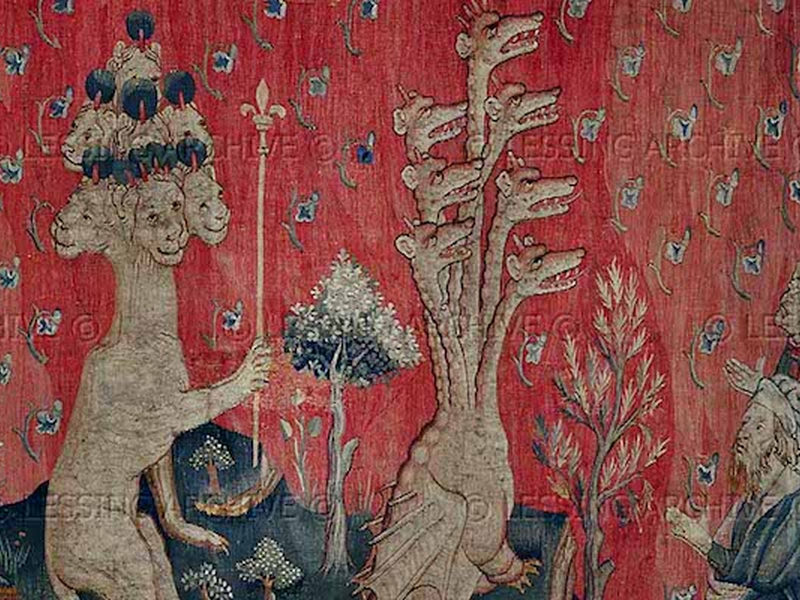
Flying scrolls. Red horses. Beasts coming out of the sea. Winged women. The list goes on. Apocalyptic literature in the Bible is like a cross between science fiction and Marvel comics. And the Bible has a fair bit of this sort of thing. Daniel sees visions in Babylon, Zechariah sees…

by Toby SumpterNovember 4, 2014

bhm-skyline-2
Theopolis News

New Name, New Look

Trinity House Institute has taken a new name, the Theopolis Institute. This striking new name expresses our unique vision and mission and captures the unified purpose behind all our specific programs and activities. We still have Bible, liturgy, and culture in our tagline. We still offer the same courses on…

by TheopolisNovember 4, 2014
istock_000012860926small
Atonement

Not Fearing the Devil

Adam Kotsko offers a socio-political variation on the Christus Victor atonement theory in his 2010 study, The Politics of Redemption: The Social Logic of Salvation . He does this by explaining "the devil" in terms of the Hegelian concept of "objective spirit," Geist . As Kotsko puts it, Geist "refers…

by Peter LeithartOctober 13, 2014
jez-timms-8muutamcwu4-unsplash
Leviticus

The Meaning of Sacrifice

Two factors keep Nahtali Meshel from discussing the meaning of sacrifice until late in his The "Grammar" of Sacrifice . The first has to do with the texts he draws from: "P says little about the meaning of its rituals" (174). The other has to do with the grammatical theory…

by Peter LeithartOctober 8, 2014
jez-timms-8muutamcwu4-unsplash
Leviticus

Praxemics

Chapter 5 of Naphtali Meshel's The "Grammar" of Sacrifice focuses on "praxemics," the physical actions of sacrificial ritual. Praxemes are constituted by six elements: an "atomact," an elementary physical act or gesture; an actor; an object that is acted up; a target for the action and often for the object…

by Peter LeithartOctober 6, 2014
markus-winkler-aid-xyrtlec-unsplash
Leviticus

Jugation and Hierarchy

Two chapters of Naphtali Meshel’s The “Grammar” of Sacrifice cover what he calls “jugation” and “hierarchies.” The first involves the addition of other materials to an animal offering. Jugates include wine, cereal, and oil that are added to the animals (zoemes) that are offered in sacrifice. Some jugates are coordinated…

by Peter LeithartOctober 1, 2014

Showing page 167 of 309

See all

Showing page 12 of 43

See all

Apolitical Liberalism

Judd Owen’s Religion and the Demise of Liberal Rationalism calls on liberals to pay attention to the foundational issues raised by liberalism’s antifoundational critics. Owen recognizes that liberalism does not propose a “neutral” theory of politics. While political regimes do not take sides in religious disputes, and thus exercise a…

February 6, 2018

Symphonic Love

Robert Jenson writes: “our enjoyment of God is that we are taken into the triune singing. Perhaps we may say we are allowed to double the parts. And here too we must insist on concreteness. That the proclamation and prayer of the church regularly bursts into beauty, indeed seems to…

February 6, 2018

Mill at an Impasse

John Gray ( Liberalisms ) argues that the “argument from ignorance” is at the heart of certain liberal theorizing, that it cannot hold up to scrutiny. Human knowledge is limited, and that puts constraints on political certainty. Besides, it is argued that human knowledge advances best when freedom is maximized.…

February 5, 2018
Economics

Un-Tragic Commons?

In his Out of the Wreckage , George Monbiot cites the famous 1968 article of Garrett Hardin on the "Tragedy of the Commons." In Monbiot's summary, Hardin argued that "common property will always be destroyed, because the gain that individuals make by over-exploiting it will outweigh the loss they suffer…

February 2, 2018
Work

God the Laborer

Heiner Ruschaupt writes: “In Greek society labor was viewed as an inescapable fate imposed by the gods. To be like the gods meant to live free from labor. In the world of the ancient Orient, labor was viewed as a burden, as slave labor for the gods, who therefore were…

February 2, 2018

Love Song

Markus Rathey ( Bach's Major Vocal Works ) argues that Bach's Christmas Oratorio is a love song. Several threads of argument support this conclusion. In composing the Oratorio , Bach recycled music from earlier compositions, including the quasi-operatic Lasst uns sorgen , which renders a myth about Hercules in musical…

February 2, 2018

Showing page 98 of 2212

Browse by Category

In Medias Res

Your weekly digest for all things Theopolis.

Donate

Theopolis is nearly 100% donor-supported. Consider joining us on our mission.