Theopolis Logo

Writing

Explore our collection of theological essays, biblical studies, and reflections on faith and culture.

See all
tanner-mardis-xuxghzhibn4-unsplash-1-2
Biblical Studies

Tweets-turned-Notes on the Bible’s Chronology

Summary In what follows, I will consider the “year-stamps” employed in Scripture, i.e., statements of the form, “Such-and-such an event took place in the Xth year of Y.” In the process, I will suggest some ways in which the Biblical narrative might relate to events in the extra-Biblical world, though…

by James BejonJuly 16, 2019
durer-prodigal-son-2
Luke

Perspectives on the Prodigal, (Part 2)

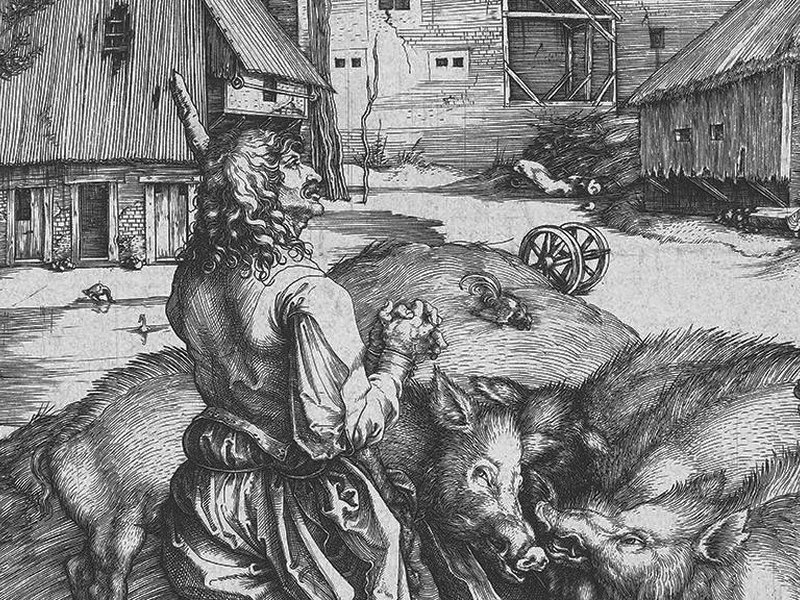
In the first essay on the parable of the Prodigal Son, I suggested that the problems commentators and others encounter in interpreting Jesus three-part parable are not accidental. These are not just problems in our ignorance of cultural background. They are intentional features of the stories —stories designed to poke…

by Ralph Allan SmithJuly 11, 2019
durer-prodigal-son-2
Luke

Perspectives on the Prodigal, (Part 1)

The story of the Prodigal Son is perhaps the most well-known story in the Bible. As others have observed, it may also be one of the most misunderstood. In two short essays, I will point out features of this story that are commonly neglected, aspects of Jesus’ parable that might…

by Ralph Allan SmithJuly 9, 2019
de-rijke-man-en-de-arme-lazarus-by-jacopo-da-ponte-16th-century
Luke

Lazarus and the Rich Man

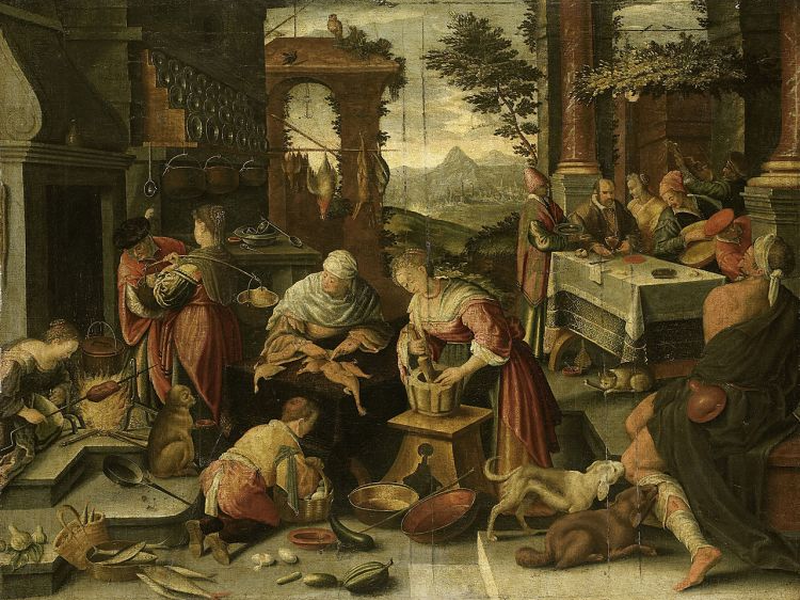
The parable of Lazarus and the nameless rich man is not an independent story. It is part of a long context that begins in Luke 15:1, where Jesus is eating with tax collectors and sinners and the scribes and Pharisees grumble. In response to their hardheartedness, Jesus tells a three-part…

by Ralph Allan SmithJuly 4, 2019
aaron-burden-uynrnfdkjwg-unsplash
Luke

Everybody has Dropsy - Luke 14:1-24

The Bible is written so that even when a reader cannot pick up on what might be deeper or more detailed aspects of a text, there is virtually always a message to be heard. In the ancient world, where the “reader” of Scripture would likely be a church official facing…

by Ralph Allan SmithJuly 2, 2019
communion
Biblical Theology

Fruit Trees and Grain Plants

The distinction between garden (or vineyard) and field begins in Genesis 2. This relates to the ordering of the formless world. Plants of the field are contrasted with the garden planted by God in Genesis 2:5&8. Later on, under the Old Covenant the Israelites will be required to keep their…

by James B. JordanJune 27, 2019

Showing page 77 of 309

See all

Showing page 13 of 43

See all

Modern Sphinx

Modernity, Sergei Bulgakov once said, is a sphinx. It poses a riddle, and those who cannot or will not answer the riddle are devoured. The editors of Political Theology in Orthodox Christianity cite this at the beginning of their study to highlight the ambivalence of modernity. It has both constructive…

September 22, 2017

Bach the Modern?

"One of the factors that has rendered [Bach's] Matthew Passion so successful over the course of its reception," writes John Butt ( Bach's Dialogue with Modernity , 36), "lies in its evocation of subjectivities that somehow resonate with those of the broader modern condition." Bach's Passions target "the individual believer,…

September 22, 2017

Liturgy In Secular Imagination

Alastair Roberts's contribution to Our Secular Age , a collection of essays on Charles Taylor's A Secular Age , focuses on the effect of secularism on liturgical piety. Taylor identifies "authenticity" as one of the features of our secular age, and Roberts observes that this can take the form of…

September 22, 2017

US By TR

Graham Allison's Destined for War is a study of contemporary politics, Sino-American relations in particular. Along the way, he asks what we would think if China started acting like the U.S. did as we rose to global prominence. The career of Teddy Roosevelt makes the point: “ In the decade…

September 22, 2017

Late Bloomer

William Golding, writes Allan Massie in a review of John Carey's biography in the TLS , was "a late starter, one oppressed in youth by doubts and feelings of social, and perhaps intellectual, inferiority. Until his middle forties he was a poor, reluctant and unsatisfied provincial schoolmaster." He more than…

September 22, 2017

Fire Makes the Man

John Lanchester reviews James Scott's latest ( Against the Grain ) in the New Yorker . Scott contends that human civilization is the product of our mastery of fire. Fire enabled humans to cook food, and that gave us, Scott argues, and evolutionary advantage. Chimps put a lot of (unconscious)…

September 22, 2017

Showing page 141 of 2212

Browse by Category

In Medias Res

Your weekly digest for all things Theopolis.

Donate

Theopolis is nearly 100% donor-supported. Consider joining us on our mission.