Theopolis Logo

Writing

Explore our collection of theological essays, biblical studies, and reflections on faith and culture.

See all
tanner-mardis-xuxghzhibn4-unsplash-1-2
Biblical Studies

Tweets-turned-Notes on the Bible’s Chronology

Summary In what follows, I will consider the “year-stamps” employed in Scripture, i.e., statements of the form, “Such-and-such an event took place in the Xth year of Y.” In the process, I will suggest some ways in which the Biblical narrative might relate to events in the extra-Biblical world, though…

by James BejonJuly 16, 2019
durer-prodigal-son-2
Luke

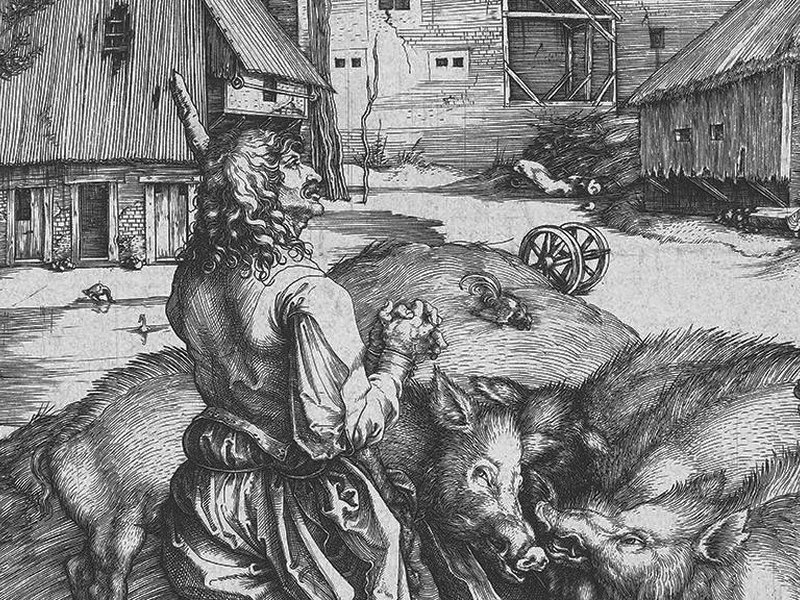
Perspectives on the Prodigal, (Part 2)

In the first essay on the parable of the Prodigal Son, I suggested that the problems commentators and others encounter in interpreting Jesus three-part parable are not accidental. These are not just problems in our ignorance of cultural background. They are intentional features of the stories —stories designed to poke…

by Ralph Allan SmithJuly 11, 2019
durer-prodigal-son-2
Luke

Perspectives on the Prodigal, (Part 1)

The story of the Prodigal Son is perhaps the most well-known story in the Bible. As others have observed, it may also be one of the most misunderstood. In two short essays, I will point out features of this story that are commonly neglected, aspects of Jesus’ parable that might…

by Ralph Allan SmithJuly 9, 2019
de-rijke-man-en-de-arme-lazarus-by-jacopo-da-ponte-16th-century
Luke

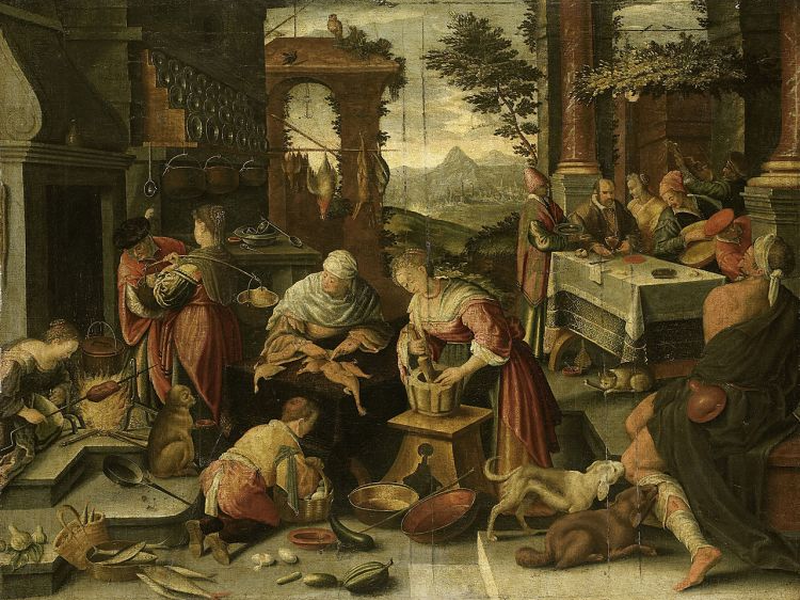
Lazarus and the Rich Man

The parable of Lazarus and the nameless rich man is not an independent story. It is part of a long context that begins in Luke 15:1, where Jesus is eating with tax collectors and sinners and the scribes and Pharisees grumble. In response to their hardheartedness, Jesus tells a three-part…

by Ralph Allan SmithJuly 4, 2019
aaron-burden-uynrnfdkjwg-unsplash
Luke

Everybody has Dropsy - Luke 14:1-24

The Bible is written so that even when a reader cannot pick up on what might be deeper or more detailed aspects of a text, there is virtually always a message to be heard. In the ancient world, where the “reader” of Scripture would likely be a church official facing…

by Ralph Allan SmithJuly 2, 2019
communion
Biblical Theology

Fruit Trees and Grain Plants

The distinction between garden (or vineyard) and field begins in Genesis 2. This relates to the ordering of the formless world. Plants of the field are contrasted with the garden planted by God in Genesis 2:5&8. Later on, under the Old Covenant the Israelites will be required to keep their…

by James B. JordanJune 27, 2019

Showing page 77 of 309

See all

Showing page 13 of 43

See all

Covenant lawsuit

John’s gospel is a contentious courtroom of a gospel. Legal language dominates the whole gospel - witnesses are called, Jesus promises an advocate, the Jews are constantly trying to put Jesus in the dock. But the whole gospel is really the trial of the Jews, just as what appears to…

February 28, 2006

Hidden Hero

Homer’s prologue to the Odyssey delays the identification of the hero until the end of the prologue, a literary sign that this hero comes hidden, disguised, in craft. That, of course, is precisely how Odysseus behaves throughout the epic. John’s gospel begins with similar techniques. We learn about the Word…

February 28, 2006
Literature

Coriolanus and Christ

Shakespeare’s Coriolanus can be read as dramatizing the Augustinian perspective most recently articulated by Oliver O’Donovan, namely, that “within every political society there occurs, implicitly, an act of worship of divine rule.” Through his dramatization of Roman society, Shakespeare points to another act of worship that constitutes a different sort…

February 28, 2006
Philosophy

J. L. Austin, Deconstructionist?

JL Austin famously distinguished between “performative” and “constative” utterances, the former of which perform the action to which they refer and the latter of which make assertions that can be judged as true or false. Modern philosophy has treated the constative as the norm, and performatives, if considered at all,…

February 28, 2006
Philosophy

structuralism, linguistic and other

How did the linguistic theory of Saussure become a model for anthropologists, sociologists, and analysts of pop culture? Jonathan Culler suggests that this move rests on “two fundamental insights: first, that social and cultural phenomena are not simply material objects or events but objects or events iwth meaning, and hence…

February 27, 2006
Philosophy

Anthropologized science

Foucault, in Canguilhem’s summary, argues that an anthropologization of the sciences took place in the late eighteenth and early nineteenth century, when Kantian philosophy combined with biology, economics, and linguistics to raise the question What is Man? Foucault argues: “From the moment when life, work, and language ceased to be…

February 27, 2006

Showing page 1874 of 2212

Browse by Category

In Medias Res

Your weekly digest for all things Theopolis.

Donate

Theopolis is nearly 100% donor-supported. Consider joining us on our mission.