Theopolis Logo

Writing

Explore our collection of theological essays, biblical studies, and reflections on faith and culture.

See all
evangelists
Matthew

Dating Matthew, (Part 1)

When might the Gospel according to Matthew have been written? Of course, any answer can only be speculation, but that does not mean we are reduced to groundless opinion. In this series of articles I point the way to an approach different from the general consensus among scholars today which…

by Ralph Allan SmithNovember 22, 2016
hebrew-manuscript-3
Hermeneutics

Synopticity, (Part 2)

In my first essay on “synopticity” I offered a rather rough definition of the phenomenon and important, though not exhaustive examples. In this essay, I want to introduce broader aspects of the phenomenon of “synopticity.” The first example that I have in mind is conventional stories, stories of different historical…

by Ralph Allan SmithNovember 17, 2016
screen-shot-2016-03-31-at-9-32-11-am
Ascension

Brexit and the Binding of Satan, Part 4

Since the judgment of Babel was followed by the initiation of the circumcision, the impending end of the circumcision in AD70 explains the significance of the first century miracle of foreign tongues. Except for a few Aramaic “teasers” in the book of Daniel, the Word of God was monolingual and…

by Mike BullNovember 15, 2016
four-evangelists
Hermeneutics

Synopticity, (Part 1)

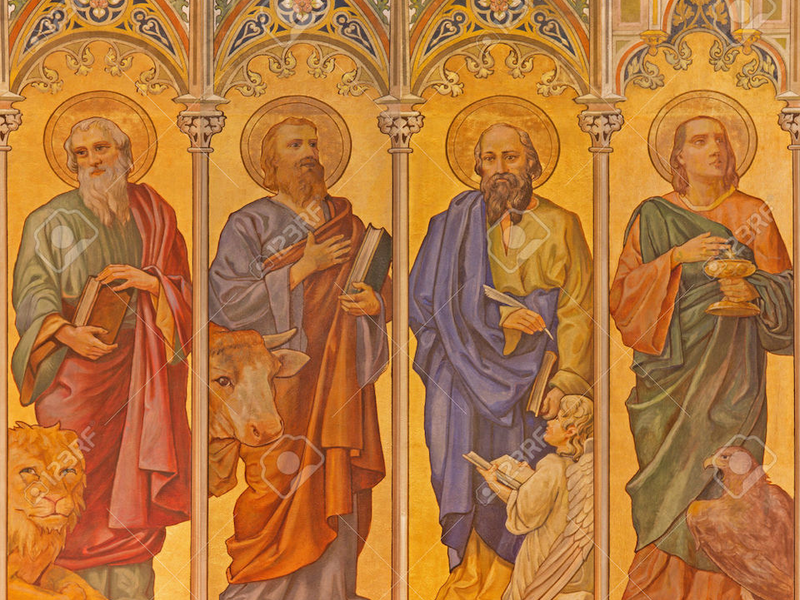
To the best of my knowledge “synopticity” is not a word used in theology or Biblical studies, but it seems an appropriate word to describe the kind of phenomena associated with the Synoptic Gospels, Matthew, Mark, and Luke. These three Gospels tell essentially the same story with significant — sometimes…

by Ralph Allan SmithNovember 10, 2016
laughing_statue_by_xxbobbiie-d5f0meh-2
Humor

Learning to Laugh

Humor is a funny thing. It is altogether familiar yet also mysterious. What makes us laugh? Why do we find things funny? There are academic fields of study dedicated to discovering what makes things humorous. These academicians even have a journal entitled International Journal of Humor Research . No joke.…

by Bill SmithNovember 8, 2016
chaucer
Literature

Flawed Means of Grace: Liturgy in The Pardoner's Tale

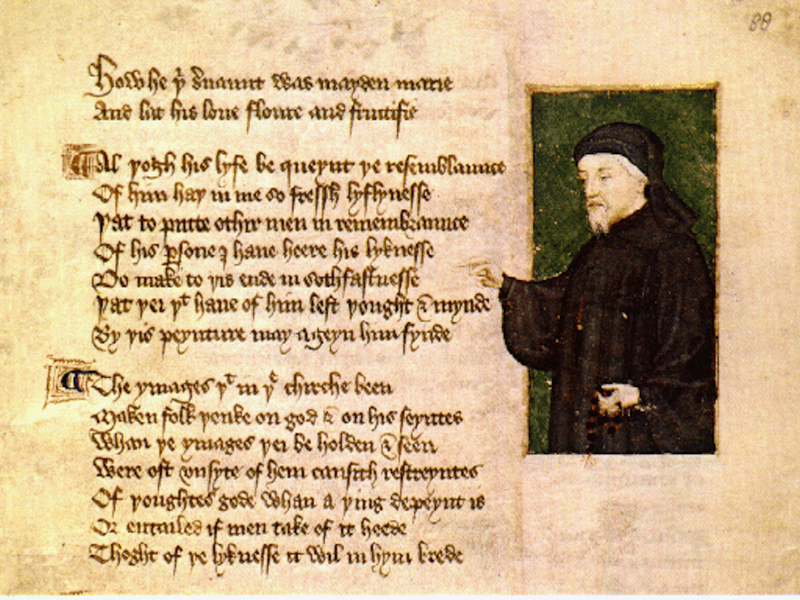
Out of all the characters in Geoffrey Chaucer’s The Canterbury Tales , the Pardoner has been called the “one lost soul.” The pious Parson, who closes out the collection of tales with a sermon on the seven deadly sins and how a sinner can absolve himself of them, connects the…

by Christian LeithartNovember 3, 2016

Showing page 122 of 309

See all

Showing page 13 of 43

See all

Are Trinitarian Persons Persons?

B oethius defined persona as an “individual substance of a rational nature ( natuae rationalis individua substantia ). This definition is often cited as evidence that medieval Trinitarian theology, deeply influenced by Boethius, did not teach that the Trinitarian “Persons” are persons in the modern sense of the term -…

January 19, 2017

Justice and Righteousness

N estled within several chapters of 1 Chronicles that describe David's wars, 1 Chronicles 18:14–17 explains the purpose of those wars: To establish Yahweh's order of justice in Israel, an order of justice that David himself administers and mediates. Having conquered Philistia, Moab, Ammon, and Edom, David reigns over “all…

January 18, 2017

God's Sacramental Self-Gift

What does God give in creation and redemption? He gives us our own existence, and that the gift He gives is Himself. Both are true. Luther captures this latter point in his 1528 “Confession”: “These are the three Persons and the one God, Who has given Himself to us wholly…

January 17, 2017

Anthropomorphism and Nature

I n his Essays in Anthropology , Robert Spaemann observes that “the beginning of modern science was marked by polemics against the concept of nature. The concept of nature is now taken to be anthropomorphic, while the essentially teleological idea of things in the cosmos having ‘movement in themselves' is…

January 17, 2017

American Covenant

P hilip Gorski's American Covenant examines the American tradition of civil religion or civic republicanism from the Puritans through President Obama. Gorski contrasts this tradition with the two most belligerent contenders in contemporary American politics, religious nationalism and radical secularism. Civil religion differs from radical secularism in its anthropology (communitarian…

January 16, 2017

Conrad’s Mesmerizing Obscurity

K ate Symondson begins her TLS review of recent editions of Joseph Conrad’s letters and his novel Victory with a reminder of FR Leavis's complaint about Conrad's “insistence on inexpressible and incomprehensible mystery.” Symondson writes, “Instead of the Victorian preference for pellucid—almost pedantic—hardened detail, mist shrouds and encircles Conrad's fiction.…

January 13, 2017

Showing page 216 of 2212

Browse by Category

In Medias Res

Your weekly digest for all things Theopolis.

Donate

Theopolis is nearly 100% donor-supported. Consider joining us on our mission.