Theopolis Logo

Writing

Explore our collection of theological essays, biblical studies, and reflections on faith and culture.

See all
31-03-0213
Hermeneutics

Apocalyptic Eyes

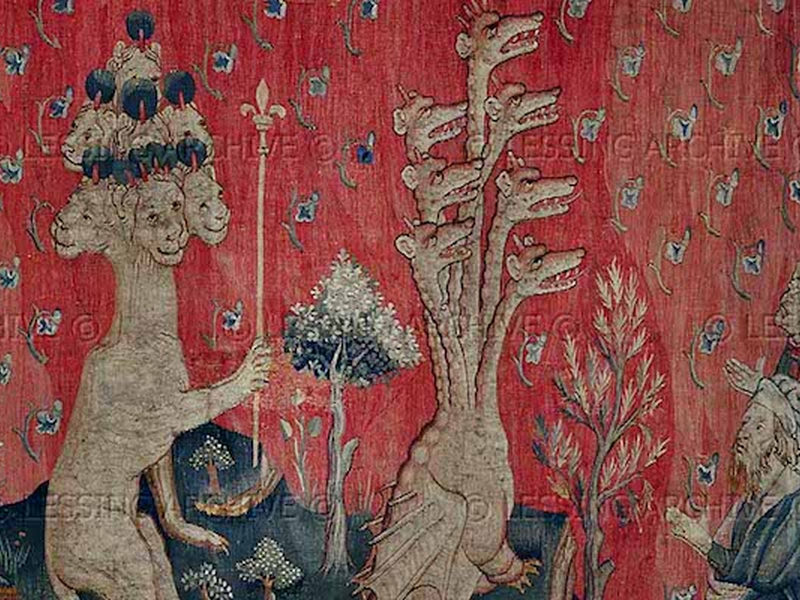
Flying scrolls. Red horses. Beasts coming out of the sea. Winged women. The list goes on. Apocalyptic literature in the Bible is like a cross between science fiction and Marvel comics. And the Bible has a fair bit of this sort of thing. Daniel sees visions in Babylon, Zechariah sees…

by Toby SumpterNovember 4, 2014

bhm-skyline-2
Theopolis News

New Name, New Look

Trinity House Institute has taken a new name, the Theopolis Institute. This striking new name expresses our unique vision and mission and captures the unified purpose behind all our specific programs and activities. We still have Bible, liturgy, and culture in our tagline. We still offer the same courses on…

by TheopolisNovember 4, 2014
istock_000012860926small
Atonement

Not Fearing the Devil

Adam Kotsko offers a socio-political variation on the Christus Victor atonement theory in his 2010 study, The Politics of Redemption: The Social Logic of Salvation . He does this by explaining "the devil" in terms of the Hegelian concept of "objective spirit," Geist . As Kotsko puts it, Geist "refers…

by Peter LeithartOctober 13, 2014
jez-timms-8muutamcwu4-unsplash
Leviticus

The Meaning of Sacrifice

Two factors keep Nahtali Meshel from discussing the meaning of sacrifice until late in his The "Grammar" of Sacrifice . The first has to do with the texts he draws from: "P says little about the meaning of its rituals" (174). The other has to do with the grammatical theory…

by Peter LeithartOctober 8, 2014
jez-timms-8muutamcwu4-unsplash
Leviticus

Praxemics

Chapter 5 of Naphtali Meshel's The "Grammar" of Sacrifice focuses on "praxemics," the physical actions of sacrificial ritual. Praxemes are constituted by six elements: an "atomact," an elementary physical act or gesture; an actor; an object that is acted up; a target for the action and often for the object…

by Peter LeithartOctober 6, 2014
markus-winkler-aid-xyrtlec-unsplash
Leviticus

Jugation and Hierarchy

Two chapters of Naphtali Meshel’s The “Grammar” of Sacrifice cover what he calls “jugation” and “hierarchies.” The first involves the addition of other materials to an animal offering. Jugates include wine, cereal, and oil that are added to the animals (zoemes) that are offered in sacrifice. Some jugates are coordinated…

by Peter LeithartOctober 1, 2014

Showing page 167 of 309

See all

Showing page 13 of 43

See all

Shakespeare's Songs

Late at night in Lady Olivia’s great house in Illyrium, three friends – Sir Toby, the lady’s uncle, Feste her fool, and Sir Andrew Aguecheek, her hapless suitor – sing drunken songs that resound loudly through the empty halls. Malvolio, Lady Olivia’s stern steward and “something of a Puritan,” rises…

December 7, 2015

Parochial Postmodernism

David Harvey ( Ways of the World ) describes our cultural moment in terms of “space-time compression,” and finds an analogy with the speed-up of life that was widely noted at the beginning of the twentieth century: “While historical analogies are always dangerous, I think it no accident that postmodern…

December 7, 2015

Momanomics

In her collection of essays on money, Slave of Two Masters , Melinda Selmys devotes several pages to the celebration of motherhood and its unique economics. Taking her cue from the curse of Genesis 3, she argues that men have always “lorded” over women by claiming all important human achievements…

December 7, 2015

How God Fixes Things

The cry has come up from our national journalogians at the NYT and the Daily News : “God isn't fixing this. No more prayers. Let's get some action.” If God - the living God - were to get busy fixing things, they may not like the way He goes about…

December 7, 2015

In the Fullness of Time

As Robert Jenson has argued, the big question of religion is the question of eternity: How is God related to time? For Greco-Roman paganism and for the great religions of the far east, god or the gods are immune to time, alien to time. The whole point of Plato's forms…

December 4, 2015

Hamlet in Society

Despite the distracting use of the opposition of of “authenticity” and “responsibility,” Terry Eagleton has some thoughtful observations on the tragic dilemma in Hamlet ( Shakespeare and Society , 1967). Hamlet’s is a society of “reciprocal human definitions,” that is to say, a man’s identity is mirrored to him by…

December 4, 2015

Showing page 344 of 2212

Browse by Category

In Medias Res

Your weekly digest for all things Theopolis.

Donate

Theopolis is nearly 100% donor-supported. Consider joining us on our mission.