Theopolis Logo

Writing

Explore our collection of theological essays, biblical studies, and reflections on faith and culture.

See all
tanner-mardis-xuxghzhibn4-unsplash-1-2
Biblical Studies

Tweets-turned-Notes on the Bible’s Chronology

Summary In what follows, I will consider the “year-stamps” employed in Scripture, i.e., statements of the form, “Such-and-such an event took place in the Xth year of Y.” In the process, I will suggest some ways in which the Biblical narrative might relate to events in the extra-Biblical world, though…

by James BejonJuly 16, 2019
durer-prodigal-son-2
Luke

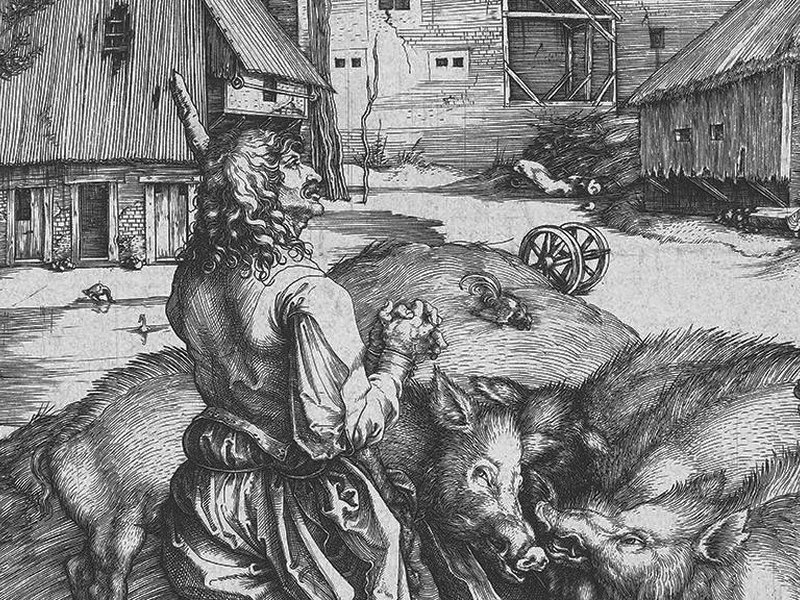
Perspectives on the Prodigal, (Part 2)

In the first essay on the parable of the Prodigal Son, I suggested that the problems commentators and others encounter in interpreting Jesus three-part parable are not accidental. These are not just problems in our ignorance of cultural background. They are intentional features of the stories —stories designed to poke…

by Ralph Allan SmithJuly 11, 2019
durer-prodigal-son-2
Luke

Perspectives on the Prodigal, (Part 1)

The story of the Prodigal Son is perhaps the most well-known story in the Bible. As others have observed, it may also be one of the most misunderstood. In two short essays, I will point out features of this story that are commonly neglected, aspects of Jesus’ parable that might…

by Ralph Allan SmithJuly 9, 2019
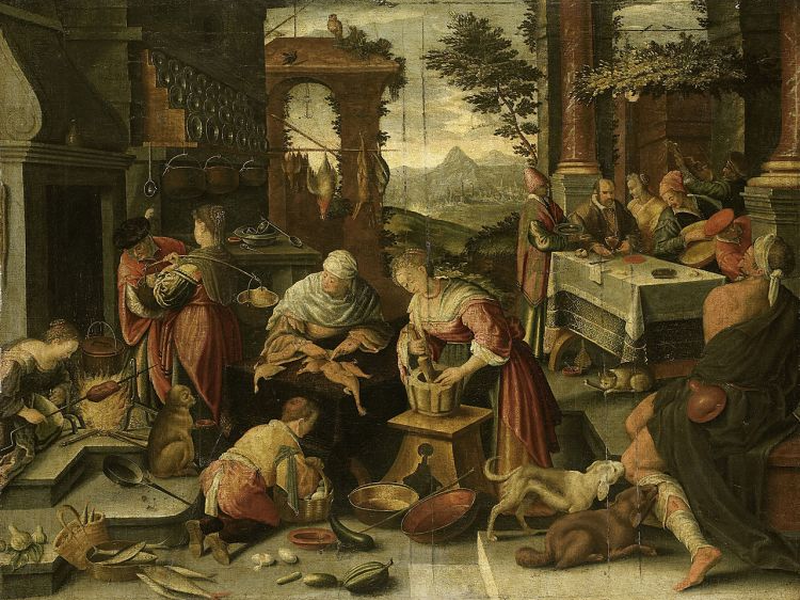
de-rijke-man-en-de-arme-lazarus-by-jacopo-da-ponte-16th-century
Luke

Lazarus and the Rich Man

The parable of Lazarus and the nameless rich man is not an independent story. It is part of a long context that begins in Luke 15:1, where Jesus is eating with tax collectors and sinners and the scribes and Pharisees grumble. In response to their hardheartedness, Jesus tells a three-part…

by Ralph Allan SmithJuly 4, 2019
aaron-burden-uynrnfdkjwg-unsplash
Luke

Everybody has Dropsy - Luke 14:1-24

The Bible is written so that even when a reader cannot pick up on what might be deeper or more detailed aspects of a text, there is virtually always a message to be heard. In the ancient world, where the “reader” of Scripture would likely be a church official facing…

by Ralph Allan SmithJuly 2, 2019
communion
Biblical Theology

Fruit Trees and Grain Plants

The distinction between garden (or vineyard) and field begins in Genesis 2. This relates to the ordering of the formless world. Plants of the field are contrasted with the garden planted by God in Genesis 2:5&8. Later on, under the Old Covenant the Israelites will be required to keep their…

by James B. JordanJune 27, 2019

Showing page 77 of 309

See all

Showing page 13 of 43

See all
Global Christianity

The Era of Christian Expansion

Protestants look back longingly to the Reformation as one of the great periods of church history, and it was in many respects. In terms of the global reach of Christianity, though, the sixteenth century was a low point. Since its beginning, Christianity has rarely been confined to so contracted an…

October 5, 2015

The One

Peter Adamson (P hilosophy in the Hellenistic and Roman Worlds ) claims that “A good case can be made for seeing Plotinus as the most in fluential Western philosopher of all time, apart from Plato and Aristotle themselves.” He fused Plato with some of Aristotle's ideas, added Stoic concepts, to…

October 5, 2015

Throne of the Beast

The fifth angel pours out his bowl on the “throne of the beast” (Revelation 16:10-110). There are a lot of beasts in Revelation. Which one is it? The fact that it is in the fifth slot gives us a clue. God created swarming things on earth and in the sea…

October 5, 2015

Mother in Israel

Deborah is the only female judge, and the only judge who does anything close to what we would recognizing as “judging.” She is a prophetess, and holds court sitting under a palm tree between Ramah and Bethel (Judges 4:5). She also does what the other Hebrew judges do - leads…

October 2, 2015
Philosophy

Autonomy or Theonomy

Peter Adamson finds some general trends in his forthcoming study of Philosophy in the Hellenistic and Roman Worlds . Hellenistic philosophy was broadly anti-Platonic, denying the existing of “immaterial entities” and devoted to physicalism. In one of his many moments of whimsy, Adamson suggests that the change is so sudden…

October 2, 2015

Egyptian Bees

The subtitle of Gene Kritsky's forthcoming Tears of Re is “Beekeeping in Ancient Egypt.” The linkage of deity, mourning, and beekeeping is too tantalizing to pass up. The title is based on a myth found in a papyrus from about 300 BC: “The god Re wept and the tears from…

October 2, 2015

Showing page 368 of 2212

Browse by Category

In Medias Res

Your weekly digest for all things Theopolis.

Donate

Theopolis is nearly 100% donor-supported. Consider joining us on our mission.