Theopolis Logo

Writing

Explore our collection of theological essays, biblical studies, and reflections on faith and culture.

See all
woman-bw
Grace

Never Be Dismayed

I'm afraid of messing up. Not just of messing up in general, but of messing this up—the big This that is the story that is my life, the story that God is attempting to tell with me as His material. The question casts its shadow over all my decisions. Can…

by Leta SundetOctober 6, 2015
jesus-with-sword
Revelation

Greater Phinehas

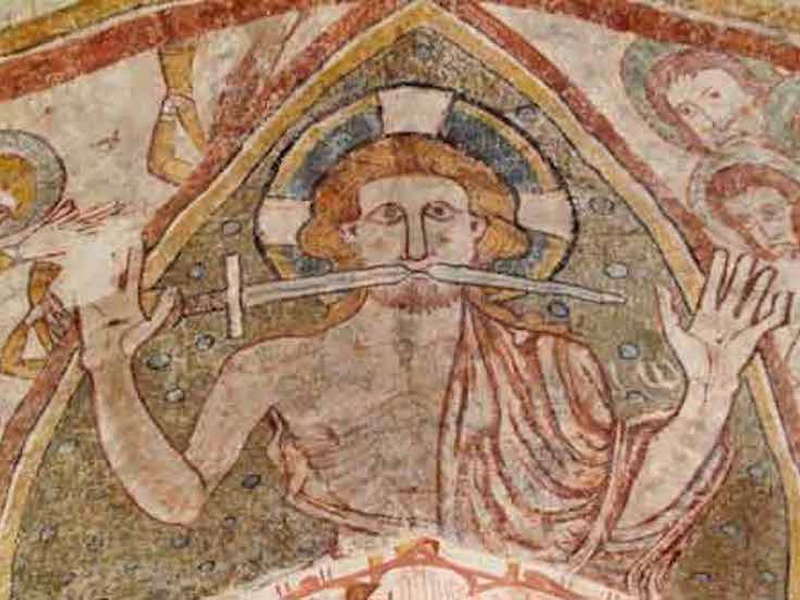
Jesus’ letter to Pergamum mentions Balaam and Balak (Revelation 2:14), and that is a signal that the whole message is running along the lines of Numbers 22-25. The death of the high priest is a sacrificial moment in the life of Israel. According to the rules of the cities of…

by Peter LeithartOctober 1, 2015
marriage
Marriage

The Glory of Self-Giving: A Wedding Homily

As you come to be joined in marriage today, I want to take a moment to focus on one important dimension of what it means to be married as Christians: that is as those who know Jesus and are being made into His likeness. This is a glorious day, full…

by Joshua AppelSeptember 29, 2015
jesus-centurion
Authority

Authority and Faith

When Jesus was entered into Capernaum, there came unto him a centurion, beseeching him, saying, “Lord, my servant lieth at home sick of the palsy, grievously tormented.” Jesus saith unto him, “I will come and heal him.” The centurion answered and said, “Lord, I am not worthy that thou shouldest…

by Lindsey TollefsonSeptember 24, 2015
creation-eve-2
Genesis

The Two Shall Become One Flesh: A Wedding Homily

Philosophers have measured mountains, Fathom'd the depths of seas, of states, and kings, Walk'd with a staff to heaven, and traced fountains But there are two vast, spacious things, The which to measure it doth more behove: Yet few there are that sound them; Sin and Love. The Agonie –…

by Joshua AppelSeptember 22, 2015
john-baptist-pointing
Luke

Of Sandals and Heroes

The third chapter of Luke famously opens with a list of mighty men, seven mighty men, potential heroes of the Mediterranean world. Beginning with Tiberius Caesar and Pontius Pilate, passing on to Herod the Tetrarch and his brothers, and ending with two High Priests, Luke says that the word of…

by Toby SumpterSeptember 17, 2015

Showing page 143 of 309

See all

Showing page 13 of 43

See all

Monster to Music

In Rune 40 of the Finnish epic, Kalevala , the hero, Wainamoinen, is sailing with his friends to Pohjola, where he intends to recover the Sampo, a talisman of good luck and extraordinary, mysterious power. No one today quite knows what the Sampo was, but many of the episodes of…

April 28, 2015

Chaucer and the Greeks

Chaucer, like Shakespeare after him, set some of his poems in ancient Greece. The “Knight's Tale” takes place in Athens, ruled by the same “Duke” Theseus who rules Athens in Midsummer Nights Dream . Troilus and Cresyde is a Trojan love tragedy. Neither of these works, however, shows much deep…

April 28, 2015

Greece in the English Renaissance

According to C. S. Lewis ( English Literature in the Sixteenth Century , 27-28), English humanists were most interested in style, but the style was mostly Latin: “Greek was given abundance of ‘mouth honor,’ but only the minor Greek authors (Plutarch, Heliodrous, Chilles Tatius, the Anthology) were really relished. Greek…

April 28, 2015

Make Love and War: The Knight's Tale

Emily, the lady-love of Chaucer's “Knight's Tale,” the first of the Canterbury Tales, appears in a garden, and the poet describes her as if where were part of the garden. She is Eve in Eden. But this is no Edenic world. The men who see her are locked out of…

April 28, 2015

Universal Tragedy

Tragic stories are fall stories. Whether through moral wrong or through some inadvertent hamartia , the tragic hero falls from a high place. Others are engulfed in the tragedy to one extent or another, but not everyone. Those who watch can experience the catharsis of pity and fear by watching…

April 28, 2015

Invention of Allegory

C S. Lewis describes the formation of medieval allegorism in his classic Allegory of Love . He begins by distinguishing between an allegorical and a sacramental or symbolic turn of mind. Allegory begins, he says, with “an immaterial fact, such as the passions which you actually experience” and finds ways…

April 27, 2015

Showing page 434 of 2212

Browse by Category

In Medias Res

Your weekly digest for all things Theopolis.

Donate

Theopolis is nearly 100% donor-supported. Consider joining us on our mission.